
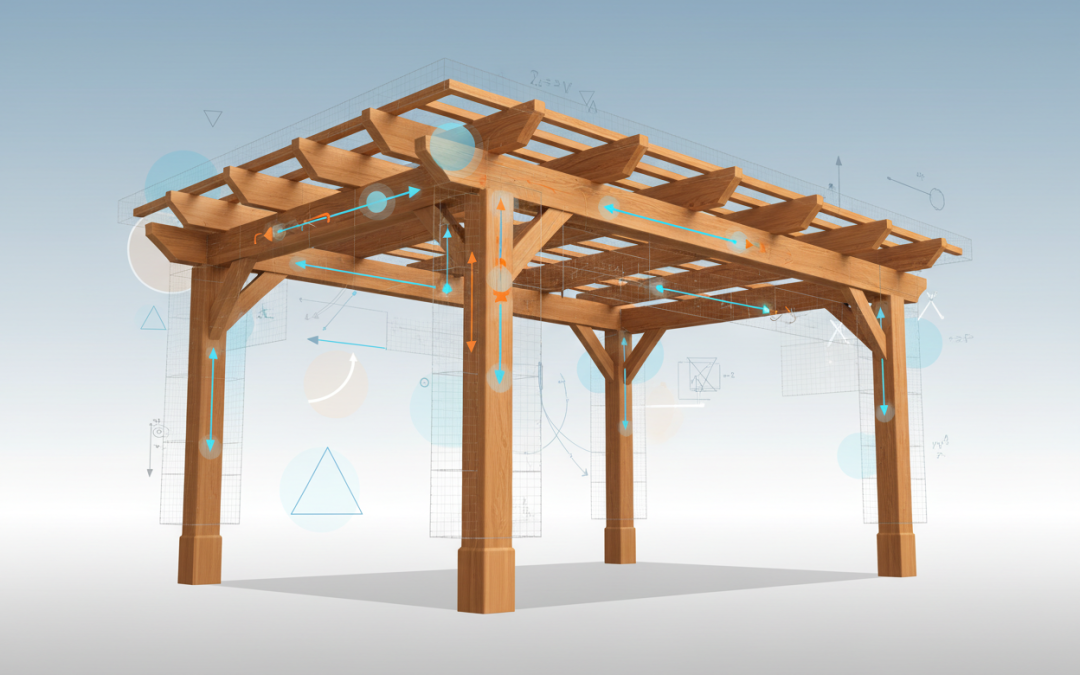
The Science of Custom Pergola Structural Load Distribution: Engineering Beauty That Lasts
When you envision your dream outdoor space, you probably picture elegant gatherings under a stunning pergola, not complex engineering calculations. However, behind every beautiful custom pergola lies fascinating science that ensures your investment stands strong against nature’s forces. Understanding structural load distribution isn’t just for engineers – it’s knowledge that empowers homeowners to make informed decisions about their outdoor structures.
The science of pergola load distribution involves carefully calculating how weight, wind, and environmental forces travel through the structure and transfer safely to the ground. This intricate balance between form and function determines whether your pergola becomes a lasting centerpiece or a costly mistake. Let’s explore the engineering principles that make custom pergolas both beautiful and bulletproof.
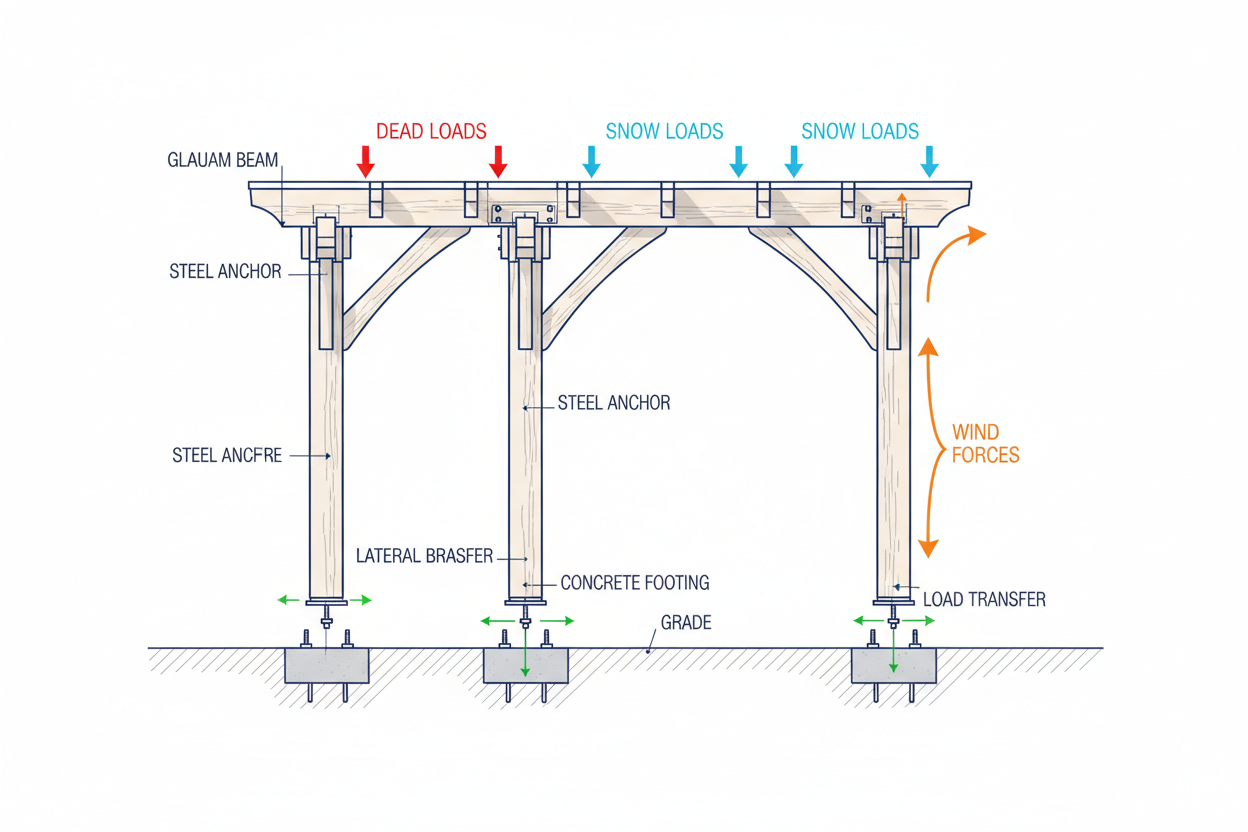
Table of Contents
Understanding Structural Load Basics
Types of Loads Acting on Pergolas
Material Selection and Load Capacity
Foundation Requirements for Proper Load Transfer
Beam Sizing and Spacing Calculations
Connection Points and Hardware Engineering
Wind Load Considerations in Pergola Design
Snow and Live Load Factors
Common Load Distribution Mistakes to Avoid
Professional Engineering vs DIY Considerations
Frequently Asked Questions
Understanding Structural Load Basics
Every structure, from skyscrapers to pergolas, must follow fundamental physics principles. Load distribution refers to how forces spread throughout a structure and eventually reach the foundation. Think of it like water flowing through a river system – forces must have clear, strong pathways to travel safely to the ground.
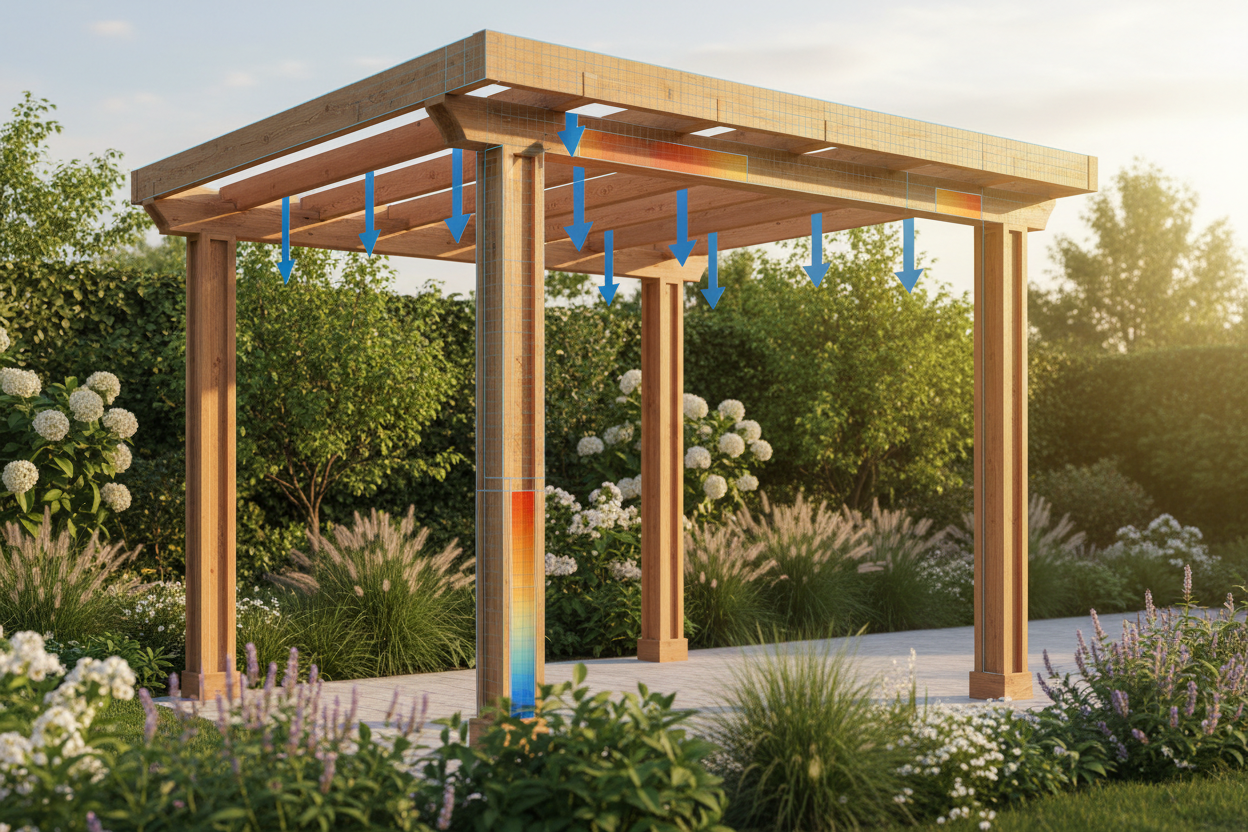
In pergola design, we deal with what engineers call “load paths.” These invisible highways carry weight from the roof structure down through posts and beams, finally transferring everything to the foundation. When these paths are properly designed, your pergola handles stress gracefully. When they’re compromised, failure becomes inevitable.
The beauty of custom pergola engineering lies in optimizing these load paths while maintaining aesthetic appeal. Unlike cookie-cutter designs, custom pergolas can incorporate site-specific factors like soil conditions, local weather patterns, and architectural integration requirements.
Types of Loads Acting on Pergolas
Pergolas face multiple types of forces simultaneously, each requiring different engineering approaches. Dead loads represent the structure’s own weight – beams, posts, roofing materials, and any permanent fixtures. These loads are constant and predictable, making them relatively straightforward to calculate.
Live loads include everything temporary that might be added to the structure. This encompasses people climbing for maintenance, hanging plants, lighting fixtures, or temporary decorations. While individually small, these loads can accumulate significantly, especially during events or seasonal decorating.
Environmental loads present the greatest challenge in pergola design. Wind creates both uplift and lateral forces that try to overturn or slide the structure. Snow accumulation adds substantial weight that varies by season and geographic location. Even rain can create temporary loading through water accumulation in roof valleys or on fabric covers.
Seismic loads, while less common, require consideration in earthquake-prone regions. These dynamic forces can shake structures in multiple directions simultaneously, demanding special attention to connection details and foundation anchoring.
Material Selection and Load Capacity
The relationship between material choice and load distribution is more nuanced than simply picking the strongest option. Different materials handle various types of stress differently, and the most effective pergola design matches material properties to specific loading conditions.
Wood remains popular for custom pergolas due to its excellent strength-to-weight ratio and natural aesthetic appeal. However, wood species vary dramatically in load capacity. Southern Yellow Pine offers excellent strength for structural applications, while cedar provides superior weather resistance but requires larger dimensions for equivalent load capacity.
Steel pergolas excel in environments with high wind or snow loads. Steel’s predictable properties and high strength allow for more slender profiles while maintaining structural integrity. The key lies in proper corrosion protection and thermal expansion accommodation in connection details.
Aluminum offers the best strength-to-weight ratio for pergola applications, particularly important when foundation conditions are challenging. Modern aluminum alloys provide surprising load capacity while eliminating corrosion concerns entirely.
Engineered lumber products like laminated veneer lumber (LVL) or glue-laminated beams offer consistent properties and can span greater distances than traditional lumber. These materials eliminate the natural defects found in solid wood, providing more predictable load distribution characteristics.
Foundation Requirements for Proper Load Transfer
The foundation represents the critical final link in the load distribution chain. All the careful engineering upstream becomes meaningless if forces cannot transfer safely into the ground. Custom pergola foundations must be sized and designed based on actual calculated loads, not rules of thumb.
Soil bearing capacity varies dramatically between locations, even within the same property. Clay soils might support 1,500 pounds per square foot, while sandy soils could handle 3,000 pounds or more. Professional soil analysis ensures foundation sizing matches actual site conditions rather than conservative assumptions.
Concrete footings must extend below the frost line to prevent heaving in cold climates. The footing size depends on both soil capacity and the loads being transferred. A common mistake involves using identical footings for all posts, regardless of their actual loading conditions.
Post-to-foundation connections deserve special attention in pergola design. Simple post bases might suffice for basic structures, but custom pergolas often require engineered connections capable of transferring both vertical loads and lateral forces. Hold-down anchors prevent uplift during high winds, while proper embedment depths ensure adequate load transfer.
Beam Sizing and Spacing Calculations
Proper beam sizing requires balancing multiple factors: span length, load requirements, deflection limits, and aesthetic preferences. The goal is creating a structure that’s neither over-engineered nor under-designed, achieving the perfect balance between safety and elegance.
Beam deflection often governs sizing more than ultimate strength. While a beam might safely carry the required loads, excessive sagging creates both aesthetic and functional problems. Most pergola designs target deflection limits of L/240 or L/360, meaning a 12-foot beam should deflect no more than 0.6 to 0.4 inches under full load.
Continuous beams spanning multiple supports distribute loads more efficiently than simple spans. This principle allows for smaller beam sizes or longer spans while maintaining the same load capacity. However, continuous beam design requires more sophisticated analysis to account for complex moment distributions.
Cantilever extensions add architectural interest but create significant engineering challenges. The cantilever length directly affects the required beam size and support reactions. A general rule limits cantilevers to 25% of the back span, but custom designs might push these limits with appropriate engineering analysis.
Connection Points and Hardware Engineering
Connections represent the most critical elements in pergola load distribution. These joints must transfer forces between different structural elements while accommodating material movement from temperature and moisture changes. Failure typically occurs at connections rather than within structural members themselves.
Beam-to-post connections vary widely in complexity and capacity. Simple notched connections work well for basic designs but limit load transfer capabilities. Engineered connections using bolts, brackets, or custom steel fabrications can handle much higher loads while providing greater design flexibility.
Hardware selection must match the specific loading conditions at each connection point. Standard construction hardware might not provide adequate capacity for pergola applications, particularly under wind loading. Galvanized or stainless steel hardware prevents corrosion-related failures that could compromise structural integrity.
Thermal movement accommodation becomes crucial in large pergola structures. Materials expand and contract with temperature changes, and connections must allow this movement while maintaining structural integrity. Slotted holes, expansion joints, or flexible connection details prevent stress concentrations that could lead to failure.
Wind Load Considerations in Pergola Design
Wind loading presents unique challenges for pergola structures due to their typically open configuration and relatively light weight. Unlike enclosed buildings, pergolas experience complex wind flow patterns that can create unexpected loading conditions.
Basic wind pressure calculations follow established building codes, but pergola applications require special consideration of wind flow through and around the structure. Solid roofing materials create different loading patterns than open lattice designs, and partial enclosures can create problematic wind tunnel effects.
Uplift forces often govern pergola design in high-wind areas. These forces try to lift the structure off its foundation, requiring adequate dead load or mechanical anchoring to resist. The relatively light weight of most pergolas means uplift resistance must come primarily from foundation connections rather than structural weight.
Lateral wind loads create overturning moments that must be resisted by the foundation system. Wider post spacing increases these moments significantly, requiring larger footings or additional bracing to maintain stability. Custom pergola designs can incorporate architectural bracing elements that enhance both structural performance and visual appeal.
Snow and Live Load Factors
Snow loading varies dramatically by geographic location and local microclimate conditions. Flat pergola roofs accumulate more snow than sloped surfaces, but even modest slopes can reduce loading significantly. Understanding local snow load requirements is essential for safe pergola design in cold climates.
Unbalanced snow loading creates additional design challenges. Wind can redistribute snow across a pergola roof, creating concentrated loads on some areas while leaving others clear. Drift patterns around adjacent buildings can also create higher-than-expected snow accumulations.
Live loads account for maintenance access, temporary decorations, and other variable loading conditions. While building codes provide minimum live load requirements, custom pergola applications might require higher values depending on intended use. Pergolas designed for heavy plant installations or extensive lighting systems need increased live load capacity.
Dynamic loading from wind-induced vibration can amplify both live and environmental loads. Proper structural design includes consideration of natural frequencies to avoid resonance conditions that could lead to fatigue failures over time.
Common Load Distribution Mistakes to Avoid
One of the most frequent errors in pergola design involves underestimating connection requirements. Many DIY builders focus on beam and post sizing while neglecting the hardware needed to transfer loads between these elements. Inadequate connections create weak links that compromise the entire structural system.
Ignoring local building codes and permit requirements can lead to both safety and legal issues. Many jurisdictions require engineered drawings and permits for pergola construction, particularly for larger or more complex designs. Working without permits can create liability issues and complicate future property sales.
Uniform loading assumptions often lead to over-conservative or under-designed structures. Real pergolas experience varying loads across their span, and efficient design accounts for these variations. Corner posts typically carry different loads than interior posts, requiring different foundation and connection details.
Neglecting long-term maintenance access creates both safety and practical problems. Pergola designs should include provisions for safely accessing all structural elements for inspection and maintenance. This might involve permanent ladder attachments, access platforms, or removable panels.
Professional Engineering vs DIY Considerations
The complexity of modern pergola designs often exceeds the scope of typical DIY projects. While simple, small pergolas might be suitable for experienced builders, custom designs with complex geometry, large spans, or challenging site conditions benefit from professional engineering input.
Liability considerations extend beyond immediate safety concerns. Improperly designed pergolas can cause property damage, personal injury, or insurance complications. Professional engineering provides both technical expertise and liability protection that can prove invaluable over the structure’s lifetime.
Cost-benefit analysis often favors professional design for custom pergolas. While engineering fees represent an upfront cost, proper design can reduce material requirements, simplify construction, and prevent costly failures or modifications later. The peace of mind from knowing your pergola is properly engineered is often worth the investment alone.
Local building officials increasingly require engineered drawings for pergola permits, particularly in high-wind or seismic areas. Having professional drawings from the start streamlines the permit process and ensures code compliance from the beginning.
Frequently Asked Questions
How do I know if my pergola needs engineered drawings?
Most pergolas over 200 square feet, those with spans exceeding 12 feet, or structures in high-wind areas benefit from professional engineering. Check local building codes, as many jurisdictions require engineered drawings for pergola permits regardless of size.
What’s the maximum span for a pergola beam without intermediate support?
Maximum spans depend on beam material, size, and loading conditions. Typical wood beams might span 10-16 feet, while engineered lumber or steel can achieve much longer spans. Professional analysis is required for spans over 16 feet or unusual loading conditions.
How deep should pergola footings be?
Footing depth depends on soil conditions, frost line depth, and structural loads. Most areas require footings extending at least 6 inches below the frost line, with minimum depths of 18-24 inches in non-freezing climates. Larger pergolas or poor soil conditions may require deeper footings.
Can I attach a pergola to my house without special engineering?
Attached pergolas create additional loading on the house structure and typically require engineering analysis to ensure the existing building can handle the added loads. Improper attachment can damage the house or create dangerous conditions.
What wind speed should my pergola be designed for?
Design wind speeds vary by location and are specified in local building codes. Most areas require design for 90-120 mph winds, but coastal or mountainous regions might require higher values. Your local building department can provide the required design wind speed for your area.
How much does professional pergola engineering typically cost?
Engineering fees typically range from $500-2000 for residential pergolas, depending on complexity and local rates. This investment often pays for itself through optimized material usage, faster permit approval, and peace of mind regarding structural safety.
Understanding the science behind pergola load distribution empowers you to make informed decisions about your outdoor living investment. While the engineering principles might seem complex, they ensure your custom pergola provides decades of safe, beautiful outdoor enjoyment. Whether you choose to tackle the project yourself or work with professionals, this knowledge helps you appreciate the careful balance between form and function that makes great pergola design possible.

Lowry Crossing TX custom pergolas | Keathley Landscaping

Sachse TX pergolas | Keathley Landscaping

Lucas TX outdoor living contractor | Keathley Landscaping

Dallas TX custom patio cover builders | Keathley Landscaping

Garland TX custom wood pergola | Keathley Landscaping

Rowlett TX luxury custom pergolas | Keathley Landscaping

Lowry Crossing TX custom patio covers | Keathley Landscaping

Sachse TX luxury custom pergolas | Keathley Landscaping

Lowry Crossing TX custom patio cover cost | Keathley Landscaping

Richardson TX pergola companies near me | Keathley Landscaping

Rockwall TX pergola builders | Keathley Landscaping

Rowlett TX pergolas | Keathley Landscaping

Lavon TX covered patios | Keathley Landscaping

McKinney TX custom pergolas | Keathley Landscaping

Rowlett TX pergola builders | Keathley Landscaping

Plano TX pergolas | Keathley Landscaping

Fate TX covered patio contractors near me | Keathley Landscaping

Allen TX custom pergolas | Keathley Landscaping

Lakewood Dallas TX outdoor living space contractors | Keathley Landscaping

Mobile City TX custom patio cover builders | Keathley Landscaping

Rose Hill TX custom wood pergola | Keathley Landscaping

Highland Park TX luxury custom pergolas | Keathley Landscaping

Rowlett TX outdoor living space contractors | Keathley Landscaping

Plano TX luxury custom pergolas | Keathley Landscaping

Plano TX covered patios | Keathley Landscaping

Fate TX custom wood pergola | Keathley Landscaping

Fate TX pergola builders | Keathley Landscaping

Highland Park TX outdoor living contractor | Keathley Landscaping

price for sod installation Rowlett Texas

sod installation near me Lakewood Dallas Texas

grass installation Plano Texas

cost of sod installation Rowlett Texas

sod installation services Murphy Texas

sod contractors Lucas Texas

sod installation company near me Rowlett Texas

sod installation near me Allen Texas

cost of sod and installation Lavon Texas

sod lawn installation Frisco Texas

price for sod installation Sachse Texas

cost for sod installation Rose Hill Texas

grass contractor Mobile City Texas

lawn sod installation near me Rose Hill Texas

sod company Richardson Texas

new sod installation McKinney Texas

lawn sod installation Plano Texas

price for sod installation Lakewood Dallas Texas

sod contractors Lavon Texas

residential sod installation Garland Texas

grass contractor McKinney Texas

lawn sod installation Sachse Texas

sod grass installation Richardson Texas

sod contractors Plano Texas

cost of sod and installation Sachse Texas

sod installation company Garland Texas

sod installation services Lucas Texas

lawn sod installation near me Lakewood Dallas Texas

drainage solutions near me McKinney Texas

yard drainage contractors near me Wylie Texas

drainage specialist near me Plano Texas

drainage contractors near me Parker Texas

drain cleaning Lake Highlands Dallas Texas

landscape drainage Lucas Texas

landscape drainage Rockwall Texas

drainage contractors near me Lowry Crossing Texas

drainage company near me Sachse Texas

drain contractor Garland Texas

drain cleaning Lowry Crossing Texas

drainage company Rockwall Texas

drainage specialist near me Mobile City Texas

drainage solutions near me Fairview Texas

drainage company near me Parker Texas

drain contractor Sachse Texas

landscape drainage Sachse Texas

drainage specialist near me Sachse Texas

drain cleaning company near me Lavon Texas

landscape drain Parker Texas

drainage company Fate Texas

outdoor drain repair Murphy Texas

drainage specialist near me Garland Texas

drainage specialist near me Rockwall Texas

outdoor drain repair Preston Hollow Dallas Texas

drain contractor Lavon Texas

channel drain cleaning Murphy Texas

Recent Comments