
Custom Pergola Hardware Maintenance: Preventing Rust and Corrosion
Table of Contents
1. Introduction
2. Understanding Rust and Corrosion in Pergola Hardware
3. Common Types of Pergola Hardware Susceptible to Rust
4. Environmental Factors That Accelerate Corrosion
5. Essential Maintenance Techniques for Rust Prevention
6. Seasonal Maintenance Schedule for Pergola Hardware
7. Protective Coatings and Treatments
8. When to Replace vs. Repair Corroded Hardware
9. Professional Maintenance Services vs. DIY Approach
10. Long-term Cost Benefits of Proper Maintenance
11. Frequently Asked Questions
12. Conclusion
Introduction
Your custom pergola represents a significant investment in your outdoor living space, transforming your backyard into a beautiful retreat where memories are made. However, like any outdoor structure, pergolas face constant challenges from Mother Nature. The hardware that holds your pergola together – those crucial bolts, brackets, screws, and connectors – are particularly vulnerable to rust and corrosion.
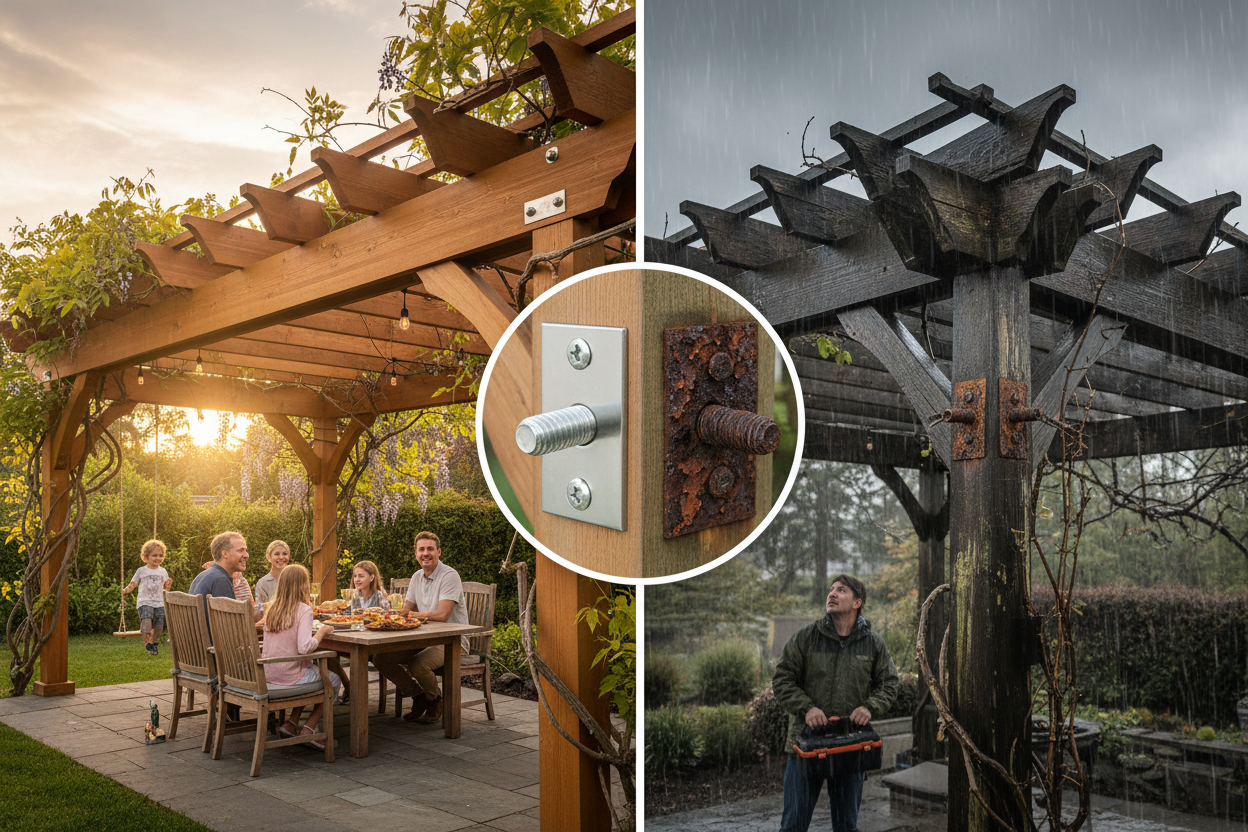
I’ve seen too many beautiful pergolas deteriorate prematurely because homeowners overlooked the importance of hardware maintenance. The good news? With proper care and attention, you can extend the life of your pergola hardware significantly, saving thousands in replacement costs while maintaining the structural integrity and aesthetic appeal of your outdoor sanctuary.
This comprehensive guide will walk you through everything you need to know about preventing rust and corrosion in your custom pergola hardware, from understanding the science behind metal deterioration to implementing practical maintenance strategies that actually work.
Understanding Rust and Corrosion in Pergola Hardware
Before diving into prevention strategies, it’s essential to understand what we’re fighting against. Rust and corrosion aren’t just cosmetic issues – they’re chemical processes that can compromise the structural integrity of your entire pergola.
Rust specifically affects iron and steel components when they react with oxygen and moisture. This electrochemical process creates iron oxide, which we recognize as that familiar reddish-brown flaking material. Corrosion, however, is a broader term that encompasses the deterioration of various metals, including aluminum, copper, and stainless steel.
The process begins microscopically, often in areas where protective coatings have been scratched or worn away. Once started, rust and corrosion can spread rapidly, especially in harsh weather conditions. What starts as a small spot can quickly become a structural weak point that compromises your pergola’s safety and longevity.
Common Types of Pergola Hardware Susceptible to Rust
Not all pergola hardware faces the same level of risk. Understanding which components are most vulnerable helps you prioritize your maintenance efforts and budget accordingly.
Galvanized steel bolts and screws are among the most common culprits. While the galvanized coating provides initial protection, it can wear away over time, especially at connection points where metal rubs against metal. Brackets and joist hangers, particularly those in contact with treated lumber, face additional challenges from chemical interactions.
Hinges and moving parts deserve special attention because they experience mechanical wear that can compromise protective coatings. Chain and cable hardware, if your pergola includes retractable elements, are especially vulnerable due to their constant exposure and movement.
Interestingly, stainless steel hardware, while more resistant to corrosion, isn’t immune. In coastal environments or areas with high chloride content, even stainless steel can develop pitting and corrosion over time.
Environmental Factors That Accelerate Corrosion
Your pergola’s location plays a crucial role in determining how aggressively you need to approach hardware maintenance. Coastal properties face the double challenge of salt air and high humidity, creating an environment where corrosion can occur at an accelerated pace.
Industrial areas present their own challenges, with airborne pollutants and acid rain contributing to faster metal deterioration. Even in seemingly benign suburban settings, factors like sprinkler systems, pool chemicals, and fertilizers can create localized corrosive conditions.
Temperature fluctuations cause metals to expand and contract, creating stress points where protective coatings can crack. Areas that experience frequent freeze-thaw cycles face additional challenges, as moisture can penetrate small cracks and cause significant damage when it freezes and expands.
Shade and ventilation also matter more than you might expect. Hardware in constantly damp, poorly ventilated areas will corrode faster than components that dry out regularly between weather events.
Essential Maintenance Techniques for Rust Prevention
The foundation of effective rust prevention lies in regular inspection and proactive maintenance. I recommend establishing a routine that becomes second nature, much like checking your car’s oil or cleaning your gutters.
Start with a thorough visual inspection every three months. Look for discoloration, flaking, or rough textures that might indicate the beginning of corrosion. Pay special attention to joints, crevices, and areas where different metals meet, as these are prime locations for galvanic corrosion.
Cleaning is more important than many homeowners realize. Use a soft brush or cloth with mild soap and water to remove dirt, debris, and salt deposits that can trap moisture against metal surfaces. For stubborn deposits, a solution of white vinegar and water can be effective without being overly aggressive.
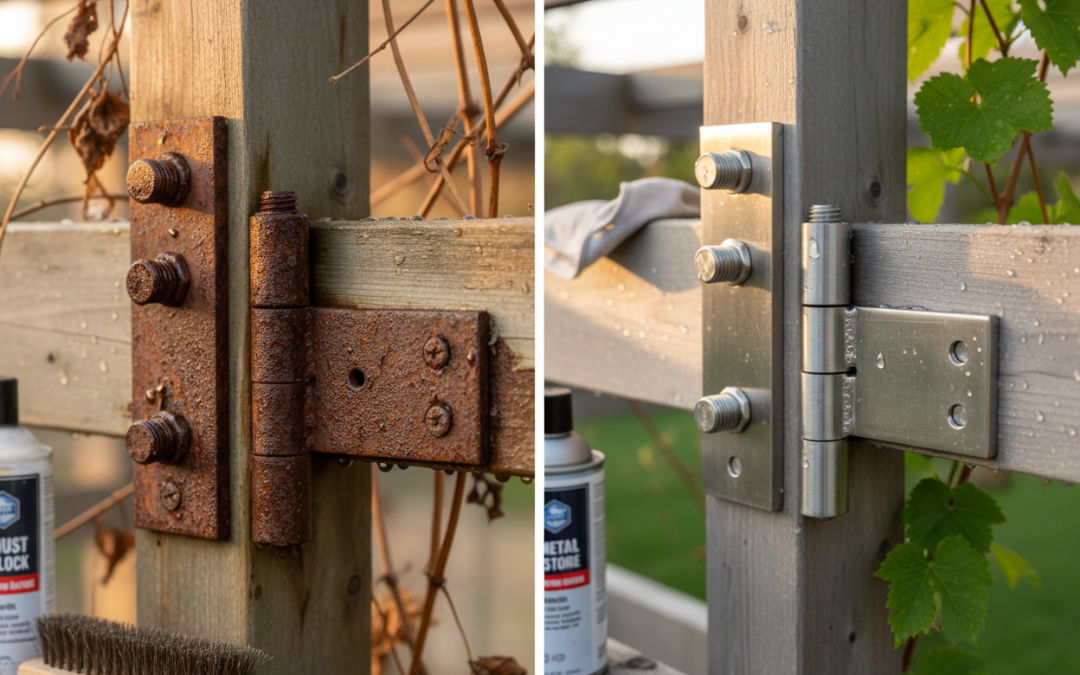
When you discover early-stage rust, address it immediately. Light surface rust can often be removed with fine steel wool or a wire brush, followed by thorough cleaning and the application of a rust-inhibiting primer and paint. The key is catching it early – once rust has eaten deeply into the metal, repair becomes much more challenging and expensive.
Lubrication plays a vital role in maintaining moving parts. Use marine-grade lubricants that resist washout and provide long-lasting protection. Apply lubricant to hinges, pivot points, and any hardware that moves or adjusts.
Seasonal Maintenance Schedule for Pergola Hardware
Creating a seasonal maintenance schedule helps ensure that hardware care doesn’t get overlooked in the busy rhythm of daily life. Each season brings specific challenges and opportunities for maintenance.
Spring represents the perfect time for a comprehensive inspection after winter’s harsh conditions. Look for any damage caused by ice, snow loading, or freeze-thaw cycles. This is also an ideal time to apply protective coatings, as moderate temperatures and lower humidity create optimal conditions for proper curing.
Summer maintenance focuses on cleaning and lubrication. The warm, dry conditions make it easier to thoroughly clean hardware and ensure all surfaces are completely dry before applying protective treatments. However, avoid working in direct sunlight on extremely hot days, as this can cause coatings to cure too quickly and become brittle.
Fall preparation is crucial for pergolas in harsh winter climates. Apply a final protective coating, ensure all hardware is properly lubricated, and consider removing or protecting any particularly vulnerable components. This is also the time to address any issues discovered during summer use.
Winter monitoring might seem less important, but periodic checks during mild weather can help you identify problems before they become serious. Look for ice buildup that might stress hardware and ensure that snow loads aren’t exceeding design limits.
Protective Coatings and Treatments
The right protective coating can dramatically extend the life of your pergola hardware, but choosing the appropriate product requires understanding the specific challenges your hardware faces.
Rust-inhibiting primers form the foundation of any good protection system. These products chemically bond with metal surfaces and provide a barrier against moisture and oxygen. For previously rusted areas, consider using a rust converter that actually transforms rust into a protective coating.
Topcoat selection depends on your specific environment and aesthetic preferences. Marine-grade paints offer excellent protection in harsh conditions but may require more frequent touch-ups. Powder coatings provide superior durability but typically require professional application.
For hardware that’s difficult to paint, such as bolts and screws, consider using penetrating oils or wax-based protectants. These products can reach into threads and crevices where traditional coatings might not penetrate effectively.
Don’t overlook the importance of proper surface preparation. Even the best coating will fail if applied over rust, dirt, or old paint that isn’t properly bonded. Take the time to clean, sand, and prime surfaces properly – it’s the difference between a coating that lasts two years and one that protects for a decade.
When to Replace vs. Repair Corroded Hardware
Knowing when to repair versus replace corroded hardware can save you money and ensure your pergola remains safe and structurally sound. This decision often comes down to understanding the extent of damage and the critical nature of each component.
Surface rust on non-critical components can often be successfully treated with cleaning, rust removal, and protective coating. However, any hardware that shows significant pitting, cracking, or dimensional changes should be replaced immediately. Structural bolts and brackets fall into this category – when in doubt, replace them.
Consider the age and quality of the original hardware when making repair decisions. Sometimes it makes more sense to upgrade to higher-quality, more corrosion-resistant hardware rather than repeatedly repairing inferior components.
Keep detailed records of when hardware was installed or last replaced. This information helps you make informed decisions about expected service life and replacement scheduling. Most galvanized hardware should be replaced every 10-15 years in normal conditions, while stainless steel components might last 20-30 years or more.
Professional Maintenance Services vs. DIY Approach
While many aspects of pergola hardware maintenance can be handled by motivated homeowners, some situations call for professional expertise. Understanding when to tackle maintenance yourself and when to call in professionals can save both time and money.
DIY maintenance works well for routine cleaning, inspection, and basic protective coating application. Most homeowners can successfully handle these tasks with basic tools and materials. The key is being honest about your skill level and available time.
Professional services become valuable when dealing with extensive corrosion, structural concerns, or when working at height poses safety risks. Professionals also have access to specialized coatings and application equipment that can provide superior long-term protection.
Consider a hybrid approach where you handle routine maintenance but have professionals perform annual comprehensive inspections and major repairs. This strategy provides the best balance of cost-effectiveness and expertise.
Long-term Cost Benefits of Proper Maintenance
Investing in proper hardware maintenance pays significant dividends over the life of your pergola. While the upfront costs of quality protective coatings and regular maintenance might seem substantial, they pale in comparison to the cost of premature replacement.
A well-maintained pergola can last 25-30 years or more, while neglected structures might require major repairs or replacement within 10-15 years. When you consider that a custom pergola can cost $15,000-$50,000 or more, the economics of maintenance become compelling.
Beyond direct cost savings, proper maintenance preserves your property value and ensures that your outdoor living space remains safe and enjoyable for years to come. There’s also the intangible value of not having to deal with emergency repairs or safety concerns during peak outdoor season.
Frequently Asked Questions
How often should I inspect my pergola hardware for rust and corrosion?
Perform visual inspections every three months, with more thorough examinations twice yearly. In harsh coastal or industrial environments, monthly checks are recommended during peak weather seasons.
Can I use regular automotive paint on pergola hardware?
While automotive paints offer good protection, marine-grade coatings are specifically formulated for outdoor exposure and typically provide superior longevity for pergola applications.
What’s the difference between galvanized and stainless steel hardware?
Galvanized steel is regular steel coated with zinc for corrosion protection, while stainless steel is an alloy that’s inherently corrosion-resistant. Stainless steel generally lasts longer but costs more initially.
Is it normal for stainless steel hardware to show some discoloration?
Yes, stainless steel can develop surface staining, especially in coastal environments. This is usually cosmetic and doesn’t affect structural integrity, but it should be monitored and cleaned regularly.
How do I remove rust stains from surrounding wood or concrete?
Use oxalic acid (wood bleach) for wood surfaces and muriatic acid solutions for concrete. Always test in an inconspicuous area first and follow all safety precautions.
Should I be concerned about different types of metals touching each other?
Yes, galvanic corrosion can occur when dissimilar metals are in direct contact, especially in the presence of moisture. Use insulating washers or gaskets to separate different metals when possible.
Conclusion
Maintaining your custom pergola hardware doesn’t have to be overwhelming or expensive, but it does require consistent attention and the right approach. By understanding the causes of rust and corrosion, implementing a regular maintenance schedule, and using appropriate protective measures, you can significantly extend the life of your pergola while preserving its beauty and structural integrity.
Remember that prevention is always more cost-effective than repair or replacement. The small investment in time and materials for regular maintenance pays enormous dividends in the long run, ensuring that your pergola continues to provide enjoyment and add value to your property for decades to come.
Start implementing these maintenance practices today, and you’ll be amazed at how much longer your pergola hardware will last. Your future self – and your wallet – will thank you for the effort you put in now to protect this valuable outdoor investment.

Richardson TX custom patio covers | Keathley Landscaping

Dallas TX covered patios | Keathley Landscaping

Mobile City TX pergola builders | Keathley Landscaping

Fairview TX custom wood pergola | Keathley Landscaping

Lucas TX outdoor living contractor | Keathley Landscaping

Lowry Crossing TX outdoor living contractor | Keathley Landscaping

Highland Park TX custom patio cover cost | Keathley Landscaping

Garland TX pergola builders | Keathley Landscaping

McKinney TX custom wood pergola | Keathley Landscaping

Preston Hollow Dallas TX custom wood pergola | Keathley Landscaping

Highland Park TX custom pergolas | Keathley Landscaping

Rowlett TX custom patio cover builders | Keathley Landscaping

Parker TX luxury custom pergolas | Keathley Landscaping

Lake Highlands Dallas TX custom patio cover cost | Keathley Landscaping

Fairview TX custom patio covers | Keathley Landscaping

Lucas TX pergola companies near me | Keathley Landscaping

Rowlett TX custom pergolas | Keathley Landscaping

Lake Highlands Dallas TX covered patios | Keathley Landscaping

Lakewood Dallas TX pergola builders | Keathley Landscaping

Fairview TX luxury custom pergolas | Keathley Landscaping

Fate TX pergolas | Keathley Landscaping

Lakewood Dallas TX custom patio cover cost | Keathley Landscaping

Lowry Crossing TX pergola builders | Keathley Landscaping

Rowlett TX covered patios | Keathley Landscaping

McKinney TX custom patio cover cost | Keathley Landscaping

Sachse TX custom patio covers | Keathley Landscaping

Wylie TX outdoor living space contractors | Keathley Landscaping

Preston Hollow Dallas TX custom patio covers | Keathley Landscaping

cost for sod installation Allen Texas

installation of sod cost Richardson Texas

sod installation company Lavon Texas

grass installation Lavon Texas

sod installation company near me Preston Hollow Dallas Texas

sod installation near me Mobile City Texas

price of sod installation Fairview Texas

residential sod installation Lucas Texas

lawn sod installation near me Allen Texas

sod installation cost Rowlett Texas

sod lawn installation Fate Texas

sod contractors Allen Texas

price for sod installation Allen Texas

sod grass installation Garland Texas

sod installation cost Sachse Texas

sod grass installation Murphy Texas

new sod installation Richardson Texas

new sod installation Preston Hollow Dallas Texas

sod grass installation Dallas Texas

sod lawn installation Murphy Texas

residential sod installation Lake Highlands Dallas Texas

sod grass installation Preston Hollow Dallas Texas

sod installation services Wylie Texas

price of sod installation Fate Texas

sod installation cost Lucas Texas

residential sod installation Frisco Texas

installation of sod cost Wylie Texas

sod installation company Lucas Texas

drainage Highland Park Texas

drainage company near me Lake Highlands Dallas Texas

drain cleaning company near me Parker Texas

drain Fairview Texas

landscape drain McKinney Texas

yard drainage specialist near me Lucas Texas

drainage specialist near me McKinney Texas

yard drainage specialist near me Rockwall Texas

yard drainage contractors near me Frisco Texas

drainage company Dallas Texas

drain cleaning company near me Lake Highlands Dallas Texas

drainage company near me Lowry Crossing Texas

yard drainage contractors near me Richardson Texas

yard drainage Parker Texas

landscape drain Garland Texas

landscape drainage Lake Highlands Dallas Texas

drainage Fairview Texas

outdoor drain repair Mobile City Texas

landscape drain Preston Hollow Dallas Texas

yard drainage contractors near me Highland Park Texas

landscape drainage Fate Texas

drainage company near me Parker Texas

channel drain cleaning Plano Texas

landscape drainage Dallas Texas

drainage contractors near me Lake Highlands Dallas Texas

channel drain cleaning Mobile City Texas

drainage company McKinney Texas

Recent Comments