
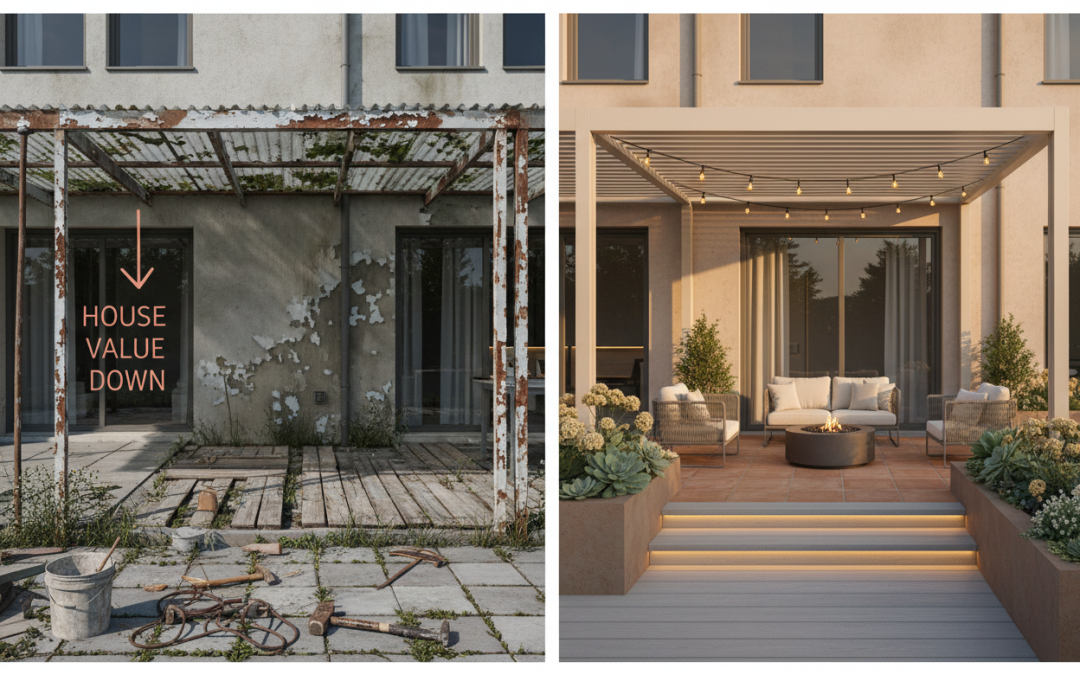
Top 8 Custom Patio Cover Mistakes That Decrease Home Value
Table of Contents
1. Introduction
2. Choosing the Wrong Materials for Your Climate
3. Ignoring Local Building Codes and Permits
4. Poor Proportions and Scale Issues
5. Inadequate Drainage and Water Management
6. Mismatched Architectural Styles
7. Skimping on Professional Installation
8. Blocking Natural Light and Views
9. Neglecting Long-term Maintenance Considerations
10. Conclusion
11. Frequently Asked Questions
Introduction
A custom patio cover can transform your outdoor living space into a year-round retreat while potentially boosting your home’s value. However, when done incorrectly, these additions can actually harm your property’s worth and appeal to future buyers. I’ve seen countless homeowners make costly mistakes that turn what should be an asset into a liability.
Whether you’re planning to install a new patio cover or evaluating an existing one, understanding these common pitfalls can save you thousands of dollars and protect your investment. From material selection to design choices, every decision matters when it comes to maintaining and increasing your home’s market value.
Let’s explore the eight most critical mistakes that can decrease your home value, along with practical solutions to avoid or fix them.
Choosing the Wrong Materials for Your Climate
One of the biggest mistakes homeowners make is selecting patio cover materials without considering their local climate conditions. What works beautifully in Arizona might fail miserably in Seattle, and vice versa.
In humid climates, untreated wood covers can quickly develop mold, mildew, and rot issues that create unsightly stains and structural problems. Meanwhile, metal covers in coastal areas without proper corrosion-resistant coatings will rust and deteriorate rapidly, creating an eyesore that screams “maintenance nightmare” to potential buyers.
The solution lies in choosing climate-appropriate materials from the start. For wet climates, consider aluminum, vinyl, or properly treated composite materials. In areas with intense sun exposure, opt for materials with UV-resistant properties and adequate thermal expansion capabilities. Desert climates demand materials that can handle extreme temperature fluctuations without cracking or warping.
Smart material choices not only preserve your home’s value but also reduce long-term maintenance costs, making your property more attractive to cost-conscious buyers.
Ignoring Local Building Codes and Permits
Nothing kills a home sale faster than discovering unpermitted additions during the inspection process. Many homeowners assume patio covers are simple structures that don’t require permits, but this assumption can be financially devastating.
Most municipalities have specific requirements for patio covers, especially regarding size, height, setbacks from property lines, and structural specifications. When these requirements are ignored, you might face forced removal, expensive retrofitting, or significant price reductions during negotiations.
I’ve witnessed deals fall through entirely because buyers couldn’t secure financing for homes with unpermitted structures. Lenders view unpermitted additions as potential liabilities, and rightfully so.
Before starting any patio cover project, contact your local building department to understand permit requirements. Yes, it adds time and cost upfront, but it protects your investment and ensures smooth transactions when selling. Proper permits also demonstrate to buyers that the work was done professionally and safely.
Poor Proportions and Scale Issues
A patio cover that’s too large can overwhelm your home’s architecture, while one that’s too small looks awkward and incomplete. Both scenarios negatively impact curb appeal and perceived value.
Oversized covers often violate the principle of proportion that makes homes visually appealing. They can make your house appear smaller by comparison or create an unbalanced look that feels “off” to viewers. Conversely, undersized covers look like afterthoughts and fail to provide adequate coverage for outdoor furniture and activities.
The key is finding the sweet spot that complements your home’s existing proportions. A good rule of thumb is that your patio cover should extend far enough to provide meaningful shade and protection but not so far that it dominates the rear elevation of your home.
Consider the sight lines from inside your home as well. The cover should frame outdoor views attractively rather than creating a tunnel effect or blocking important vistas. Professional designers often use the golden ratio and other architectural principles to ensure pleasing proportions that enhance rather than detract from your home’s overall appeal.
Inadequate Drainage and Water Management
Water damage is one of the fastest ways to destroy property value, and poorly designed patio covers often create drainage problems that didn’t exist before installation. Without proper planning, your beautiful new cover can become a source of foundation damage, flooding, and structural issues.
Common drainage mistakes include covers that direct water toward the house foundation, inadequate gutter systems, and failure to account for increased water volume during heavy rains. Some homeowners install flat or nearly flat covers that allow water to pool, creating leaks and potential collapse risks.
Effective water management starts with proper slope design that directs water away from your home’s foundation. This typically means a minimum slope of 1/4 inch per foot toward appropriate drainage points. Quality gutter systems with adequate capacity for your roof area are essential, along with downspouts that discharge water well away from the foundation.
Don’t forget about the area under your cover either. Proper grading and potentially adding drainage solutions like French drains can prevent water from pooling around your patio and creating soggy, unusable spaces that buyers will see as problems rather than benefits.
Mismatched Architectural Styles
Your patio cover should feel like a natural extension of your home, not an obvious add-on that clashes with the existing architecture. Style mismatches create visual discord that makes your entire property feel less cohesive and well-planned.
I’ve seen Mediterranean-style homes with ultra-modern steel and glass covers that look completely out of place, and contemporary homes with ornate Victorian-inspired covers that seem like they belong in different centuries. These jarring contrasts make buyers question the homeowner’s judgment and wonder what other mismatched improvements they might encounter.
The most successful patio covers either match the home’s existing architectural style closely or complement it with a thoughtful, harmonious design. This might mean using similar materials, repeating design elements like column styles or rooflines, or choosing colors that coordinate with the home’s exterior palette.
When in doubt, err on the side of simplicity and compatibility. A well-designed cover that feels integrated with your home’s architecture will always be more valuable than an elaborate structure that looks like it was dropped in from another property.
Skimping on Professional Installation
The temptation to save money through DIY installation or hiring the lowest bidder often backfires spectacularly when it comes to patio covers. Poor installation creates safety hazards, premature failure, and obvious quality issues that savvy buyers will spot immediately.
Common installation problems include inadequate footings that can’t support the structure’s weight, improper flashing that allows water infiltration, and connections that don’t meet structural requirements. These issues aren’t just cosmetic problems – they’re safety hazards that can result in collapse, injury, and significant liability concerns.
Professional installers bring expertise in local building codes, proper construction techniques, and quality materials. They also typically provide warranties that protect your investment and give buyers confidence in the structure’s reliability.
While professional installation costs more upfront, it pays dividends in longevity, safety, and resale value. Buyers can often tell the difference between professional and amateur work, and they’re willing to pay more for structures they trust won’t require immediate repairs or replacement.
Blocking Natural Light and Views
Natural light is one of the most desired features in any home, and patio covers that significantly reduce interior lighting can actually decrease your property value despite adding outdoor living space. The key is finding the right balance between shade and openness.
Solid covers that completely block sunlight can make adjacent interior spaces feel dark and cramped, especially if they cover large areas near windows or sliding doors. This is particularly problematic in homes where the patio area is visible from main living spaces like kitchens or family rooms.
Similarly, covers that block attractive views – whether of landscaping, mountains, or other desirable vistas – can reduce the perceived value of your home’s location and setting. Buyers often pay premiums for homes with good views, so blocking them with poorly designed covers is counterproductive.
Consider options like lattice work, pergola-style designs, or partial covers that provide shade while maintaining light and views. Retractable covers or adjustable louvers offer flexibility to control light and shade as needed while preserving the option for full openness when desired.
Neglecting Long-term Maintenance Considerations
A patio cover that requires extensive ongoing maintenance can quickly become a liability rather than an asset. Buyers today are increasingly conscious of maintenance requirements and total cost of ownership when evaluating properties.
High-maintenance materials like untreated wood that requires annual staining, or complex designs with hard-to-reach areas that collect debris, can deter buyers who want low-maintenance outdoor spaces. Similarly, covers with numerous small parts, moving components, or specialized cleaning requirements may be seen as more trouble than they’re worth.
The most valuable patio covers are those that look great with minimal ongoing care. This typically means choosing durable, weather-resistant materials and simple, clean designs that age gracefully. Features like integrated gutter systems, easy-to-clean surfaces, and accessible components for routine maintenance add value by reducing long-term hassles.
When planning your patio cover, think beyond the initial installation to consider how it will look and function five or ten years down the road. Buyers appreciate improvements that enhance their lifestyle without creating ongoing obligations or expenses.
Conclusion
A well-designed and properly installed custom patio cover can be a significant asset that enhances your outdoor living experience while boosting your home’s value. However, avoiding these eight common mistakes is crucial to ensuring your investment pays off both in daily enjoyment and eventual resale value.
Remember that the best patio covers feel like natural extensions of your home, complement the existing architecture, and provide practical benefits without creating new problems. By choosing appropriate materials, following proper procedures, and focusing on quality installation, you can create an outdoor space that adds lasting value to your property.
Whether you’re planning a new installation or evaluating an existing cover, use this guide to make informed decisions that protect and enhance your home’s worth. The investment in doing things right the first time will pay dividends for years to come, both in your enjoyment of the space and in maintaining your property’s market appeal.
Frequently Asked Questions
Q: Do I always need a permit for a patio cover?
A: Permit requirements vary by location and project scope. Most municipalities require permits for permanent structures, especially those attached to the house or exceeding certain size limits. Always check with your local building department before starting construction.
Q: What’s the best material for a patio cover in terms of home value?
A: The best material depends on your climate and home style, but aluminum, vinyl, and composite materials generally offer the best combination of durability, low maintenance, and broad buyer appeal. Wood can add value when properly treated and maintained.
Q: How much should I expect to spend on a quality patio cover?
A: Costs vary widely based on size, materials, and complexity, typically ranging from $3,000 to $15,000 or more for custom installations. Remember that professional installation and quality materials are investments in long-term value.
Q: Can a patio cover actually decrease my home value?
A: Yes, poorly designed, unpermitted, or low-quality patio covers can decrease home value by creating maintenance issues, blocking light and views, or simply looking unprofessional. Quality and proper installation are essential.
Q: Should my patio cover match my home’s existing roofline?
A: While exact matching isn’t always necessary, your patio cover should complement your home’s architectural style and proportions. The goal is creating a cohesive look that appears intentional and well-planned rather than added as an afterthought.

Preston Hollow Dallas TX custom patio covers | Keathley Landscaping

Richardson TX pergola companies near me | Keathley Landscaping

Lakewood Dallas TX covered patio contractors near me | Keathley Landscaping

Allen TX custom patio cover cost | Keathley Landscaping

Rose Hill TX luxury custom pergolas | Keathley Landscaping

Murphy TX custom pergolas | Keathley Landscaping

Lucas TX outdoor living space contractors | Keathley Landscaping

Frisco TX custom patio covers | Keathley Landscaping

Rowlett TX custom patio cover cost | Keathley Landscaping

Lake Highlands Dallas TX covered patio contractors near me | Keathley Landscaping

Wylie TX luxury custom pergolas | Keathley Landscaping

Fate TX pergola builders | Keathley Landscaping

Lakewood Dallas TX pergola companies near me | Keathley Landscaping

Lavon TX custom patio cover builders | Keathley Landscaping

Highland Park TX custom pergolas | Keathley Landscaping

Parker TX custom patio covers | Keathley Landscaping

Highland Park TX outdoor living space contractors | Keathley Landscaping

Fate TX pergolas | Keathley Landscaping

Lavon TX luxury custom pergolas | Keathley Landscaping

Lake Highlands Dallas TX outdoor living contractor | Keathley Landscaping

Preston Hollow Dallas TX pergola companies near me | Keathley Landscaping

Highland Park TX pergolas | Keathley Landscaping

Sachse TX custom patio cover builders | Keathley Landscaping

Rockwall TX custom patio cover cost | Keathley Landscaping

Frisco TX pergola companies near me | Keathley Landscaping

Fairview TX luxury custom pergolas | Keathley Landscaping

Mobile City TX outdoor living space contractors | Keathley Landscaping

Garland TX pergola companies near me | Keathley Landscaping

cost for sod installation Preston Hollow Dallas Texas

lawn sod installation Rowlett Texas

lawn sod installation near me McKinney Texas

sod installation services Dallas Texas

sod contractors Lakewood Dallas Texas

sod grass installation Highland Park Texas

grass installation Highland Park Texas

sod contractors Parker Texas

sod installation services Wylie Texas

sod installation cost Richardson Texas

sod company Fairview Texas

price for sod installation Murphy Texas

installation of sod cost Rose Hill Texas

sod contractors McKinney Texas

sod installation near me Parker Texas

lawn sod installation near me Richardson Texas

cost of sod installation Allen Texas

cost of sod and installation Dallas Texas

cost for sod installation Lake Highlands Dallas Texas

residential sod installation Garland Texas

new sod installation Preston Hollow Dallas Texas

sod company Rose Hill Texas

price of sod installation Fate Texas

sod installation companies Frisco Texas

sod grass installation Sachse Texas

sod installation cost Rowlett Texas

sod installation companies near me Murphy Texas

sod grass installation Dallas Texas

drainage company Rockwall Texas

landscape drainage Allen Texas

drainage company near me Lavon Texas

yard drainage specialist near me Murphy Texas

yard drainage specialist near me Lowry Crossing Texas

yard drainage Richardson Texas

drain cleaning company near me Fate Texas

drainage company near me Preston Hollow Dallas Texas

landscape drainage contractor near me Lake Highlands Dallas Texas

outdoor drain repair Plano Texas

drainage solutions near me Lavon Texas

yard drainage specialist near me Preston Hollow Dallas Texas

drain contractor Frisco Texas

drain cleaning company near me Allen Texas

drainage solutions near me Lucas Texas

channel drain cleaning Garland Texas

channel drain cleaning Richardson Texas

drain cleaning company near me Garland Texas

landscape drain Lakewood Dallas Texas

drainage Lucas Texas

drain cleaning Lucas Texas

drainage company near me Rose Hill Texas

drainage contractors near me Sachse Texas

drainage company McKinney Texas

drain cleaning company near me Highland Park Texas

yard drainage Sachse Texas

channel drain cleaning Highland Park Texas

Recent Comments