
The ROI of Installing Custom Pergolas: What Homeowners Need to Know
Table of Contents
1. Understanding Pergola ROI Basics
2. Immediate Property Value Increases
3. Long-Term Financial Benefits
4. Cost Factors That Impact ROI
5. Maximizing Your Pergola Investment
6. Market Trends and Buyer Preferences
7. Maintenance Costs vs. Value Retention
8. Frequently Asked Questions
When Sarah first mentioned wanting a pergola in our backyard, I’ll admit I was skeptical. Another home improvement project? More money out the door? But after diving deep into the numbers and seeing the transformation in our outdoor living space, I’ve become a true believer in the return on investment that custom pergolas can deliver. If you’re on the fence about this outdoor addition, let me walk you through what every homeowner should know about pergola ROI.
Understanding Pergola ROI Basics
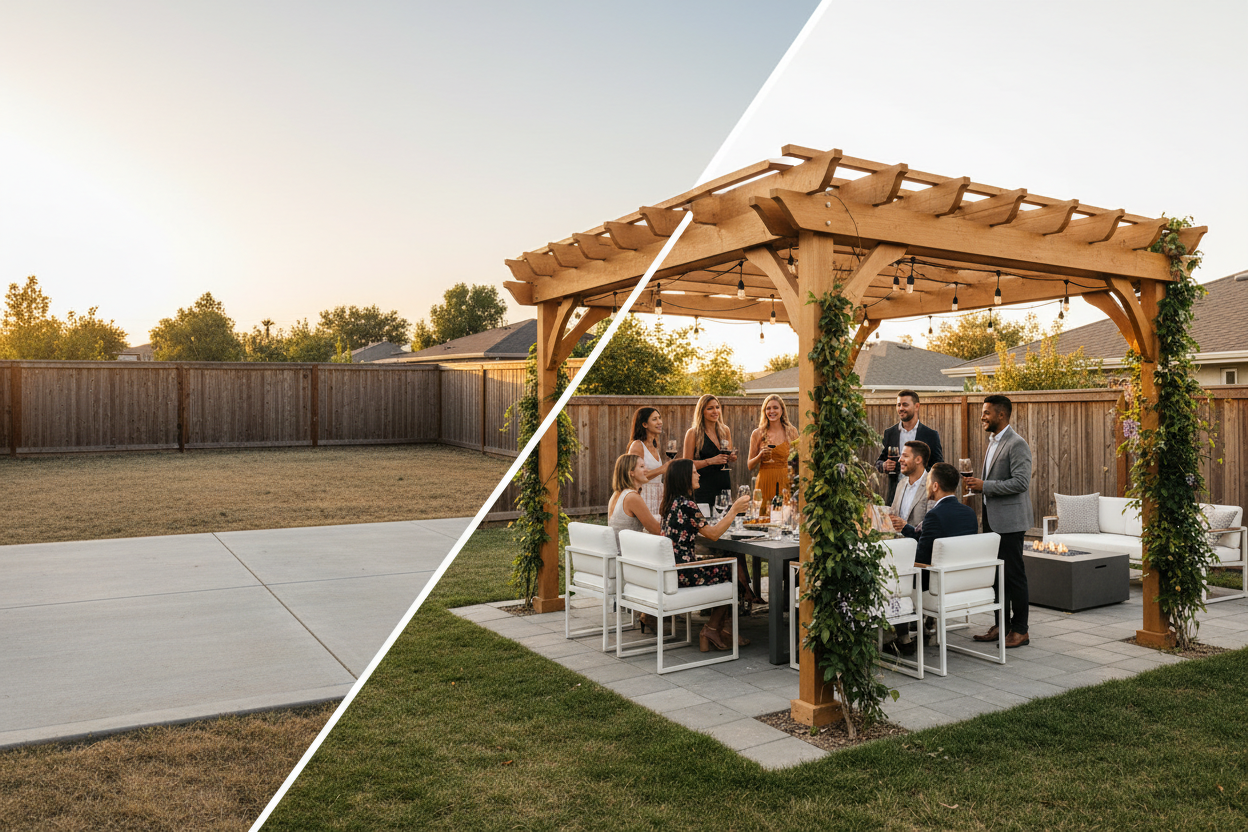
Return on investment for pergolas isn’t just about the dollars and cents you’ll see when you sell your home. It’s a multifaceted calculation that includes immediate property value increases, enhanced lifestyle benefits, and long-term market appeal. Most homeowners see an ROI ranging from 50% to 80% on well-designed custom pergolas, though this varies significantly based on location, materials, and installation quality.
The key difference between custom pergolas and prefabricated options lies in their integration with your home’s architecture and landscape. Custom installations typically yield higher returns because they’re designed to complement your specific property, creating a seamless extension of your living space rather than an obvious add-on.
Real estate professionals consistently report that outdoor living spaces have become increasingly important to buyers, especially post-pandemic. A thoughtfully designed pergola can serve as a major selling point, often becoming the feature that sets your property apart in competitive markets.
Immediate Property Value Increases
The most tangible benefit of pergola installation is the immediate boost to your property’s appraised value. According to recent studies by the National Association of Realtors, outdoor improvements like pergolas can increase home values by 4% to 12%, depending on the scope and quality of the project.
For a home valued at $400,000, this translates to a potential value increase of $16,000 to $48,000. When you consider that a quality custom pergola typically costs between $8,000 and $25,000, the math becomes quite compelling. The key is ensuring your pergola is proportionate to your home’s value and neighborhood standards.
Appraisers look at several factors when evaluating pergola additions: structural integrity, material quality, design cohesion with the existing home, and the functionality it adds to the outdoor space. A pergola that creates a defined outdoor dining area or extends your entertaining space will typically appraise higher than one that’s purely decorative.
Geographic location plays a crucial role in immediate value increases. Homes in warmer climates or areas with strong outdoor living cultures tend to see higher returns. California, Arizona, Texas, and Florida homeowners often report the highest immediate ROI on pergola installations.
Long-Term Financial Benefits
Beyond immediate property value, pergolas offer several long-term financial advantages that smart homeowners should consider. Energy savings represent one of the most overlooked benefits. A well-positioned pergola can reduce cooling costs by providing natural shade to windows and outdoor spaces, potentially saving $200 to $500 annually on energy bills.
The extended living space created by a pergola can also reduce entertainment and vacation expenses. Many families find they’re hosting more gatherings at home and taking fewer expensive trips when they have an inviting outdoor retreat. Over time, these lifestyle changes can result in significant savings.
Pergolas also tend to appreciate in value as landscaping matures around them. What starts as a beautiful structure becomes even more valuable as climbing plants establish themselves and the overall outdoor environment develops. This natural enhancement doesn’t require additional investment but continues to boost property appeal.
Market trends suggest that outdoor living features are becoming standard expectations rather than luxury additions. Installing a pergola now positions your home ahead of this curve, potentially protecting against future market disadvantages when outdoor spaces become baseline requirements for competitive listings.
Cost Factors That Impact ROI
Understanding the cost variables that affect your pergola’s ROI helps you make informed decisions about materials, size, and features. Material choice significantly impacts both upfront costs and long-term returns. Cedar and redwood pergolas typically offer the best balance of cost and ROI, while aluminum and vinyl options provide lower maintenance costs but may not add as much property value.
Size matters, but bigger isn’t always better for ROI. A pergola should be proportionate to your outdoor space and home size. Oversized structures can overwhelm smaller properties, while undersized pergolas may seem insignificant on larger lots. The sweet spot for most properties is a pergola that covers 150 to 300 square feet of outdoor space.
Professional installation versus DIY significantly affects ROI. While DIY installation saves on labor costs, professional installation ensures proper permits, structural integrity, and compliance with local building codes. These factors are crucial for insurance coverage and future property sales. Most real estate professionals recommend professional installation for pergolas over $10,000 or those requiring electrical work.
Additional features like integrated lighting, ceiling fans, or built-in seating increase both costs and potential returns. However, these upgrades should align with your local market expectations. In some areas, basic pergolas perform just as well as feature-rich installations from an ROI perspective.
Maximizing Your Pergola Investment
Strategic planning can significantly boost your pergola’s ROI. Location within your yard is crucial – pergolas that create natural transitions between indoor and outdoor spaces or that frame attractive views tend to add more value. Consider sight lines from inside your home and from the street when positioning your pergola.
Timing your installation can also impact returns. Spring installations allow you to enjoy the space throughout the peak outdoor season and provide time for landscaping to establish before winter. This timing also positions your home well if you decide to sell during the traditionally strong spring and summer real estate markets.
Integration with existing outdoor features maximizes impact. Pergolas that connect to decks, patios, or pools create cohesive outdoor living environments that appraise higher than standalone structures. Consider how your pergola can enhance existing outdoor investments rather than competing with them.
Quality landscaping around your pergola can double its visual impact and ROI. Climbing plants, strategic lighting, and complementary hardscaping create an outdoor room that feels intentional and luxurious. Many homeowners find that the landscaping investment pays for itself in increased property appeal.
Market Trends and Buyer Preferences
Current real estate trends strongly favor outdoor living spaces, making pergolas increasingly attractive to potential buyers. Millennial and Gen X buyers, who represent the largest segments of today’s housing market, consistently rank outdoor entertaining space as a high priority. This demographic shift suggests that pergola ROI will likely remain strong or even improve over time.
Sustainable and low-maintenance features are becoming more important to buyers. Pergolas made from responsibly sourced materials or those designed to support solar panels or rainwater collection systems may see premium returns in environmentally conscious markets.
The work-from-home trend has increased demand for versatile outdoor spaces that can serve multiple functions. Pergolas that can accommodate outdoor offices, exercise areas, or flexible entertaining spaces appeal to this growing market segment.
Regional preferences vary significantly. Research your local market to understand what pergola features and styles resonate with buyers in your area. What works in Southern California may not translate to New England markets, and vice versa.
Maintenance Costs vs. Value Retention
Understanding ongoing maintenance requirements is essential for calculating true ROI. Wood pergolas require regular staining or sealing every 2-3 years, costing $300 to $800 per treatment. However, well-maintained wood pergolas often retain their value better than low-maintenance alternatives because buyers perceive them as higher quality.
Aluminum and vinyl pergolas have minimal maintenance requirements but may show wear differently over time. While they don’t require staining, they can fade or develop surface scratches that are difficult to repair. Factor these long-term appearance issues into your ROI calculations.
Structural maintenance varies by material and installation quality. Professional installations with proper foundations and hardware typically require minimal structural maintenance for 15-20 years. DIY installations may need more frequent adjustments and repairs, reducing long-term ROI.
Insurance considerations also affect long-term costs. Most homeowner’s insurance policies cover pergolas, but coverage varies by material and installation method. Professional installations with permits typically receive better coverage, protecting your investment against weather damage or accidents.
Installing a custom pergola represents one of the more reliable home improvement investments available to today’s homeowners. With proper planning, quality installation, and strategic design choices, most homeowners can expect strong returns both in immediate property value and long-term market appeal.
The key to maximizing pergola ROI lies in understanding your local market, choosing appropriate materials and sizing, and ensuring professional installation when warranted. As outdoor living continues to grow in importance to homebuyers, pergolas are likely to become even more valuable assets.
Remember that ROI isn’t just about financial returns – the lifestyle benefits of extended outdoor living space often justify the investment even before considering property value increases. When you combine the enjoyment factor with solid financial returns, custom pergolas represent one of the smartest home improvement investments you can make.
Frequently Asked Questions
Q: How long does it take to see ROI on a pergola installation?
A: Immediate property value increases are typically reflected in appraisals within 30-60 days of completion. However, maximum ROI often occurs 2-3 years after installation as landscaping matures and the structure weathers naturally.
Q: Do I need permits for a custom pergola, and how does this affect ROI?
A: Permit requirements vary by location and pergola size. Generally, structures over 200 square feet or those with electrical components require permits. Permitted installations typically yield higher ROI due to verified compliance and better insurance coverage.
Q: What’s the difference in ROI between attached and freestanding pergolas?
A: Attached pergolas typically offer higher ROI because they create seamless indoor-outdoor transitions and are perceived as home extensions. Freestanding pergolas can also provide good returns when properly positioned to create defined outdoor rooms.
Q: How does climate affect pergola ROI?
A: Warmer climates and areas with longer outdoor seasons generally see higher pergola ROI. However, pergolas in northern climates can still provide good returns by extending the usable outdoor season and creating attractive year-round focal points.
Q: Should I install a pergola if I’m planning to sell within two years?
A: Yes, if the pergola fits your neighborhood’s price range and buyer expectations. Quick sales often benefit from move-in-ready outdoor spaces, and pergolas can help your property stand out in competitive markets.
Q: What pergola features provide the best ROI?
A: Integrated lighting, quality materials like cedar or aluminum, proper proportioning to the home and lot, and professional installation typically provide the best returns. Avoid over-customizing beyond your neighborhood’s standards.

Mobile City TX custom patio cover builders | Keathley Landscaping

McKinney TX custom patio cover cost | Keathley Landscaping

Frisco TX covered patio contractors near me | Keathley Landscaping

Rockwall TX outdoor living space contractors | Keathley Landscaping

Rose Hill TX custom wood pergola | Keathley Landscaping

Sachse TX covered patios | Keathley Landscaping

Richardson TX covered patios | Keathley Landscaping

Preston Hollow Dallas TX pergola builders | Keathley Landscaping

Rose Hill TX outdoor living contractor | Keathley Landscaping

Lucas TX pergola builders | Keathley Landscaping

Rowlett TX custom patio cover builders | Keathley Landscaping

Allen TX covered patio contractors near me | Keathley Landscaping

Frisco TX pergola builders | Keathley Landscaping

Fate TX outdoor living contractor | Keathley Landscaping

Lakewood Dallas TX luxury custom pergolas | Keathley Landscaping

Allen TX pergola builders | Keathley Landscaping

Highland Park TX pergola companies near me | Keathley Landscaping

Rose Hill TX covered patio contractors near me | Keathley Landscaping

Mobile City TX custom pergolas | Keathley Landscaping

Rockwall TX pergola builders | Keathley Landscaping

Dallas TX covered patio contractors near me | Keathley Landscaping

Allen TX outdoor living space contractors | Keathley Landscaping

Rose Hill TX pergolas | Keathley Landscaping

Lavon TX custom patio cover builders | Keathley Landscaping

Rowlett TX outdoor living space contractors | Keathley Landscaping

Rockwall TX outdoor living contractor | Keathley Landscaping

Rose Hill TX luxury custom pergolas | Keathley Landscaping

Fate TX pergolas | Keathley Landscaping

sod installation near me Rose Hill Texas

sod installation cost Fate Texas

installation of sod cost Lakewood Dallas Texas

sod installation companies McKinney Texas

cost of sod and installation McKinney Texas

cost of sod and installation Parker Texas

grass contractor Preston Hollow Dallas Texas

sod company Dallas Texas

sod installation companies near me Parker Texas

cost for sod installation Highland Park Texas

residential sod installation Garland Texas

cost of sod and installation Lake Highlands Dallas Texas

lawn sod installation Plano Texas

sod installation company Murphy Texas

grass contractor Sachse Texas

sod installation company near me Rose Hill Texas

lawn sod installation near me Garland Texas

sod installation companies near me Preston Hollow Dallas Texas

sod installation companies Rose Hill Texas

grass contractor Murphy Texas

cost of sod installation Rowlett Texas

installation of sod cost Rowlett Texas

sod lawn installation Rowlett Texas

residential sod installation Lakewood Dallas Texas

price for sod installation Lake Highlands Dallas Texas

sod installation companies near me Highland Park Texas

sod installation companies near me Dallas Texas

grass contractor Rockwall Texas

yard drainage specialist near me Lake Highlands Dallas Texas

drainage solutions near me Lucas Texas

drainage specialist near me Lowry Crossing Texas

drainage company Garland Texas

drainage solutions near me McKinney Texas

yard drainage Rowlett Texas

drainage company Lavon Texas

landscape drainage Rowlett Texas

channel drain cleaning Mobile City Texas

drainage solutions near me Highland Park Texas

yard drainage contractors near me Lavon Texas

drainage company near me Rowlett Texas

landscape drain Murphy Texas

drainage company near me Mobile City Texas

channel drain cleaning Dallas Texas

outdoor drain repair Frisco Texas

drainage contractors near me Garland Texas

drainage solutions near me Lowry Crossing Texas

yard drainage specialist near me Highland Park Texas

drain contractor Dallas Texas

yard drainage Sachse Texas

drainage solutions near me Rose Hill Texas

yard drainage contractors near me Lowry Crossing Texas

drain cleaning company near me Richardson Texas

drainage company Murphy Texas

drainage Parker Texas

drain Rowlett Texas

Recent Comments