
10 Custom Patio Cover Designs That Transform Your Outdoor Space
Table of Contents
1. Introduction
2. Why Custom Patio Covers Matter
3. 10 Stunning Custom Patio Cover Designs
4. Choosing the Right Materials for Your Patio Cover
5. Installation Considerations
6. Maintenance Tips for Long-lasting Beauty
7. Conclusion
8. Frequently Asked Questions
Introduction
Your patio is more than just an outdoor space – it’s an extension of your home where memories are made and relaxation happens. But let’s be honest, a bare patio exposed to the elements can quickly become uncomfortable during scorching summer days or unexpected rain showers. That’s where custom patio covers come in, transforming your outdoor area into a year-round sanctuary that’s both functional and beautiful.
Whether you’re dreaming of cozy family gatherings, entertaining friends, or simply enjoying your morning coffee in peace, the right patio cover design can make all the difference. Today, we’re exploring ten innovative custom patio cover designs that will not only protect you from the elements but also elevate your outdoor living experience to new heights.
Why Custom Patio Covers Matter
Before diving into specific designs, it’s worth understanding why investing in a custom patio cover is such a game-changer. Unlike generic solutions, custom covers are tailored to your space, lifestyle, and aesthetic preferences. They provide essential protection from UV rays, rain, and wind while creating a defined outdoor living area that feels like a natural extension of your home’s interior.
Custom patio covers also add significant value to your property. According to recent real estate studies, well-designed outdoor living spaces can increase home value by up to 15%. More importantly, they enhance your quality of life by giving you a comfortable outdoor retreat that you can enjoy throughout the year.
10 Stunning Custom Patio Cover Designs
1. The Modern Pergola with Retractable Canopy
This contemporary design combines the classic appeal of a pergola with modern functionality. The sleek wooden or metal frame supports a retractable fabric canopy that you can adjust based on weather conditions and your mood. On sunny days, extend the canopy for complete shade protection. When you want to stargaze or enjoy gentle sunshine, simply retract it for an open-air experience.
The beauty of this design lies in its versatility. Choose from weather-resistant fabrics in colors that complement your home’s exterior, and add integrated LED lighting for evening ambiance. This style works particularly well for modern and transitional home architectures.
2. The Rustic Timber Frame Pavilion
For those who love the warmth and character of natural wood, a rustic timber frame pavilion creates an inviting outdoor room with substantial presence. Using heavy timber construction techniques, this design features exposed beams and posts that showcase the natural beauty of wood grain and joinery.
This style works beautifully with stone or brick patios and can accommodate various roofing materials, from traditional cedar shakes to modern metal panels. The substantial structure provides excellent protection while creating a cozy, cabin-like atmosphere that’s perfect for year-round entertaining.
3. The Sleek Aluminum Louvered System
Technology meets outdoor living with adjustable aluminum louvered patio covers. These innovative systems feature rotating slats that you can control with a remote or smartphone app, allowing you to fine-tune the amount of sunlight and airflow in your space.
When fully closed, the louvers provide complete weather protection. Open them partially for filtered light and gentle breezes, or fully for an open-sky experience. Many systems also integrate with smart home technology and can automatically adjust based on weather sensors.
4. The Mediterranean-Inspired Stucco and Tile Cover
Transport yourself to the Mediterranean with a stucco-finished patio cover topped with clay tiles. This design typically features arched openings, decorative columns, and warm earth-tone finishes that create a resort-like atmosphere in your backyard.
The substantial construction provides excellent protection from the elements while the classic styling adds timeless elegance to your outdoor space. Complement this design with wrought iron details, natural stone flooring, and lush Mediterranean plants for a complete transformation.
5. The Glass Panel Sanctuary
For those who don’t want to sacrifice views or natural light, a glass panel patio cover offers the perfect solution. Using tempered safety glass panels supported by a minimalist frame, this design provides weather protection while maintaining an open, airy feel.
This contemporary approach works exceptionally well for homes with stunning views or gardens you want to showcase. The transparent coverage protects from rain and wind while allowing maximum natural light to filter through. Consider adding retractable side panels for complete weather protection when needed.
6. The Living Roof Garden Cover
Combine sustainability with beauty by incorporating a living roof into your patio cover design. This eco-friendly option features a structural deck topped with waterproof membrane and growing medium to support plants, creating a natural canopy above your outdoor space.
Living roofs provide excellent insulation, reduce stormwater runoff, and create habitat for beneficial insects and birds. Choose drought-tolerant plants like sedums or native grasses for low-maintenance beauty that changes with the seasons.
7. The Industrial Chic Metal and Wood Hybrid
Blend raw industrial elements with warm wood accents for a contemporary patio cover that makes a bold statement. This design typically features steel or aluminum framework with wood cladding or decking elements, creating an interesting contrast of materials and textures.
The metal structure provides durability and clean lines, while wood elements add warmth and natural beauty. This style works particularly well with modern and industrial-style homes, and can be customized with various finishes and wood species to match your aesthetic preferences.
8. The Curved Sail Structure
Create dramatic visual interest with curved fabric sails stretched between posts or attachment points. This modern design approach offers flexible coverage options while adding sculptural beauty to your outdoor space.
Fabric sails can be configured in various shapes and heights to create dynamic shadows and visual flow. Choose high-performance fabrics that resist UV damage and weather, and consider multiple sails at different levels for complex, artistic coverage patterns.
9. The Traditional Gable Roof Extension
For a seamless integration with your home’s architecture, consider extending your existing roofline with a matching gable roof patio cover. This classic approach creates the feeling of an outdoor room that’s truly part of your home’s structure.
Use matching roofing materials and trim details to ensure the cover looks like it was part of the original design. This approach works well for traditional, colonial, and craftsman-style homes, and can accommodate various ceiling treatments from exposed beams to finished drywall.
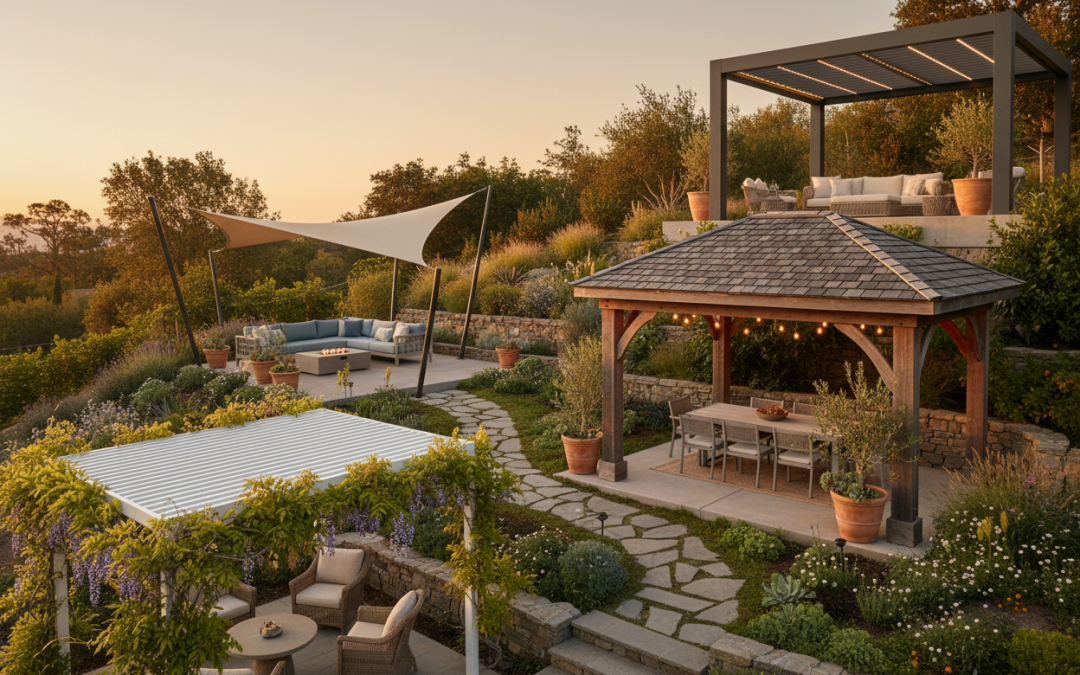
10. The Multi-Level Terraced Design
For sloped lots or those wanting to create distinct outdoor zones, a multi-level terraced patio cover design offers both function and visual drama. This approach uses different roof heights and levels to create separate areas for dining, lounging, and entertaining while maintaining cohesive design elements throughout.
Each level can have its own character and function while the overall design creates flow and connection between spaces. This approach works particularly well for larger patios and can incorporate various materials and styles within the unified design framework.
Choosing the Right Materials for Your Patio Cover
The materials you choose for your custom patio cover will significantly impact both its appearance and longevity. Wood offers natural beauty and warmth but requires regular maintenance to prevent weather damage. Cedar and redwood are naturally resistant to insects and decay, making them excellent choices for outdoor applications.
Metal options like aluminum and steel provide durability and low maintenance, with powder coating available in numerous colors. These materials work well for contemporary designs and can support larger spans without intermediate posts.
For roofing materials, consider factors like climate, architectural style, and maintenance requirements. Metal roofing offers longevity and weather resistance, while tile provides classic beauty but requires stronger structural support. Fabric options work well for retractable systems and sail designs, offering flexibility and softer aesthetics.
Installation Considerations
Proper installation is crucial for both safety and longevity of your custom patio cover. Start by checking local building codes and permit requirements, as most permanent structures require permits and inspections. Consider factors like wind loads, snow loads, and seismic requirements in your area.
Foundation requirements vary based on the design and local soil conditions. Some covers can attach to existing house structures, while others require independent footings. Proper drainage is essential to prevent water damage and ensure long-term structural integrity.
Working with experienced contractors who specialize in outdoor structures ensures your project meets all safety requirements and building codes while achieving the aesthetic and functional goals you’re seeking.
Maintenance Tips for Long-lasting Beauty
Regular maintenance keeps your custom patio cover looking beautiful and functioning properly for years to come. Wood structures benefit from annual cleaning and periodic staining or sealing to protect against weather damage. Inspect for loose fasteners, cracked boards, or signs of insect damage.
Metal covers require less maintenance but should be cleaned periodically to prevent buildup of dirt and debris. Check for scratches in protective coatings and touch up as needed to prevent corrosion.
Fabric elements need regular cleaning according to manufacturer specifications. Remove debris like leaves and branches promptly to prevent staining and damage. For retractable systems, ensure mechanisms are properly lubricated and functioning smoothly.
Conclusion
A well-designed custom patio cover transforms your outdoor space from a simple deck or patio into a true outdoor living room. Whether you prefer the modern sophistication of a louvered aluminum system, the rustic charm of a timber frame pavilion, or the innovative beauty of a living roof garden, there’s a design approach that will perfectly complement your home and lifestyle.
The key to success lies in choosing a design that harmonizes with your home’s architecture while meeting your specific functional needs. Consider factors like climate, maintenance preferences, and how you plan to use the space when making your decision.
Remember that a custom patio cover is an investment in both your property value and your quality of life. Take time to research options, work with qualified professionals, and choose materials and designs that will provide years of enjoyment and protection for your outdoor living space.
Frequently Asked Questions
Q: Do I need a permit for a custom patio cover?
A: Most permanent patio covers require building permits, especially if they’re attached to your home or exceed certain size limits. Check with your local building department for specific requirements in your area. Temporary or portable structures typically don’t require permits.
Q: How much does a custom patio cover typically cost?
A: Costs vary widely based on size, materials, and complexity, typically ranging from $3,000 for simple structures to $15,000 or more for elaborate custom designs. Factors affecting cost include materials chosen, structural requirements, and local labor rates.
Q: What’s the best material for a patio cover in areas with extreme weather?
A: For extreme weather conditions, aluminum and steel structures with appropriate coatings offer excellent durability. These materials resist wind, hail, and temperature extremes while requiring minimal maintenance. Proper engineering for local wind and snow loads is essential.
Q: Can I add lighting and fans to my patio cover?
A: Yes, most custom patio covers can incorporate electrical elements like lighting, ceiling fans, and outlets. Plan for electrical needs during the design phase to ensure proper wiring and support. Always use outdoor-rated fixtures and have electrical work performed by licensed professionals.
Q: How long does it take to install a custom patio cover?
A: Installation timeframes vary based on design complexity and weather conditions, typically ranging from 2-5 days for standard designs to several weeks for elaborate custom structures. Permit approval and material delivery times can add to the overall project timeline.

Preston Hollow Dallas TX pergolas | Keathley Landscaping

Wylie TX pergolas | Keathley Landscaping

Lowry Crossing TX custom wood pergola | Keathley Landscaping

Lavon TX custom pergolas | Keathley Landscaping

Garland TX pergolas | Keathley Landscaping

Dallas TX custom patio cover cost | Keathley Landscaping

Murphy TX custom patio cover builders | Keathley Landscaping

Parker TX luxury custom pergolas | Keathley Landscaping

Highland Park TX pergolas | Keathley Landscaping

Lakewood Dallas TX custom patio covers | Keathley Landscaping

Lucas TX custom patio cover cost | Keathley Landscaping

Garland TX pergola builders | Keathley Landscaping

Allen TX custom wood pergola | Keathley Landscaping

Lowry Crossing TX custom patio cover cost | Keathley Landscaping

Lakewood Dallas TX custom patio cover cost | Keathley Landscaping

Lavon TX custom patio cover builders | Keathley Landscaping

Fate TX outdoor living contractor | Keathley Landscaping

Murphy TX covered patios | Keathley Landscaping

Plano TX outdoor living contractor | Keathley Landscaping

Plano TX luxury custom pergolas | Keathley Landscaping

Fate TX luxury custom pergolas | Keathley Landscaping

Plano TX custom patio covers | Keathley Landscaping

Rowlett TX pergola builders | Keathley Landscaping

Sachse TX outdoor living space contractors | Keathley Landscaping

Highland Park TX custom patio cover cost | Keathley Landscaping

Lowry Crossing TX outdoor living space contractors | Keathley Landscaping

Highland Park TX outdoor living space contractors | Keathley Landscaping

Parker TX custom pergolas | Keathley Landscaping

sod installation near me Plano Texas

sod grass installation Fairview Texas

sod installation cost Wylie Texas

sod contractors Plano Texas

new sod installation Preston Hollow Dallas Texas

lawn sod installation Garland Texas

sod contractors Garland Texas

cost of sod installation Richardson Texas

sod lawn installation Rockwall Texas

cost of sod and installation McKinney Texas

sod installation service Preston Hollow Dallas Texas

sod installation near me Preston Hollow Dallas Texas

cost of sod installation Allen Texas

lawn sod installation Lowry Crossing Texas

sod company Fairview Texas

sod installation service Lavon Texas

sod company Dallas Texas

sod installation cost Sachse Texas

sod grass installation Rose Hill Texas

lawn sod installation Parker Texas

residential sod installation Lucas Texas

sod contractors Rowlett Texas

sod lawn installation Preston Hollow Dallas Texas

installation of sod cost Richardson Texas

sod installation companies near me Mobile City Texas

sod lawn installation Lake Highlands Dallas Texas

sod installation service Lakewood Dallas Texas

sod installation near me Lowry Crossing Texas

drain contractor Lavon Texas

landscape drain Lakewood Dallas Texas

drain Fate Texas

landscape drain Rowlett Texas

drain cleaning Plano Texas

drain cleaning company near me Lakewood Dallas Texas

drain contractor McKinney Texas

channel drain cleaning Allen Texas

drain cleaning company near me Dallas Texas

outdoor drain repair Fairview Texas

drainage company near me Plano Texas

drainage specialist near me Richardson Texas

landscape drainage contractor near me Parker Texas

landscape drainage Rose Hill Texas

drainage Fate Texas

outdoor drain repair Garland Texas

channel drain cleaning Murphy Texas

drain cleaning Fate Texas

drain Mobile City Texas

channel drain cleaning Rose Hill Texas

drain Garland Texas

drainage Lucas Texas

drain cleaning company near me Allen Texas

drainage specialist near me Frisco Texas

yard drainage specialist near me Plano Texas

landscape drain Rockwall Texas

yard drainage contractors near me Frisco Texas

Recent Comments