
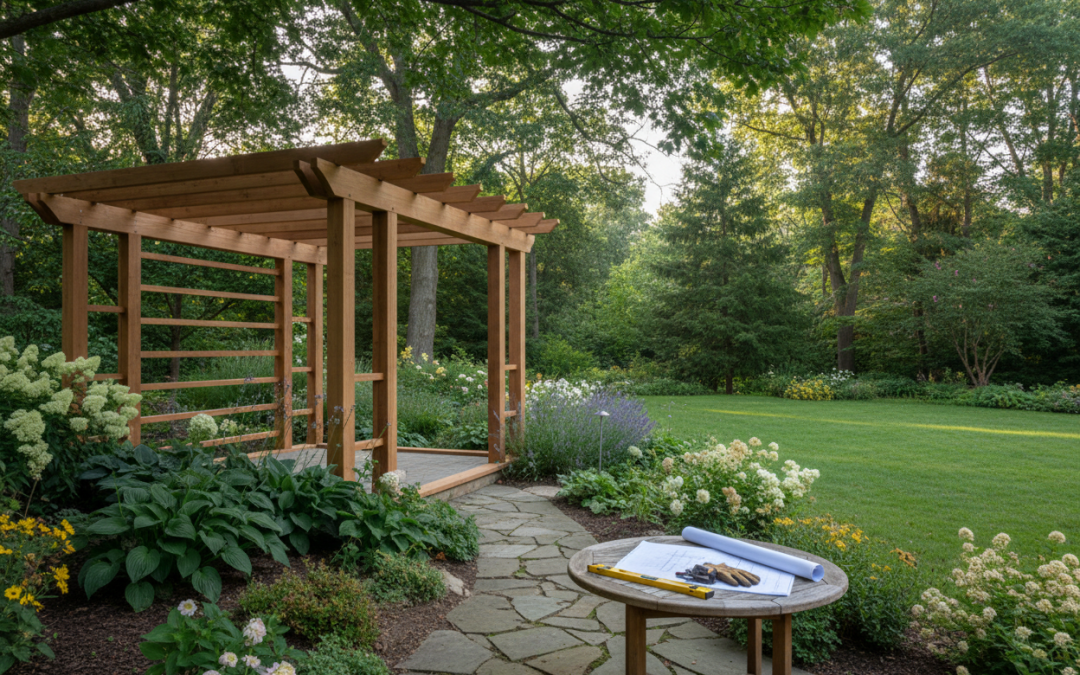
How to Plan Custom Pergola Projects Around Existing Landscaping
Adding a pergola to your outdoor space can transform an ordinary backyard into a stunning retreat. However, when you’re working with established landscaping, the challenge becomes integrating this beautiful structure seamlessly with what you’ve already cultivated. The key lies in thoughtful planning that respects your existing garden while enhancing its natural beauty.
Whether you’ve spent years nurturing mature trees, carefully positioned flower beds, or established hardscaping elements, your pergola should complement rather than compete with these features. This comprehensive guide will walk you through the essential steps to plan a custom pergola that works harmoniously with your existing landscape design.
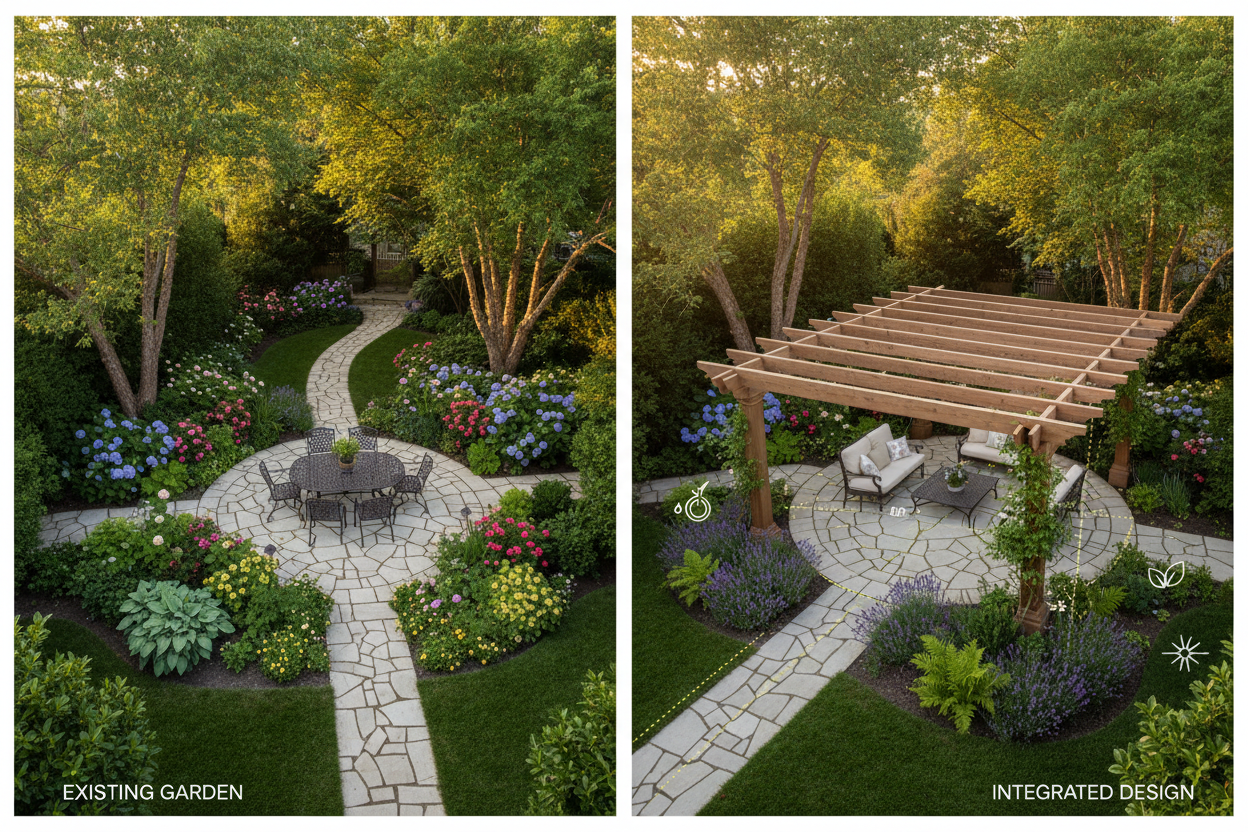
Table of Contents
1. Assessing Your Current Landscape
2. Choosing the Perfect Location for Your Pergola
3. Working Around Mature Trees and Established Plants
4. Integrating with Existing Hardscaping Features
5. Design Considerations for Landscape Harmony
6. Material Selection That Complements Your Garden
7. Planning for Utilities and Infrastructure
8. Seasonal Planning and Timeline Considerations
9. Professional vs. DIY Installation Around Landscaping
10. Maintenance Planning for Your Integrated Design
Assessing Your Current Landscape
Before you even sketch your first pergola design, take time to truly understand what you’re working with. Walk through your outdoor space at different times of day, observing how sunlight moves across various areas and noting which spots feel naturally inviting.
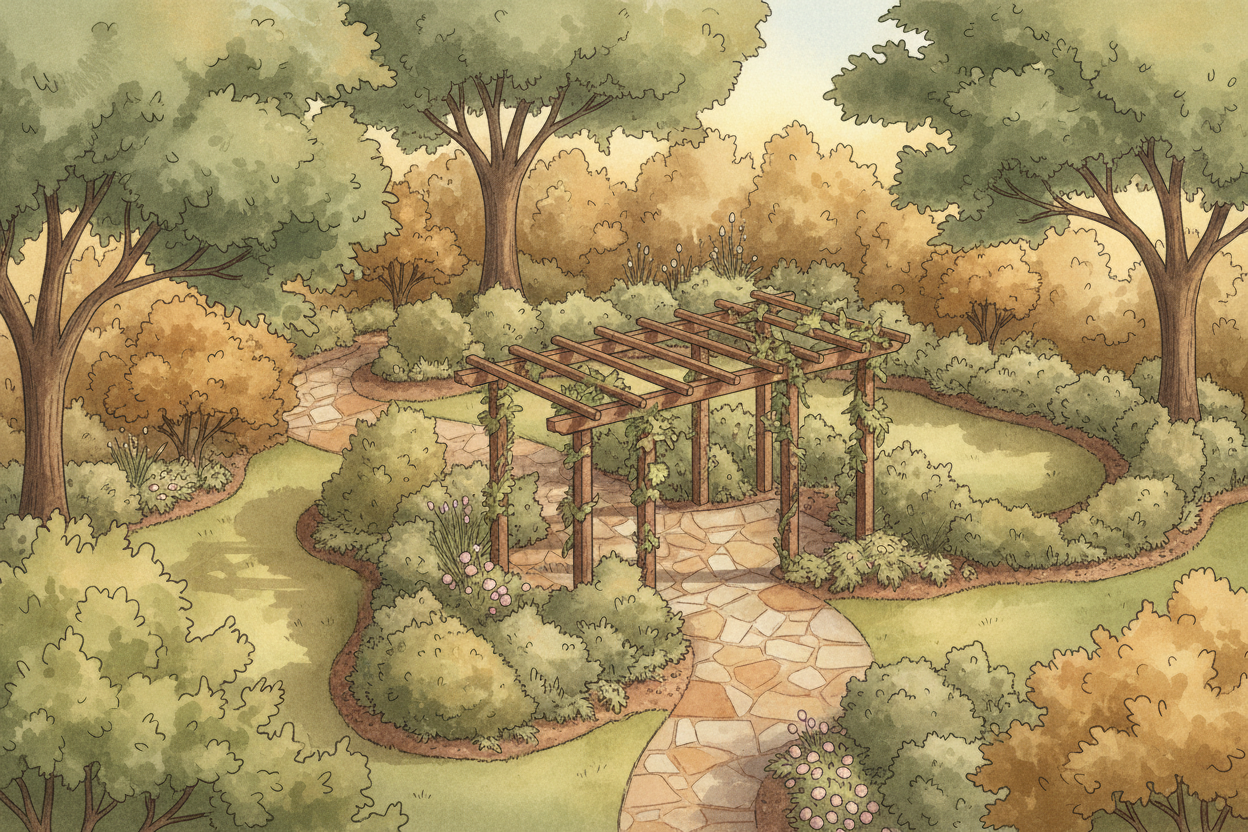
Document your existing features with photographs from multiple angles. This visual inventory will prove invaluable when discussing plans with contractors or designing the structure yourself. Pay special attention to the mature elements that would be costly or impossible to relocate, such as large trees, established shrub borders, or permanent hardscaping like retaining walls or pathways.
Consider the current traffic patterns in your yard. Where do you naturally walk when moving between different areas? Your pergola should enhance these natural flows rather than create awkward barriers. Think about sight lines too – what views do you want to frame or preserve, and which areas might benefit from some visual screening?
Choosing the Perfect Location for Your Pergola
Location selection becomes more complex when working around existing landscaping, but it’s also more rewarding when done right. Start by identifying areas that already feel somewhat enclosed or defined by your current plantings. These natural “rooms” in your landscape often make ideal pergola locations because the structure will feel like a natural extension of the space.
Evaluate the practical aspects of each potential location. Consider proximity to your home for convenience, especially if you plan to run electricity or water to the pergola. Think about privacy from neighbors and wind patterns that might affect comfort under the structure.
Don’t overlook the impact on your existing plants. A pergola will change light patterns and potentially alter drainage in the area. Plants that currently thrive in full sun might struggle if suddenly shaded, while shade-loving plants might benefit from the filtered light a pergola provides.
Working Around Mature Trees and Established Plants
Mature trees present both opportunities and challenges when planning pergola placement. The good news is that incorporating existing trees into your pergola design can create stunning visual effects and provide natural support elements. However, you’ll need to plan carefully to protect root systems and accommodate future growth.
When positioning your pergola near large trees, maintain adequate clearance for both current and future canopy spread. Trees continue growing, and branches that seem safely distant today might interfere with your structure in a few years. Consider consulting with an arborist if you’re unsure about growth patterns or root zones.
For established garden beds, plan your pergola footprint to minimize disruption. Sometimes a slight adjustment to the structure’s dimensions or orientation can save a prized planting. If some plant relocation is unavoidable, plan this work for the appropriate season and prepare temporary growing areas if needed.
Remember that construction activity can compact soil and damage delicate root systems even outside the immediate building area. Plan protective measures for valuable plants, including temporary fencing and root zone protection.
Integrating with Existing Hardscaping Features
Your pergola should feel like it belongs with your existing patios, walkways, and retaining walls. This means paying attention to materials, colors, and proportions that complement what’s already in place. A pergola that clashes with your existing hardscaping will always look like an afterthought, no matter how well-built it might be.
Consider how your pergola posts will relate to existing vertical elements like fence posts, light fixtures, or architectural features of your home. Aligning these elements creates visual continuity and makes the entire outdoor space feel more cohesive.
If you have existing outdoor entertaining areas, think about how the pergola will enhance these spaces. Can it provide shelter over part of an existing patio? Will it create a natural transition between different outdoor “rooms”? The most successful pergola installations feel like they were always meant to be part of the landscape.
Design Considerations for Landscape Harmony
The style and scale of your pergola should complement your landscape’s character. A formal garden calls for a different approach than a cottage-style or naturalistic landscape. Study the lines and forms already present in your outdoor space – are they primarily curved and organic, or straight and geometric? Your pergola design should echo these existing patterns.
Scale is crucial when working with established landscaping. A pergola that’s too large can overwhelm existing features, while one that’s too small might look insignificant next to mature trees or substantial hardscaping. Use your existing landscape elements as reference points for appropriate sizing.
Think about how the pergola’s proportions will work with viewing angles from your home’s windows and other key vantage points. The structure should enhance views rather than block them, and it should look proportionate when seen from inside your home.
Material Selection That Complements Your Garden
Material choice significantly impacts how well your pergola integrates with existing landscaping. Wood remains popular because it weathers naturally and complements most garden styles. Cedar and redwood offer natural weather resistance, while pressure-treated lumber provides an economical option that can be stained or painted to match your preferences.
Metal pergolas, particularly those made from aluminum or steel, work well in contemporary landscapes or where low maintenance is a priority. Powder coating options allow you to match existing metal features in your landscape or home exterior.
Consider how your chosen materials will age alongside your landscape. Some materials develop attractive patina over time, while others require regular maintenance to look their best. Factor these long-term considerations into your decision, especially if your landscape includes other structures that will age at different rates.
Planning for Utilities and Infrastructure
If you’re planning to add lighting, fans, or other electrical features to your pergola, now is the time to plan utility runs. Working around existing landscaping means being extra careful about where you dig and how you route cables or pipes.
Before any excavation begins, have utilities marked by your local utility location service. This is typically a free service that can prevent costly and dangerous accidents. When planning trenches for electrical or plumbing lines, try to route them along existing hardscape edges or through areas with less established plantings.
Consider future utility needs as well. Even if you don’t plan to install electrical features immediately, running conduit during initial construction is much easier than retrofitting later. The same applies to water lines for irrigation or outdoor kitchen features.
Seasonal Planning and Timeline Considerations
Timing your pergola installation around your landscape’s seasonal needs shows respect for your existing plants and can save you significant replanting costs. Spring and fall are typically ideal for construction projects that might disturb plant roots, as plants are less stressed during these seasons.
If your project requires relocating plants, plan this work for the appropriate season for each species. Some plants transplant best in early spring, while others prefer fall relocation. Research the specific needs of your valuable specimens and plan accordingly.
Consider how construction activity might affect seasonal garden maintenance. If your project timeline coincides with important gardening tasks like pruning or fertilizing, plan alternative access routes or temporary protection for work areas.
Professional vs. DIY Installation Around Landscaping
While many pergola kits are designed for DIY installation, working around valuable landscaping often justifies hiring professionals. Experienced contractors understand how to minimize landscape disruption and can often complete the work more quickly, reducing stress on nearby plants.
If you do choose the DIY route, invest extra time in planning and preparation. Rent or purchase equipment designed to minimize ground compaction, such as track-driven mini excavators instead of wheeled machines. Plan your material delivery and staging areas to avoid damage to existing plantings.
Consider a hybrid approach where you hire professionals for the most landscape-sensitive aspects of the project while handling simpler tasks yourself. This might mean having pros handle excavation and foundation work while you tackle assembly and finishing touches.
Maintenance Planning for Your Integrated Design
A pergola integrated into existing landscaping requires ongoing maintenance planning that considers both the structure and surrounding plants. Plan for access to all parts of your pergola for cleaning, staining, or repairs without damaging nearby plantings.
Consider how the pergola will affect maintenance of surrounding landscape features. Will you still be able to reach all areas for pruning, weeding, or seasonal cleanup? Sometimes minor adjustments to plant placement during construction can prevent future maintenance headaches.
Think about long-term landscape evolution as well. Plants grow and change over time, and your maintenance plan should account for these natural developments. Regular assessment of clearances and growing conditions will help you maintain the harmony between structure and landscape for years to come.
Conclusion
Planning a custom pergola around existing landscaping requires patience, careful observation, and respect for what you’ve already created in your outdoor space. The extra effort invested in thoughtful planning pays dividends in the form of a structure that truly belongs in your garden rather than merely occupying space within it.
Remember that the best pergola installations enhance both the structure and the surrounding landscape. Your existing plants, hardscaping, and natural features should look better with the pergola in place, while the pergola itself should feel like a natural extension of your garden’s character.
Take time to live with your landscape through different seasons before finalizing your pergola plans. Understanding how your outdoor space changes throughout the year will inform better decisions about placement, sizing, and design details that create lasting satisfaction with your investment.
Frequently Asked Questions
How close can I build a pergola to existing large trees?
Generally, maintain a distance equal to at least half the tree’s mature canopy spread from the trunk. This protects the root zone and allows for future growth. Consult an arborist for specific guidance on valuable or sensitive tree species.
Will a pergola damage my existing garden beds during construction?
With proper planning and protection, damage can be minimized. Use temporary fencing around sensitive areas, lay plywood over root zones for equipment access, and schedule work during seasons when plants are less vulnerable to stress.
Can I incorporate existing structures like retaining walls into my pergola design?
Yes, existing hardscaping can often be integrated into pergola designs. Retaining walls can provide support for pergola posts, and existing patios can serve as foundations. Have a structural engineer evaluate load-bearing capabilities if you’re unsure.
How do I choose pergola materials that won’t clash with my existing landscape?
Consider the dominant materials and colors already present in your outdoor space. Wood generally complements most landscapes, while metal works well with contemporary designs. When in doubt, choose materials that weather naturally and blend rather than contrast sharply.
Should I relocate plants before or after pergola construction?
Relocate plants before construction when possible, ideally during their optimal transplanting season. This reduces construction-related stress and allows you to work with a cleaner site. However, some plants may be better left in place and protected during construction if relocation risks are high.

Rose Hill TX luxury custom pergolas | Keathley Landscaping

Sachse TX pergola builders | Keathley Landscaping

Lake Highlands Dallas TX outdoor living space contractors | Keathley Landscaping

Highland Park TX outdoor living space contractors | Keathley Landscaping

Allen TX luxury custom pergolas | Keathley Landscaping

Highland Park TX covered patios | Keathley Landscaping

Plano TX outdoor living space contractors | Keathley Landscaping

Preston Hollow Dallas TX custom wood pergola | Keathley Landscaping

Lucas TX outdoor living space contractors | Keathley Landscaping

Rowlett TX custom wood pergola | Keathley Landscaping

Lucas TX custom patio cover cost | Keathley Landscaping

Lowry Crossing TX covered patio contractors near me | Keathley Landscaping

Wylie TX pergolas | Keathley Landscaping

Allen TX custom patio covers | Keathley Landscaping

Garland TX custom patio cover builders | Keathley Landscaping

Fate TX outdoor living space contractors | Keathley Landscaping

Rose Hill TX covered patio contractors near me | Keathley Landscaping

Rowlett TX covered patio contractors near me | Keathley Landscaping

Lowry Crossing TX custom pergolas | Keathley Landscaping

Highland Park TX custom patio cover cost | Keathley Landscaping

Rockwall TX covered patios | Keathley Landscaping

Lake Highlands Dallas TX pergola companies near me | Keathley Landscaping

Allen TX custom pergolas | Keathley Landscaping

Dallas TX pergolas | Keathley Landscaping

Rowlett TX custom pergolas | Keathley Landscaping

Sachse TX pergolas | Keathley Landscaping

Fairview TX pergolas | Keathley Landscaping

Highland Park TX custom pergolas | Keathley Landscaping

installation of sod cost Frisco Texas

sod installation companies near me Murphy Texas

sod company Allen Texas

cost of sod and installation Dallas Texas

cost for sod installation Highland Park Texas

cost for sod installation Fairview Texas

sod installation companies near me Plano Texas

grass installation Wylie Texas

lawn sod installation near me Richardson Texas

sod grass installation Fairview Texas

sod company Garland Texas

sod lawn installation Parker Texas

cost of sod installation Rockwall Texas

cost of sod installation Frisco Texas

sod grass installation Fate Texas

grass contractor Richardson Texas

residential sod installation Garland Texas

sod contractors Preston Hollow Dallas Texas

grass contractor Frisco Texas

sod installation companies Lakewood Dallas Texas

cost of sod installation Lakewood Dallas Texas

cost of sod installation Preston Hollow Dallas Texas

cost of sod and installation Plano Texas

cost of sod installation Fairview Texas

cost of sod and installation Frisco Texas

sod installation company Sachse Texas

sod company McKinney Texas

installation of sod cost Murphy Texas

drainage Lake Highlands Dallas Texas

drainage solutions near me Garland Texas

drain contractor Lake Highlands Dallas Texas

drain contractor Garland Texas

drainage contractors near me Wylie Texas

drain cleaning Murphy Texas

drainage Lucas Texas

drainage company Sachse Texas

yard drainage specialist near me Fate Texas

landscape drainage Rockwall Texas

drain Fairview Texas

landscape drainage Lake Highlands Dallas Texas

drainage solutions near me Frisco Texas

yard drainage specialist near me McKinney Texas

yard drainage specialist near me Rose Hill Texas

drain contractor Rose Hill Texas

yard drainage contractors near me Sachse Texas

landscape drain Fate Texas

landscape drain Wylie Texas

drain Lakewood Dallas Texas

outdoor drain repair Preston Hollow Dallas Texas

yard drainage Rowlett Texas

drain cleaning company near me Murphy Texas

landscape drainage contractor near me Murphy Texas

drain Rockwall Texas

yard drainage Frisco Texas

yard drainage Allen Texas

Recent Comments