
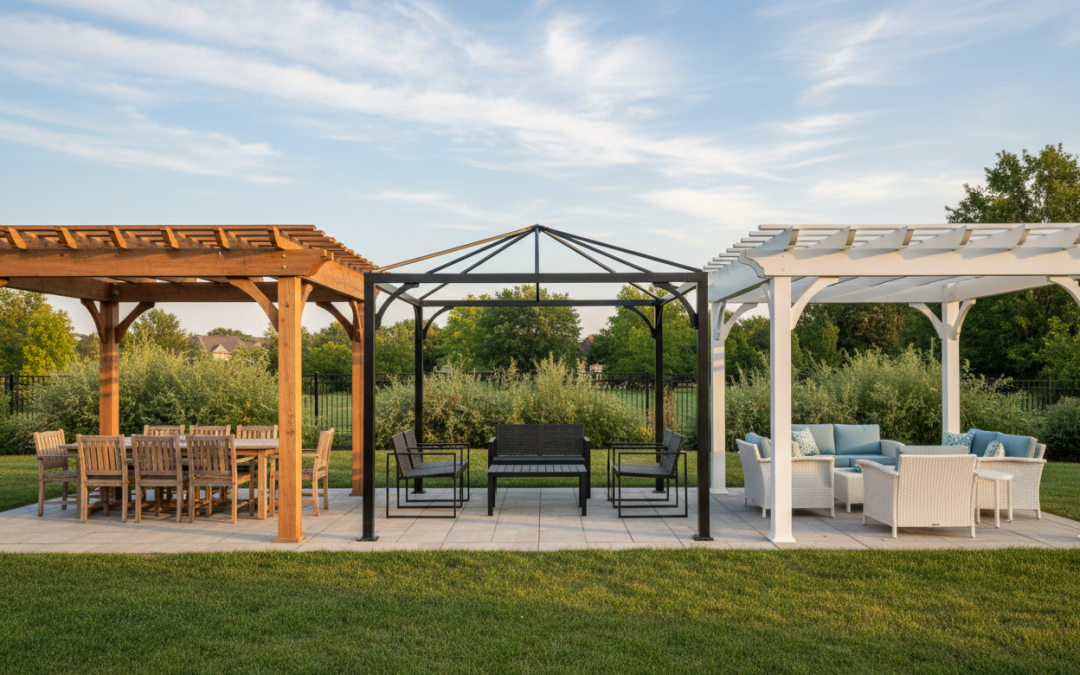
The Ultimate Guide to Custom Pergola Materials: Wood vs Metal vs Vinyl
Table of Contents
1. Introduction to Pergola Materials
2. Wood Pergolas: The Classic Choice
3. Metal Pergolas: Modern Durability
4. Vinyl Pergolas: Low-Maintenance Living
5. Cost Comparison: Which Material Fits Your Budget?
6. Maintenance Requirements for Each Material
7. Climate Considerations and Weather Resistance
8. Design Flexibility and Aesthetic Appeal
9. Installation Process and DIY Considerations
10. Making Your Final Decision
11. Frequently Asked Questions
Introduction to Pergola Materials
Picture this: you’re sipping your morning coffee in your backyard, enjoying the perfect balance of sunshine and shade beneath your beautiful pergola. But before you can create this idyllic scene, you’re faced with a crucial decision that will impact your outdoor space for years to come – choosing the right material for your custom pergola.
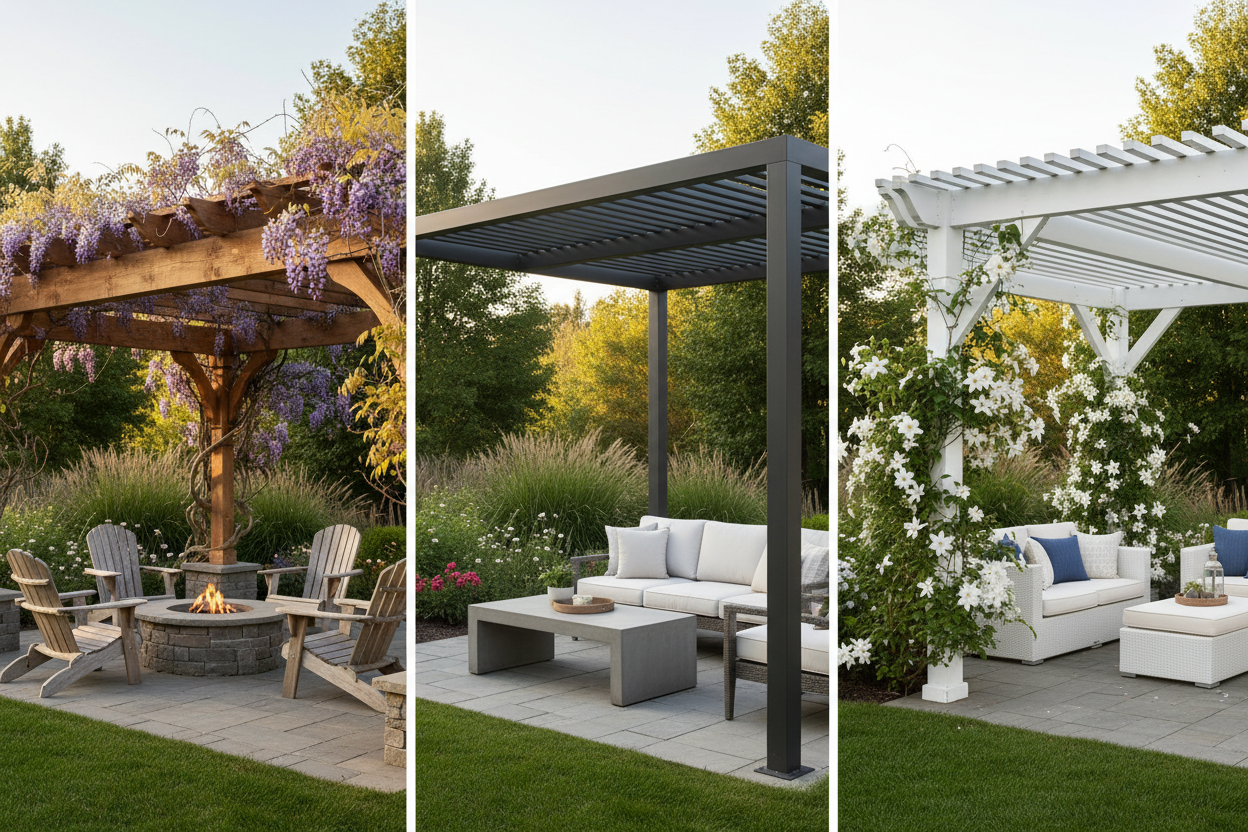
The material you select doesn’t just affect how your pergola looks; it determines its durability, maintenance requirements, and overall value to your property. Whether you’re a weekend DIY warrior or planning to hire professionals, understanding the differences between wood, metal, and vinyl pergolas is essential for making an informed decision.
In this comprehensive guide, we’ll walk through everything you need to know about pergola materials, helping you choose the perfect option for your specific needs, budget, and lifestyle. From the timeless appeal of wood to the modern durability of metal and the convenience of vinyl, each material brings unique advantages to your outdoor living space.
Wood Pergolas: The Classic Choice
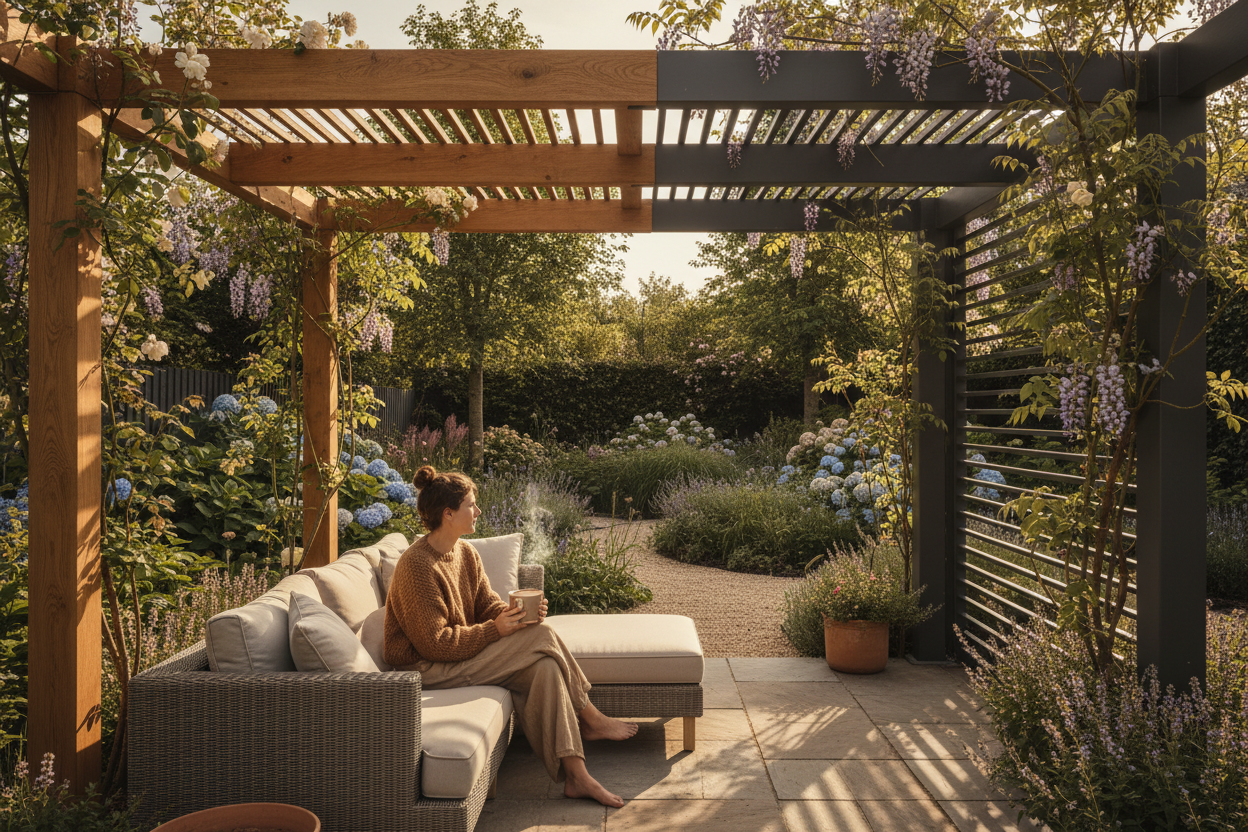
Wood remains the most popular choice for pergola construction, and for good reason. There’s something inherently warm and inviting about natural wood that complements virtually any landscape design. When you think of a traditional pergola, you’re likely picturing the rich grain and organic beauty that only wood can provide.
The most common wood types for pergola construction include cedar, redwood, pressure-treated pine, and tropical hardwoods like teak or ipe. Cedar stands out as a favorite due to its natural resistance to insects and rot, while redwood offers stunning color variations and excellent weather resistance. Pressure-treated pine provides an affordable option, though it requires more maintenance over time.
One of wood’s greatest advantages is its versatility in design. You can easily customize the size, shape, and decorative elements to match your vision perfectly. Wood accepts stains and paints beautifully, allowing you to change the color scheme as your tastes evolve or your landscape matures.
However, wood pergolas do require regular maintenance to preserve their beauty and structural integrity. Depending on your climate and the wood type, you’ll need to clean, stain, or seal your pergola every 2-3 years. This ongoing care is part of wood’s charm for many homeowners who enjoy maintaining their outdoor structures, but it’s an important consideration for your long-term planning.
Metal Pergolas: Modern Durability
Metal pergolas have gained significant popularity in recent years, particularly among homeowners who appreciate clean, contemporary design and minimal maintenance requirements. The most common metal options include aluminum, steel, and wrought iron, each offering distinct characteristics for different applications.
Aluminum pergolas lead the pack in terms of practicality. They’re lightweight, rust-resistant, and require virtually no maintenance once installed. Modern aluminum pergolas often feature powder-coated finishes that resist fading and provide excellent color retention for decades. The material’s strength-to-weight ratio makes it ideal for larger pergola designs without requiring massive support structures.
Steel pergolas offer superior strength and can support heavier loads, making them perfect for incorporating features like hanging plants, lighting systems, or retractable canopies. However, steel requires proper treatment and coating to prevent rust, especially in humid or coastal environments.
Wrought iron brings old-world elegance to pergola design, with intricate details and decorative elements that are difficult to achieve with other materials. While beautiful, wrought iron requires regular maintenance to prevent rust and may need periodic repainting to maintain its appearance.
The sleek lines and modern aesthetic of metal pergolas complement contemporary architecture beautifully. They’re particularly well-suited for urban environments and modern landscape designs where clean geometry takes precedence over rustic charm.
Vinyl Pergolas: Low-Maintenance Living
Vinyl pergolas represent the ultimate in low-maintenance outdoor structures. If you love the idea of a beautiful pergola but prefer to spend your weekends relaxing rather than maintaining your outdoor space, vinyl might be your perfect match.
Modern vinyl pergolas have come a long way from the basic white options of the past. Today’s vinyl products feature realistic wood grain textures, multiple color options, and sophisticated design elements that rival traditional materials in appearance. High-quality vinyl pergolas use advanced formulations that resist fading, cracking, and warping, even under extreme weather conditions.
The maintenance requirements for vinyl pergolas are minimal – occasional cleaning with soap and water is typically all that’s needed to keep them looking new. This makes vinyl an excellent choice for busy homeowners, vacation properties, or anyone who wants to enjoy their outdoor space without ongoing maintenance commitments.
Vinyl pergolas are also resistant to insects, rot, and moisture damage, making them ideal for humid climates or areas prone to pest problems. The material won’t splinter, crack, or require refinishing, providing consistent appearance and performance year after year.
While vinyl may lack some of the natural warmth of wood or the industrial appeal of metal, modern manufacturing techniques have significantly improved its aesthetic appeal. Many homeowners are surprised by how closely high-quality vinyl can mimic the appearance of natural materials while providing superior durability and convenience.
Cost Comparison: Which Material Fits Your Budget?
Understanding the financial implications of each material choice requires looking beyond the initial purchase price to consider long-term costs including maintenance, repairs, and potential replacement needs.
Wood pergolas typically offer the lowest upfront costs, especially when using pressure-treated lumber or standard cedar. However, the ongoing maintenance expenses can add up significantly over time. Factor in the cost of stains, sealers, cleaning supplies, and potential repairs or board replacement when calculating your total investment.
Metal pergolas generally require a higher initial investment, particularly for aluminum or high-quality steel options. However, the minimal maintenance requirements mean your ongoing costs will be much lower. When spread over the pergola’s lifespan, metal often provides excellent value despite the higher upfront expense.
Vinyl pergolas fall somewhere in the middle for initial costs but offer the best long-term value for many homeowners. The combination of moderate upfront investment and virtually no maintenance costs makes vinyl an economical choice over the pergola’s lifetime.
Remember to consider installation costs as well. Wood pergolas are often the most DIY-friendly, potentially saving on labor costs if you’re handy with tools. Metal and vinyl pergolas may require professional installation, adding to the overall project expense but ensuring proper assembly and warranty coverage.
Maintenance Requirements for Each Material
The amount of time and effort you’re willing to invest in pergola maintenance should significantly influence your material choice. Each option requires different levels of ongoing care to maintain its appearance and structural integrity.
Wood pergolas demand the most attention, requiring annual cleaning and periodic staining or sealing. You’ll need to inspect for loose fasteners, check for signs of insect damage or rot, and address any issues promptly to prevent larger problems. In harsh climates, you might need to refinish your wood pergola every 2-3 years to maintain its protection and appearance.
Metal pergolas, particularly aluminum options, require minimal maintenance. Occasional cleaning with mild soap and water, along with annual inspections of fasteners and connections, is typically sufficient. Steel pergolas may need periodic touch-up painting in areas where the coating has been damaged, but this is infrequent with quality finishes.
Vinyl pergolas win the low-maintenance contest hands down. Regular cleaning with a garden hose or pressure washer is usually all that’s needed. The material won’t fade significantly, crack, or require refinishing, making it ideal for homeowners who prefer minimal upkeep.
Climate Considerations and Weather Resistance
Your local climate plays a crucial role in determining which pergola material will perform best over time. Different materials respond differently to various weather conditions, and choosing the wrong material for your environment can lead to premature failure or excessive maintenance requirements.
In humid or wet climates, vinyl and aluminum pergolas excel due to their moisture resistance. Wood pergolas can certainly work in these conditions but require diligent maintenance to prevent rot and mold issues. Cedar and redwood naturally resist moisture better than other wood species, making them preferred choices for humid environments.
For areas with intense UV exposure, all materials can be affected, but some handle sun exposure better than others. High-quality vinyl and powder-coated metal pergolas resist fading and UV damage effectively. Wood pergolas will weather and gray naturally unless regularly treated with UV-resistant stains or sealers.
In regions with extreme temperature fluctuations, material expansion and contraction become important considerations. Metal pergolas may expand and contract more noticeably than wood or vinyl, requiring proper design considerations for fasteners and connections. Vinyl performs well in temperature extremes but may become more brittle in very cold conditions.
Coastal environments present unique challenges with salt air and high humidity. Aluminum and vinyl pergolas handle these conditions excellently, while wood and steel options require additional protection and maintenance to prevent accelerated deterioration.
Design Flexibility and Aesthetic Appeal
The visual impact of your pergola significantly influences your outdoor space’s overall appeal, and each material offers different design possibilities and aesthetic characteristics.
Wood pergolas provide unmatched design flexibility, easily accommodating custom shapes, decorative cuts, and intricate details. The natural grain patterns and warm tones complement both traditional and contemporary landscape designs. Wood can be painted or stained in virtually any color, allowing for complete customization to match your home’s exterior or landscape theme.
Metal pergolas excel in creating clean, geometric designs with precise lines and modern appeal. Aluminum pergolas can incorporate integrated lighting, louvers, and other high-tech features seamlessly. The material’s strength allows for longer spans without intermediate supports, creating more open and airy designs.
Vinyl pergolas have improved dramatically in aesthetic appeal, with many options featuring realistic wood grain textures and multiple color choices. While they may not offer the same level of customization as wood, modern vinyl pergolas can complement many architectural styles effectively.
Consider how each material will age over time as well. Wood develops a natural patina and character with age, which many homeowners find appealing. Metal pergolas maintain their appearance consistently, while vinyl pergolas resist aging and weathering to preserve their original appearance for years.
Installation Process and DIY Considerations
The complexity of installation varies significantly between materials, affecting both project timeline and whether professional installation is necessary.
Wood pergolas are generally the most DIY-friendly option, requiring standard carpentry tools and techniques that many homeowners can handle. The forgiving nature of wood allows for minor adjustments during installation, and mistakes can often be corrected without starting over. However, proper foundation preparation and ensuring square, level construction are crucial for long-term success.
Metal pergola installation typically requires more precision and specialized tools. Aluminum pergolas often come as engineered kits with pre-cut components and detailed instructions, making them suitable for experienced DIYers. Steel pergolas may require welding or specialized fastening techniques best left to professionals.
Vinyl pergola installation falls between wood and metal in terms of complexity. Most vinyl pergolas come as complete kits with pre-fabricated components designed to fit together precisely. The lightweight nature of vinyl makes handling easier, but the lack of adjustability means accurate measurement and preparation are essential.
Regardless of material choice, proper foundation preparation is critical for any pergola installation. This typically involves setting concrete footings or anchoring to existing concrete surfaces, which may require professional assistance even for DIY-friendly pergola kits.
Making Your Final Decision
Choosing the right pergola material ultimately comes down to balancing your priorities regarding appearance, maintenance, budget, and longevity. Consider your lifestyle honestly – if you enjoy weekend projects and don’t mind regular maintenance, wood might be perfect. If you prefer minimal upkeep and modern aesthetics, metal or vinyl could be ideal.
Think about your long-term plans as well. If you’re planning to stay in your home for many years, investing in higher-quality materials might make sense. For shorter-term situations, more economical options could be appropriate.
Consider consulting with local contractors or pergola specialists who understand your climate and can provide insights based on regional experience. They can help you understand how different materials perform in your specific environment and may offer material warranties or guarantees.
Don’t forget to check local building codes and HOA requirements, as some areas have restrictions on pergola materials, colors, or sizes. Getting necessary permits before starting your project can save headaches later.
Frequently Asked Questions
How long do different pergola materials typically last?
Wood pergolas can last 15-25 years with proper maintenance, while aluminum and vinyl pergolas often last 25-30 years or more. Steel pergolas fall somewhere in between, typically lasting 20-25 years with appropriate care and coating maintenance.
Can I paint or stain a vinyl pergola?
While vinyl pergolas can technically be painted, it’s not recommended as it voids most warranties and the paint may not adhere well long-term. Modern vinyl pergolas come in multiple colors and finishes, eliminating the need for painting in most cases.
Which material is best for areas with high winds?
Properly anchored metal pergolas, particularly steel options, typically handle high winds best due to their strength and wind-resistant design. However, any pergola in high-wind areas should be engineered appropriately and securely anchored regardless of material.
Do metal pergolas get hot in direct sunlight?
Metal pergolas can become warm in direct sunlight, but this rarely affects their structural integrity or usability. Powder-coated finishes help reflect heat, and the pergola’s open design allows for air circulation that prevents excessive heat buildup.
Can I add a roof or canopy to any pergola material?
Most pergola materials can accommodate roofing or canopy additions, but load-bearing capacity varies. Metal pergolas often handle additional weight best, while wood pergolas may require reinforcement. Always consult the manufacturer or a structural engineer before adding significant weight to any pergola.
Which material offers the best return on investment?
Well-built pergolas of any material typically add value to your property, but wood pergolas often provide the best immediate return due to their classic appeal and lower initial cost. However, low-maintenance options like vinyl or aluminum may offer better long-term value due to reduced upkeep costs.

McKinney TX custom wood pergola | Keathley Landscaping

Preston Hollow Dallas TX outdoor living space contractors | Keathley Landscaping

Parker TX covered patio contractors near me | Keathley Landscaping

Plano TX custom patio covers | Keathley Landscaping

Richardson TX luxury custom pergolas | Keathley Landscaping

Dallas TX custom patio covers | Keathley Landscaping

Preston Hollow Dallas TX custom pergolas | Keathley Landscaping

Wylie TX custom patio cover builders | Keathley Landscaping

Fate TX covered patios | Keathley Landscaping

Dallas TX covered patio contractors near me | Keathley Landscaping

Frisco TX luxury custom pergolas | Keathley Landscaping

Lakewood Dallas TX custom wood pergola | Keathley Landscaping

Rockwall TX pergola builders | Keathley Landscaping

Allen TX pergolas | Keathley Landscaping

Plano TX pergola builders | Keathley Landscaping

Parker TX outdoor living space contractors | Keathley Landscaping

Wylie TX custom wood pergola | Keathley Landscaping

Rose Hill TX covered patios | Keathley Landscaping

Sachse TX custom patio cover cost | Keathley Landscaping

Dallas TX pergolas | Keathley Landscaping

Rockwall TX covered patios | Keathley Landscaping

Lake Highlands Dallas TX custom wood pergola | Keathley Landscaping

Richardson TX custom pergolas | Keathley Landscaping

Fate TX custom pergolas | Keathley Landscaping

Allen TX covered patio contractors near me | Keathley Landscaping

Lake Highlands Dallas TX custom patio cover cost | Keathley Landscaping

Plano TX custom patio cover cost | Keathley Landscaping

Wylie TX pergola companies near me | Keathley Landscaping

sod company Frisco Texas

sod company McKinney Texas

lawn sod installation Rowlett Texas

grass contractor Parker Texas

price of sod installation Sachse Texas

sod installation near me Allen Texas

new sod installation Lowry Crossing Texas

sod installation companies Sachse Texas

grass contractor Lowry Crossing Texas

cost for sod installation Fate Texas

sod installation service Plano Texas

grass installation Rowlett Texas

price for sod installation Lakewood Dallas Texas

grass installation Preston Hollow Dallas Texas

installation of sod cost Lakewood Dallas Texas

price of sod installation Mobile City Texas

sod installation companies near me Rockwall Texas

sod installation company Parker Texas

sod grass installation Mobile City Texas

sod installation companies near me Richardson Texas

cost for sod installation McKinney Texas

price for sod installation Richardson Texas

cost of sod and installation Lake Highlands Dallas Texas

new sod installation Richardson Texas

grass contractor McKinney Texas

lawn sod installation near me Murphy Texas

sod installation cost Preston Hollow Dallas Texas

lawn sod installation near me Rockwall Texas

landscape drainage contractor near me Fairview Texas

landscape drainage Mobile City Texas

drainage company near me Murphy Texas

channel drain cleaning Dallas Texas

drainage contractors near me Rockwall Texas

yard drainage contractors near me Plano Texas

outdoor drain repair McKinney Texas

drain cleaning Preston Hollow Dallas Texas

landscape drainage Fairview Texas

drainage specialist near me Frisco Texas

yard drainage contractors near me Dallas Texas

drain cleaning company near me Garland Texas

yard drainage specialist near me Frisco Texas

drainage Mobile City Texas

channel drain cleaning Richardson Texas

yard drainage Rowlett Texas

landscape drainage Lucas Texas

drain cleaning Sachse Texas

channel drain cleaning Highland Park Texas

drainage company near me Parker Texas

drainage company Rowlett Texas

drainage specialist near me Sachse Texas

yard drainage contractors near me Lakewood Dallas Texas

drainage company near me Lowry Crossing Texas

landscape drain Allen Texas

yard drainage contractors near me Highland Park Texas

yard drainage specialist near me Highland Park Texas

Recent Comments