
How Custom Patio Covers Can Extend Your Living Season: Transform Your Outdoor Space Year-Round
Table of Contents
1. Introduction: The Power of Extended Outdoor Living
2. Understanding Custom Patio Covers
3. Weather Protection: Your Shield Against the Elements
4. Temperature Control for Year-Round Comfort
5. UV Protection and Health Benefits
6. Choosing the Right Materials for Your Climate
7. Design Options That Match Your Lifestyle
8. Energy Savings and Cost Benefits
9. Installation Considerations and Timeline
10. Maintenance Tips for Longevity
11. Frequently Asked Questions
12. Conclusion: Invest in Year-Round Outdoor Enjoyment
Introduction: The Power of Extended Outdoor Living
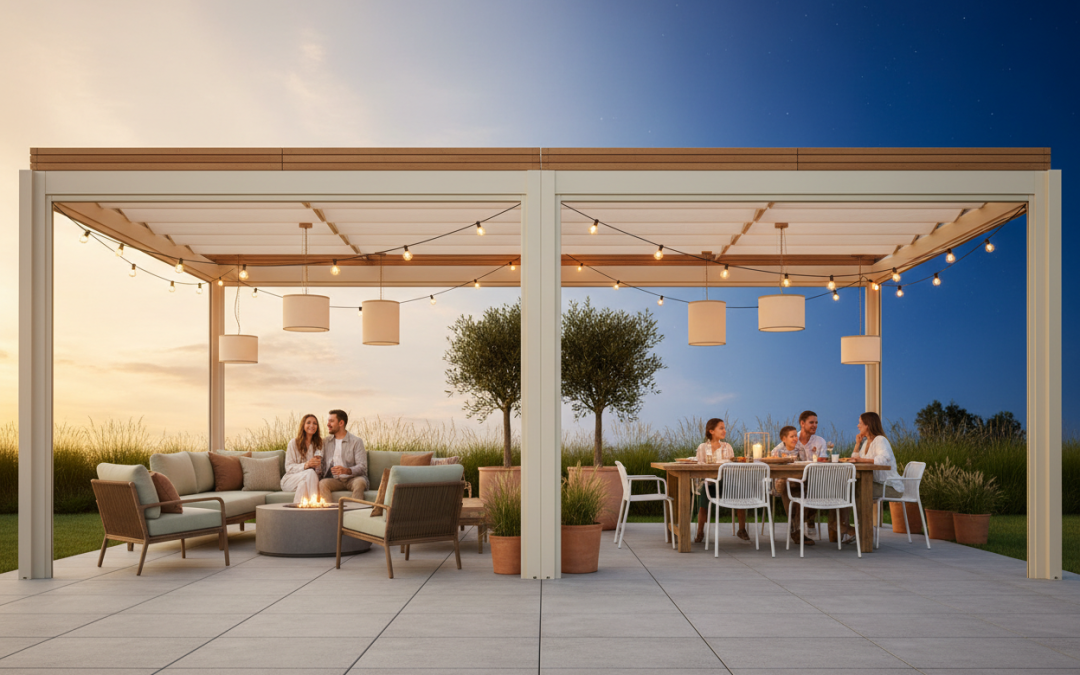
Picture this: it’s a crisp October evening, and while your neighbors have retreated indoors for the season, you’re still hosting dinner parties on your covered patio. Or imagine enjoying your morning coffee outside in March, protected from the spring rain but still breathing fresh air. This isn’t just a dream – it’s the reality that custom patio covers can create for your home.
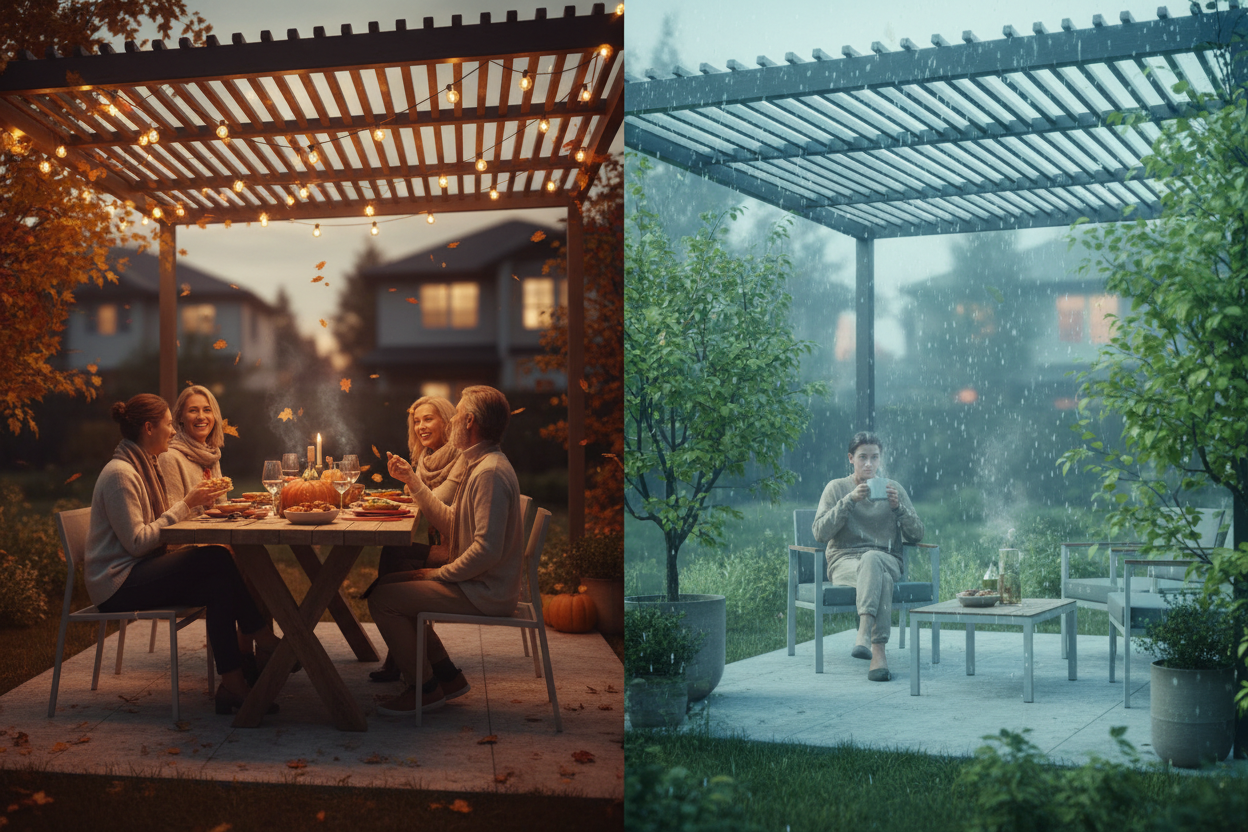
Most homeowners think of their outdoor spaces as seasonal luxuries, only usable during perfect weather conditions. However, with the right patio cover design, you can transform your backyard into a year-round extension of your home. Custom patio covers don’t just add aesthetic appeal; they’re practical investments that can extend your outdoor living season by months, sometimes even making outdoor spaces comfortable throughout the entire year.
Whether you’re dealing with scorching summer heat, unexpected rain showers, or chilly autumn evenings, a well-designed patio cover creates a comfortable microenvironment that encourages outdoor living regardless of what Mother Nature has in store.
Understanding Custom Patio Covers
Custom patio covers are permanent or semi-permanent structures designed specifically for your outdoor space, taking into account your home’s architecture, local climate conditions, and personal preferences. Unlike generic awnings or temporary solutions, custom covers are engineered to withstand local weather patterns while complementing your home’s existing design.
These structures can range from simple roof extensions attached to your house to elaborate standalone pavilions complete with lighting, fans, and even heating elements. The key word here is “custom” – every aspect, from materials and colors to dimensions and features, is tailored to your specific needs and environment.
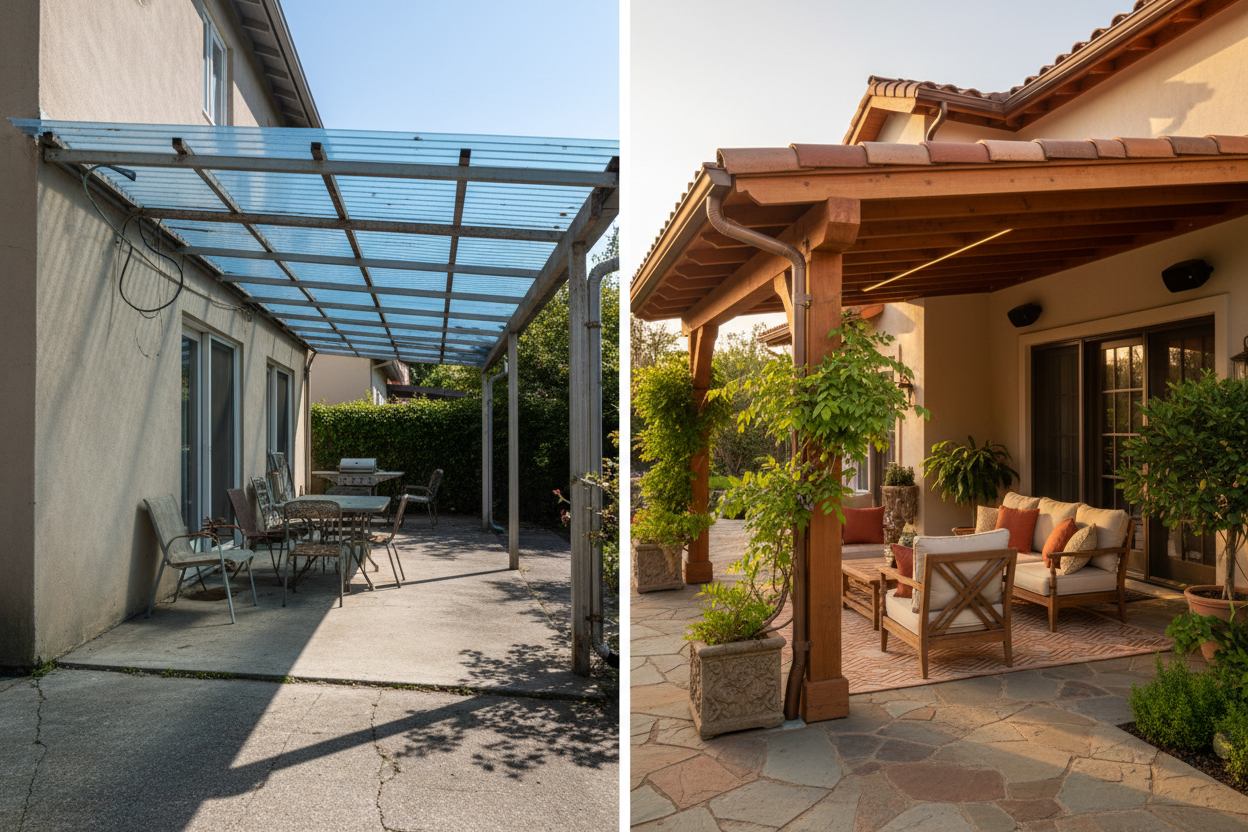
Modern patio covers incorporate advanced materials and design principles that weren’t available even a decade ago. Today’s options include everything from traditional wood and aluminum to cutting-edge composite materials and smart glass that can adjust its opacity based on sunlight intensity.
Weather Protection: Your Shield Against the Elements
The most obvious benefit of a custom patio cover is protection from unpredictable weather. Rain doesn’t have to mean the end of your outdoor gathering, and sudden temperature drops don’t need to send everyone scrambling indoors.
A properly designed patio cover creates what landscape architects call a “transition zone” – a space that feels outdoor while providing indoor-level comfort. This means you can enjoy the fresh air and natural ambiance of being outside without worrying about getting soaked during an unexpected downpour or being forced to seek shade when the sun becomes too intense.
Wind protection is another often-overlooked advantage. Strategic placement of partial walls or screens as part of your patio cover design can create calm microclimates even on breezy days. This is particularly valuable for homes in coastal areas or regions prone to strong seasonal winds.
For those living in areas with harsh winters, enclosed patio covers with removable panels offer the flexibility to create a semi-indoor space during colder months while maintaining the open-air feel during warmer seasons.
Temperature Control for Year-Round Comfort
Temperature regulation is where custom patio covers truly shine in extending your living season. During summer months, a well-designed cover can reduce the temperature in your outdoor space by 10-15 degrees compared to direct sunlight exposure. This dramatic difference can make the space comfortable even during peak afternoon heat.
The science behind this cooling effect involves more than just shade. Quality patio covers create air circulation patterns that naturally cool the space beneath them. When combined with ceiling fans specifically designed for outdoor use, the cooling effect becomes even more pronounced.
For shoulder seasons and winter use, many homeowners incorporate heating elements into their patio cover designs. Infrared heaters mounted to the cover’s structure can extend comfortable outdoor time well into fall and winter months. Some advanced systems even include radiant heating panels integrated directly into the cover’s design.
The thermal mass of certain patio cover materials also plays a role in temperature regulation. Stone or concrete elements can absorb heat during the day and release it slowly in the evening, naturally extending comfortable outdoor time.
UV Protection and Health Benefits
Beyond comfort, custom patio covers provide crucial health benefits through UV protection. Prolonged exposure to ultraviolet radiation is a leading cause of skin cancer, premature aging, and eye damage. A quality patio cover can block up to 99% of harmful UV rays while still allowing you to enjoy natural light and outdoor ambiance.
This protection is particularly important for families with children or elderly members who may be more susceptible to sun damage. It also means you can spend longer periods outdoors without the constant need for sunscreen reapplication or protective clothing.
The psychological benefits of extended outdoor time shouldn’t be underestimated either. Studies consistently show that spending time in natural environments reduces stress, improves mood, and enhances overall well-being. A patio cover makes it possible to gain these benefits even when weather conditions would normally keep you indoors.
For those who work from home, a covered patio can serve as an outdoor office space, providing the mental health benefits of being outside while maintaining productivity and comfort.
Choosing the Right Materials for Your Climate
Material selection is crucial for maximizing your patio cover’s ability to extend your living season. Different climates require different approaches, and understanding your local weather patterns is essential for making the right choice.
In hot, dry climates, materials with high thermal reflectivity work best. Light-colored aluminum, certain composite materials, and specialized fabrics can reflect heat rather than absorbing it. These materials help maintain cooler temperatures beneath the cover throughout the day.
For regions with high humidity or frequent rain, materials that resist moisture and promote air circulation become priorities. Cedar and other naturally weather-resistant woods, powder-coated aluminum, and certain synthetic materials excel in these conditions.
In areas with significant seasonal temperature variations, materials that can handle expansion and contraction without compromising structural integrity are essential. Steel frame systems with appropriate expansion joints often work well in these environments.
Snow load capacity is another critical consideration for northern climates. Your patio cover must be engineered to handle the maximum expected snow accumulation in your area while maintaining safety margins.
Design Options That Match Your Lifestyle
The beauty of custom patio covers lies in their ability to match your specific lifestyle and entertaining preferences. If you’re someone who loves hosting large gatherings, an open-span design maximizes usable space while providing overhead protection.
For intimate family settings, partially enclosed designs with built-in seating areas create cozy outdoor rooms that feel secure and comfortable. These designs often incorporate features like built-in planters, lighting systems, and even outdoor kitchens.
Multi-level covers can create distinct zones within your outdoor space – perhaps a dining area under one section and a lounging area under another. This approach allows different activities to occur simultaneously while providing appropriate coverage for each.
Retractable elements add another layer of flexibility. Motorized louvers, retractable screens, and adjustable panels allow you to modify your space based on immediate weather conditions and personal preferences.
Integration with existing landscape features can create seamless transitions between covered and uncovered areas. Pergola-style covers that incorporate climbing plants, for example, create living shade that evolves with the seasons.
Energy Savings and Cost Benefits
A well-designed patio cover can significantly impact your home’s energy consumption, particularly during summer months. By providing shade to windows and exterior walls, patio covers reduce the amount of heat that enters your home, decreasing the load on your air conditioning system.
Studies show that strategic shading can reduce cooling costs by 15-25% during peak summer months. Over the lifespan of a quality patio cover, these energy savings can offset a significant portion of the initial investment.
The extended usable space also adds functional square footage to your home without the cost of interior additions. This outdoor living area can serve multiple purposes – dining room, entertainment space, home office, or exercise area – depending on your needs.
Property value increases are another financial benefit. Real estate professionals consistently report that quality outdoor living spaces, particularly those usable year-round, add significant value to homes. The return on investment for well-designed patio covers often exceeds 70-80% of the initial cost.
Reduced wear and tear on outdoor furniture and equipment is an often-overlooked financial benefit. Protection from direct sunlight, rain, and wind significantly extends the life of patio furniture, grills, and other outdoor investments.
Installation Considerations and Timeline
Proper installation is crucial for maximizing your patio cover’s effectiveness in extending your living season. The process typically begins with a thorough site evaluation that considers factors like drainage, wind patterns, sun angles throughout the year, and integration with existing structures.
Permitting requirements vary by location, but most permanent patio covers require building permits. Working with experienced contractors familiar with local codes ensures compliance and proper engineering for your specific conditions.
The installation timeline depends on the complexity of your design and local weather conditions. Simple attached covers might be completed in 2-3 days, while elaborate custom structures can take several weeks. Planning installation during favorable weather windows is important for both quality and timeline.
Site preparation often takes longer than the actual construction. Proper foundation work, utility routing for electrical and plumbing, and coordination with existing landscape features require careful planning and execution.
Post-installation adjustments are common and should be expected. Fine-tuning elements like drainage, lighting, and ventilation often occurs after the main structure is complete and you’ve had time to use the space.
Maintenance Tips for Longevity
Regular maintenance ensures your patio cover continues extending your living season for decades to come. The specific maintenance requirements depend on your chosen materials and local environmental conditions.
Cleaning schedules should be established based on your local environment. Areas with high pollen counts, dust, or air pollution may require monthly cleaning, while cleaner environments might only need quarterly attention. Use appropriate cleaning methods for your specific materials to avoid damage.
Seasonal inspections help identify potential issues before they become major problems. Check for loose fasteners, damaged seals, clogged drainage systems, and signs of wear or corrosion. Fall inspections are particularly important before winter weather arrives.
Gutter and drainage maintenance prevents water damage and ensures proper function during heavy rain periods. Clear debris regularly and ensure water flows away from your home’s foundation.
For covers with moving parts like retractable elements or adjustable louvers, regular lubrication and adjustment maintain smooth operation and prevent premature wear.
Professional inspections every few years can identify structural issues that might not be obvious to homeowners. This is particularly important for covers that experience heavy snow loads or high winds.
Frequently Asked Questions
How much does a custom patio cover cost?
Custom patio cover costs vary widely based on size, materials, and complexity. Basic attached covers start around $3,000-$5,000, while elaborate custom structures can exceed $20,000-$30,000. Most homeowners invest between $8,000-$15,000 for a quality cover that significantly extends their living season.
Do I need a permit for a patio cover?
Most permanent patio covers require building permits, especially if they’re attached to your house or exceed certain size thresholds. Temporary or portable covers typically don’t require permits. Check with your local building department for specific requirements in your area.
How long does installation take?
Installation timelines range from 2-3 days for simple attached covers to 2-3 weeks for complex custom structures. Weather conditions, permitting delays, and site preparation requirements can affect these timelines.
What materials work best in different climates?
Hot climates benefit from reflective materials like light-colored aluminum or specialized fabrics. Humid areas need moisture-resistant options like cedar or powder-coated metals. Cold climates require materials that handle freeze-thaw cycles well, such as engineered steel systems.
Can patio covers be enclosed for winter use?
Yes, many patio covers can be designed with removable panels, screens, or glass enclosures that create semi-indoor spaces during colder months. This flexibility maximizes year-round usability.
How much maintenance do patio covers require?
Maintenance requirements depend on materials and local conditions. Generally, expect seasonal cleaning, annual inspections, and periodic minor repairs. Quality covers properly maintained can last 20-30 years or more.
Conclusion: Invest in Year-Round Outdoor Enjoyment
Custom patio covers represent one of the smartest investments you can make in your home’s livability and value. By extending your outdoor living season from a few months to potentially year-round use, these structures fundamentally change how you interact with your outdoor space.
The benefits extend far beyond simple weather protection. From energy savings and increased property value to health benefits and enhanced quality of life, a well-designed patio cover pays dividends in multiple ways. The key is working with experienced professionals who understand your local climate, your lifestyle needs, and the latest materials and design options available.
As you consider your options, remember that the best patio cover is one designed specifically for your situation. Generic solutions rarely deliver the full potential for extending your living season. Take time to evaluate your needs, research materials appropriate for your climate, and invest in quality construction that will serve you well for decades to come.
Your outdoor space has the potential to become a year-round extension of your home. With the right custom patio cover, you’ll wonder how you ever lived without this additional living area that connects you to the outdoors regardless of what the weather brings.

Parker TX covered patio contractors near me | Keathley Landscaping

Rowlett TX custom patio cover cost | Keathley Landscaping

Murphy TX custom pergolas | Keathley Landscaping

Murphy TX luxury custom pergolas | Keathley Landscaping

Sachse TX covered patio contractors near me | Keathley Landscaping

Dallas TX covered patio contractors near me | Keathley Landscaping

Rockwall TX custom pergolas | Keathley Landscaping

Parker TX luxury custom pergolas | Keathley Landscaping

Mobile City TX custom patio covers | Keathley Landscaping

Fairview TX pergola builders | Keathley Landscaping

Lucas TX luxury custom pergolas | Keathley Landscaping

Lucas TX custom patio cover cost | Keathley Landscaping

Dallas TX outdoor living contractor | Keathley Landscaping

Lakewood Dallas TX luxury custom pergolas | Keathley Landscaping

Plano TX custom patio covers | Keathley Landscaping

Rose Hill TX covered patios | Keathley Landscaping

Frisco TX custom patio covers | Keathley Landscaping

Murphy TX covered patio contractors near me | Keathley Landscaping

Rowlett TX custom patio cover builders | Keathley Landscaping

Highland Park TX custom patio cover builders | Keathley Landscaping

Fairview TX pergola companies near me | Keathley Landscaping

Allen TX custom wood pergola | Keathley Landscaping

Lavon TX custom wood pergola | Keathley Landscaping

Lucas TX custom wood pergola | Keathley Landscaping

McKinney TX luxury custom pergolas | Keathley Landscaping

Rose Hill TX custom patio cover cost | Keathley Landscaping

Dallas TX pergola companies near me | Keathley Landscaping

Mobile City TX pergola companies near me | Keathley Landscaping

lawn sod installation Sachse Texas

sod installation companies Lake Highlands Dallas Texas

price of sod installation Wylie Texas

price of sod installation Sachse Texas

installation of sod cost Fairview Texas

sod installation cost Garland Texas

grass installation Lavon Texas

cost of sod installation Dallas Texas

price of sod installation Parker Texas

sod lawn installation Fate Texas

cost for sod installation Richardson Texas

sod installation services Fate Texas

grass contractor Lavon Texas

sod installation companies Highland Park Texas

price of sod installation Fate Texas

sod installation company near me Garland Texas

lawn sod installation near me Murphy Texas

sod contractors Dallas Texas

price of sod installation Frisco Texas

sod installation near me Allen Texas

sod installation company Rockwall Texas

grass contractor Allen Texas

cost for sod installation Preston Hollow Dallas Texas

cost of sod installation Richardson Texas

cost for sod installation Lucas Texas

new sod installation Lucas Texas

sod installation companies Garland Texas

residential sod installation McKinney Texas

landscape drainage contractor near me Wylie Texas

drainage company near me Lowry Crossing Texas

yard drainage specialist near me Lowry Crossing Texas

drainage company near me Rowlett Texas

yard drainage specialist near me Fairview Texas

drain contractor Fate Texas

drain contractor Mobile City Texas

drainage Allen Texas

yard drainage specialist near me Wylie Texas

landscape drainage contractor near me Murphy Texas

drainage company near me Richardson Texas

drainage specialist near me Rockwall Texas

drainage company Fairview Texas

outdoor drain repair Lake Highlands Dallas Texas

outdoor drain repair Sachse Texas

drainage contractors near me Frisco Texas

landscape drainage Highland Park Texas

drain cleaning company near me Murphy Texas

drain cleaning company near me Sachse Texas

drainage company near me Highland Park Texas

drain cleaning company near me Fairview Texas

drain Wylie Texas

drain Lakewood Dallas Texas

yard drainage contractors near me Richardson Texas

drain cleaning company near me Richardson Texas

drain Plano Texas

landscape drainage McKinney Texas

Recent Comments