
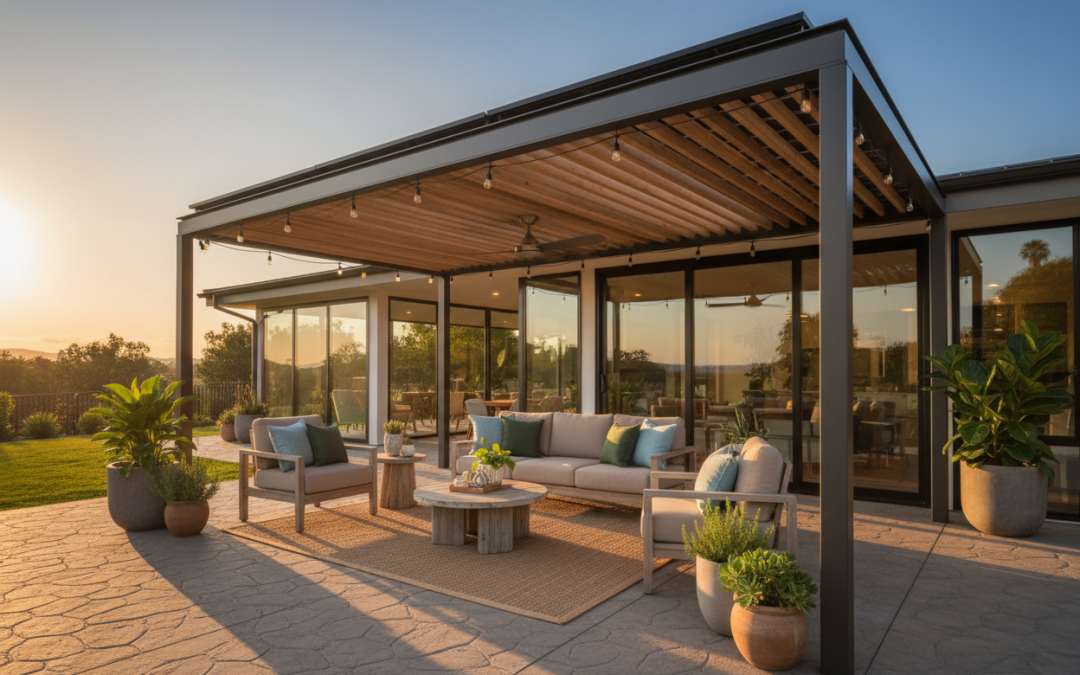
How Custom Patio Covers Can Reduce Your Energy Bills
Table of Contents
1. Introduction
2. Understanding the Energy Connection
3. How Patio Covers Block Heat and UV Rays
4. Reducing Indoor Cooling Costs
5. Creating Natural Ventilation and Airflow
6. Choosing the Right Materials for Maximum Energy Savings
7. Additional Benefits Beyond Energy Savings
8. Investment vs. Long-term Savings Analysis
9. Installation Considerations for Optimal Performance
10. Conclusion
11. Frequently Asked Questions
Introduction
Have you ever noticed how your air conditioning seems to work overtime during those scorching summer months? While you’re cranking up the AC and watching your energy bills climb higher than a summer thermometer, there’s actually a surprisingly effective solution right outside your back door. Custom patio covers aren’t just about creating a beautiful outdoor space – they’re secretly one of the smartest investments you can make for reducing your home’s energy consumption.
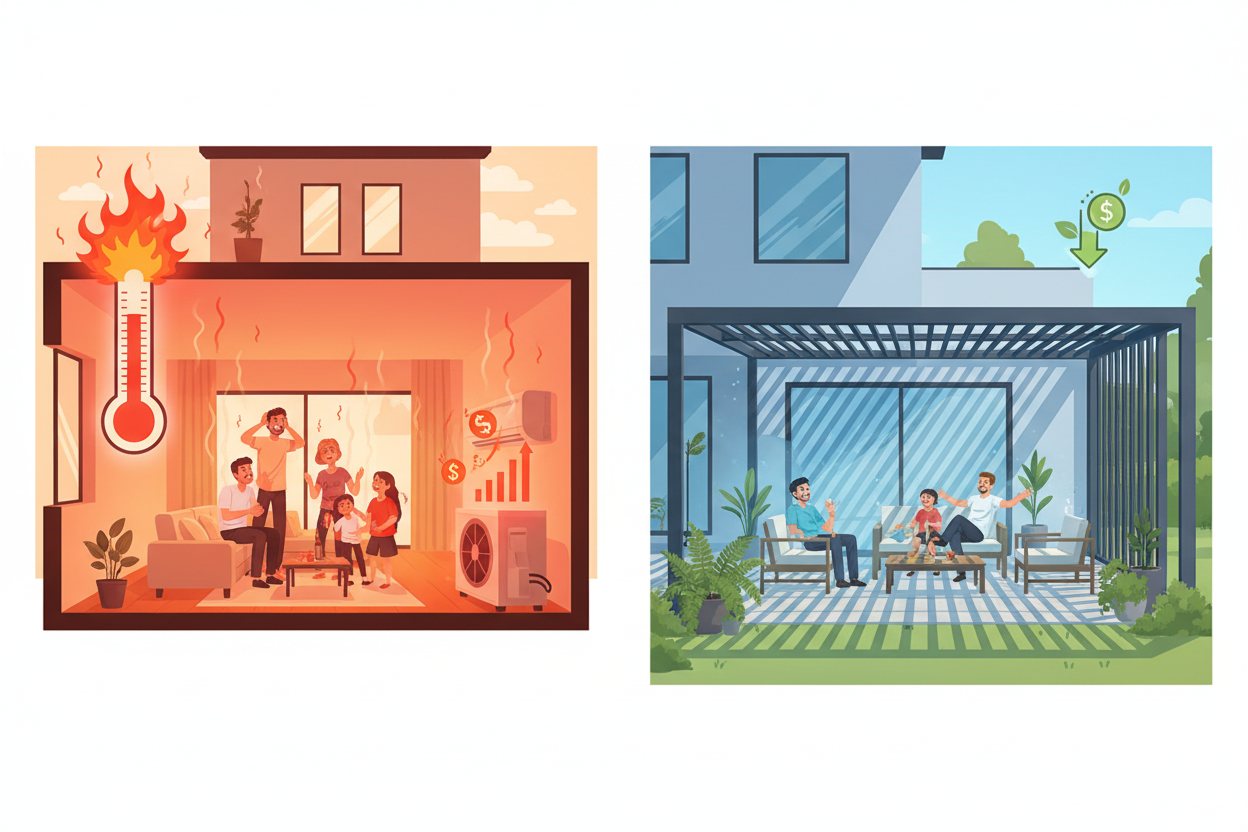
When most homeowners think about cutting energy costs, they immediately consider upgrading their HVAC system, adding insulation, or replacing windows. But here’s something that might surprise you: a well-designed patio cover can significantly reduce your cooling costs while simultaneously expanding your living space. It’s like getting two home improvements for the price of one, and the energy savings start from day one.
In this comprehensive guide, we’ll explore exactly how custom patio covers can slash your energy bills, the science behind their effectiveness, and why they might be the missing piece in your home’s energy efficiency puzzle.
Understanding the Energy Connection
The relationship between patio covers and energy savings isn’t immediately obvious to everyone, but once you understand the science, it makes perfect sense. Your home’s exterior walls and windows act like a giant heat collector during sunny days. When direct sunlight beats down on your patio doors, windows, and exterior walls, it creates what’s essentially a greenhouse effect that forces your air conditioning system to work much harder.
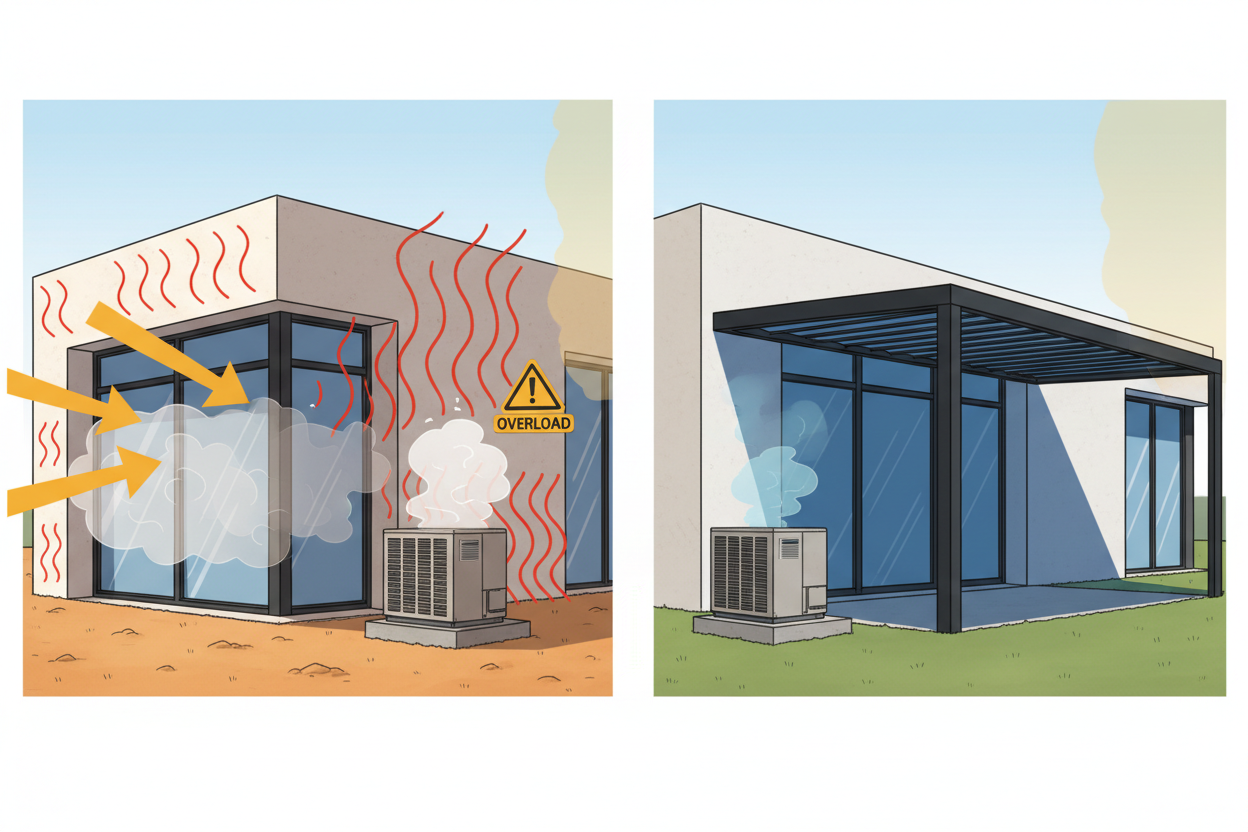
Think of your home as wearing a black t-shirt on a sunny day – it absorbs and retains heat. A patio cover acts like adding a wide-brimmed hat and finding some shade. The covered area creates a buffer zone that prevents direct solar heat gain from penetrating your home’s interior spaces.
This thermal barrier effect is particularly pronounced on south and west-facing patios, where afternoon sun can be most intense. By intercepting this solar energy before it reaches your home’s structure, patio covers can reduce the ambient temperature around your exterior walls by 10-15 degrees Fahrenheit on average.
How Patio Covers Block Heat and UV Rays
The magic of energy savings begins with understanding how patio covers interact with solar radiation. When sunlight hits your patio cover instead of your home’s exterior surfaces, several beneficial things happen simultaneously.
First, the cover material absorbs and deflects a significant portion of the sun’s energy. Quality patio cover materials are designed to reflect rather than absorb heat, sending that thermal energy back into the atmosphere instead of allowing it to build up around your home. This is particularly effective with light-colored or specially coated materials that have high solar reflectance properties.
Second, the shaded area underneath the cover creates a cooler microclimate. This isn’t just about comfort – it’s about reducing the temperature differential that your air conditioning system has to overcome. When the area immediately outside your patio doors is 15 degrees cooler, your AC doesn’t have to fight against as much heat infiltration.
The UV blocking properties also play a crucial role. While we often think of UV protection in terms of skin health and furniture fading, UV rays also carry significant thermal energy. By blocking up to 99% of harmful UV radiation, quality patio covers prevent this energy from contributing to your home’s heat load.
Reducing Indoor Cooling Costs
Here’s where the rubber meets the road in terms of actual dollar savings. When your patio cover reduces the heat load on your home’s exterior, your air conditioning system can operate more efficiently and for shorter periods. This translates directly into lower electricity bills, and the savings can be more substantial than you might expect.
Studies have shown that homes with properly installed patio covers can reduce cooling costs by 15-25% during peak summer months. For a typical household spending $200-300 monthly on air conditioning, this could mean savings of $30-75 per month, or $360-900 annually. Over the lifespan of a quality patio cover, these savings can easily exceed the initial investment.
The energy savings become even more pronounced during heat waves when electricity rates often peak. Many utility companies implement time-of-use pricing, charging higher rates during afternoon and early evening hours when demand is highest. Since patio covers are most effective during these peak sun hours, they help you avoid the most expensive electricity rates of the day.
Additionally, reducing your AC usage extends the lifespan of your cooling system. When your air conditioner doesn’t have to work as hard, it experiences less wear and tear, potentially saving you thousands in premature replacement costs.
Creating Natural Ventilation and Airflow
One of the often-overlooked benefits of patio covers is their ability to enhance natural ventilation patterns around your home. A well-designed cover doesn’t just provide shade – it can actually improve airflow in ways that further reduce your reliance on mechanical cooling.
The covered area creates what’s known as a “stack effect,” where cooler air naturally flows underneath the cover while warmer air rises and escapes. This natural convection process helps move hot air away from your home’s exterior surfaces, creating a cooling breeze effect that can make outdoor temperatures feel 5-10 degrees cooler.
When you combine this natural cooling with strategically opened windows or doors, you can often rely on cross-ventilation instead of air conditioning during milder weather. Many homeowners find they can extend their “AC-free” months by several weeks on either end of the summer season.
The key is ensuring your patio cover design promotes rather than restricts airflow. Open-sided covers generally perform better than fully enclosed structures for ventilation purposes, though the specific design should be tailored to your local climate and prevailing wind patterns.
Choosing the Right Materials for Maximum Energy Savings
Not all patio cover materials are created equal when it comes to energy efficiency. The material you choose can significantly impact your energy savings potential, so it’s worth understanding the pros and cons of different options.
Aluminum covers with light-colored or reflective finishes are among the most energy-efficient options. They reflect rather than absorb solar heat, and their lightweight construction allows for effective heat dissipation. Powder-coated aluminum in white or light colors can reflect up to 80% of solar energy.
Insulated patio covers take energy efficiency to the next level. These systems incorporate foam insulation between aluminum panels, providing both thermal resistance and sound dampening. While more expensive initially, insulated covers can increase energy savings by an additional 10-15%.
Fabric covers, particularly those made from solution-dyed acrylic materials, offer excellent UV protection while allowing some air circulation. They’re less effective at blocking radiant heat than solid materials but can still provide meaningful energy savings while offering more design flexibility.
Wood covers, while aesthetically pleasing, are generally less energy-efficient than metal alternatives. However, they can still provide significant savings when properly designed and finished with reflective stains or paints.
Additional Benefits Beyond Energy Savings
While energy savings are compelling on their own, patio covers deliver additional value that makes them an even smarter investment. These secondary benefits often justify the cost even before considering the energy savings.
Extended outdoor living space is perhaps the most immediately noticeable benefit. A covered patio effectively adds square footage to your home without the cost of interior construction. This expanded living area can increase your property value while providing a comfortable space for entertaining and relaxation.
Protection for outdoor furniture and equipment represents another form of savings. UV rays and weather exposure can quickly degrade patio furniture, grills, and other outdoor items. A quality cover can extend the life of these items by years, saving replacement costs.
Many homeowners also find that patio covers reduce their reliance on indoor air conditioning by making outdoor spaces comfortable for longer periods. Instead of retreating indoors during hot afternoons, families can continue enjoying their outdoor spaces, reducing the demand on indoor cooling systems.
Investment vs. Long-term Savings Analysis
Understanding the financial equation is crucial for making an informed decision about patio covers. While the upfront investment can range from $3,000 to $15,000 depending on size and materials, the long-term savings often justify the cost within 5-10 years.
Let’s consider a realistic scenario: A medium-sized aluminum patio cover costing $8,000 that reduces cooling costs by $500 annually would pay for itself in 16 years through energy savings alone. However, when you factor in increased property value, extended outdoor living space, and protection of outdoor investments, the payback period often drops to 8-12 years.
The return on investment becomes even more attractive in regions with high electricity costs or extreme summer temperatures. Homeowners in desert climates or areas with expensive electricity often see payback periods of 5-7 years.
It’s also worth considering the inflation hedge aspect. Energy costs typically increase faster than general inflation, so your annual savings will likely grow over time, improving your return on investment.
Installation Considerations for Optimal Performance
Proper installation is critical for maximizing energy savings from your patio cover. Even the best materials won’t deliver optimal performance if the cover isn’t properly positioned and installed.
Orientation matters significantly. Covers protecting south and west-facing areas typically provide the greatest energy savings, as these areas receive the most intense afternoon sun. However, the specific optimal orientation depends on your home’s layout and local climate patterns.
Height and pitch also affect performance. Covers that are too low can trap hot air, while those that are too high may not provide adequate shade. Most experts recommend a minimum height of 8-9 feet with a slight pitch for drainage and heat dissipation.
Integration with existing structures should be carefully planned. Covers that tie into your home’s roofline can provide better thermal protection than standalone structures, but they require more careful engineering and installation.
Professional installation is generally recommended for optimal performance and warranty protection. Experienced installers understand local building codes, wind load requirements, and optimal positioning for your specific situation.
Conclusion
Custom patio covers represent one of the most overlooked opportunities for reducing home energy costs while simultaneously improving your quality of life. By creating a thermal barrier that reduces solar heat gain, promoting natural ventilation, and expanding your usable living space, a well-designed patio cover delivers multiple forms of value.
The energy savings alone – typically 15-25% reduction in cooling costs – can justify the investment over time. When combined with increased property value, protection of outdoor investments, and enhanced outdoor living opportunities, patio covers often prove to be one of the smartest home improvements you can make.
As energy costs continue to rise and environmental consciousness grows, solutions that reduce consumption while improving comfort become increasingly valuable. A custom patio cover isn’t just an aesthetic upgrade – it’s a practical investment in your home’s efficiency and your family’s comfort.
If you’re tired of watching your energy bills climb every summer, it might be time to look beyond traditional efficiency upgrades and consider the shade solution that’s been hiding in plain sight. Your air conditioner – and your wallet – will thank you.
Frequently Asked Questions
How much can I realistically expect to save on my energy bills with a patio cover?
Most homeowners see cooling cost reductions of 15-25% during summer months, which typically translates to $300-900 in annual savings depending on your climate, home size, and local electricity rates.
Do patio covers work in all climates or just hot, sunny areas?
While patio covers provide the greatest energy savings in hot, sunny climates, they can offer benefits in most regions. Even in moderate climates, they reduce cooling loads during warm months and can extend outdoor living seasons.
What’s the difference between a cheap patio cover and an expensive one in terms of energy savings?
Higher-quality materials with better reflective properties and insulation can increase energy savings by 10-20% compared to basic covers. The difference in annual savings often justifies the higher upfront cost.
How long does it take for a patio cover to pay for itself through energy savings?
Payback periods typically range from 8-15 years through energy savings alone, but when considering increased property value and other benefits, the effective payback is often 5-10 years.
Can I install a patio cover myself, or do I need professional installation?
While DIY installation is possible for some simpler designs, professional installation is recommended for optimal energy performance, structural integrity, and warranty protection. Proper positioning and integration are crucial for maximizing energy savings.
Do I need permits for a patio cover installation?
Most areas require building permits for permanent patio covers. Requirements vary by location and cover size, so check with your local building department before starting your project.

Mobile City TX pergola companies near me | Keathley Landscaping

Garland TX custom pergolas | Keathley Landscaping

Mobile City TX luxury custom pergolas | Keathley Landscaping

Rose Hill TX outdoor living contractor | Keathley Landscaping

Lowry Crossing TX custom patio cover builders | Keathley Landscaping

Rose Hill TX pergola companies near me | Keathley Landscaping

Lake Highlands Dallas TX pergola builders | Keathley Landscaping

Lakewood Dallas TX custom patio covers | Keathley Landscaping

McKinney TX custom wood pergola | Keathley Landscaping

Rowlett TX custom patio covers | Keathley Landscaping

Lowry Crossing TX custom patio cover cost | Keathley Landscaping

Lake Highlands Dallas TX covered patio contractors near me | Keathley Landscaping

Plano TX custom patio cover cost | Keathley Landscaping

Mobile City TX covered patios | Keathley Landscaping

McKinney TX custom pergolas | Keathley Landscaping

Highland Park TX outdoor living space contractors | Keathley Landscaping

Mobile City TX custom patio cover builders | Keathley Landscaping

Rockwall TX covered patio contractors near me | Keathley Landscaping

McKinney TX custom patio cover cost | Keathley Landscaping

Sachse TX custom patio cover cost | Keathley Landscaping

Sachse TX outdoor living space contractors | Keathley Landscaping

Lavon TX custom pergolas | Keathley Landscaping

Wylie TX covered patios | Keathley Landscaping

Lowry Crossing TX custom pergolas | Keathley Landscaping

Highland Park TX covered patio contractors near me | Keathley Landscaping

Lavon TX outdoor living contractor | Keathley Landscaping

Fate TX pergola companies near me | Keathley Landscaping

Fairview TX outdoor living space contractors | Keathley Landscaping

sod company Allen Texas

sod installation near me Fate Texas

price for sod installation Plano Texas

residential sod installation Lavon Texas

new sod installation Frisco Texas

sod installation service Lavon Texas

sod installation near me Lakewood Dallas Texas

lawn sod installation Fate Texas

new sod installation Preston Hollow Dallas Texas

cost of sod and installation Parker Texas

sod installation cost Fate Texas

price of sod installation Lake Highlands Dallas Texas

sod installation service Lake Highlands Dallas Texas

installation of sod cost Allen Texas

new sod installation Allen Texas

residential sod installation Fate Texas

grass contractor Allen Texas

grass installation Parker Texas

sod company Parker Texas

sod installation company Dallas Texas

lawn sod installation Allen Texas

sod installation companies near me Wylie Texas

sod company Plano Texas

grass contractor McKinney Texas

new sod installation Sachse Texas

sod installation companies near me Mobile City Texas

sod installation cost Fairview Texas

lawn sod installation Wylie Texas

landscape drain Sachse Texas

drainage company Sachse Texas

drain cleaning company near me Lake Highlands Dallas Texas

drain contractor Rose Hill Texas

yard drainage contractors near me Garland Texas

landscape drainage contractor near me Allen Texas

drain cleaning Fairview Texas

drain contractor Lake Highlands Dallas Texas

drain cleaning company near me Lucas Texas

channel drain cleaning Dallas Texas

landscape drainage Plano Texas

yard drainage Rose Hill Texas

drainage specialist near me Garland Texas

landscape drainage Murphy Texas

landscape drainage contractor near me Lakewood Dallas Texas

drainage solutions near me Sachse Texas

drainage solutions near me Fate Texas

drainage Rockwall Texas

drainage contractors near me Rowlett Texas

drainage company near me Rose Hill Texas

landscape drain Fairview Texas

drainage company Rockwall Texas

drainage company McKinney Texas

drainage specialist near me Sachse Texas

outdoor drain repair Garland Texas

yard drainage contractors near me Mobile City Texas

yard drainage specialist near me Lowry Crossing Texas

Recent Comments