
Sustainable Materials for Eco-Friendly Custom Pergolas: A Complete Guide to Green Outdoor Living
Table of Contents
1. Introduction to Sustainable Pergola Materials
2. Why Choose Eco-Friendly Materials for Your Pergola
3. Top Sustainable Materials for Custom Pergolas
4. Reclaimed and Recycled Options
5. Maintenance and Longevity of Sustainable Pergola Materials
6. Cost Considerations for Eco-Friendly Pergolas
7. Design Ideas for Sustainable Custom Pergolas
8. Working with Contractors on Green Building Projects
9. Conclusion
10. Frequently Asked Questions
Introduction to Sustainable Pergola Materials
Creating an outdoor oasis doesn’t have to come at the expense of our planet. As homeowners become increasingly conscious of their environmental impact, the demand for sustainable building materials has skyrocketed, and pergolas are no exception. Whether you’re planning a cozy reading nook or an expansive entertainment area, choosing eco-friendly materials for your custom pergola can significantly reduce your carbon footprint while creating a stunning outdoor space that stands the test of time.
The beauty of sustainable pergola construction lies not just in its environmental benefits, but in the unique character and durability these materials bring to your outdoor living space. From reclaimed wood with decades of history etched into its grain to innovative composite materials made from recycled plastics, the options for creating an environmentally responsible pergola are both diverse and exciting.
Why Choose Eco-Friendly Materials for Your Pergola
The decision to use sustainable materials for your custom pergola extends far beyond environmental consciousness, though that’s certainly a compelling reason. When I first started researching eco-friendly building materials for my own backyard project, I was amazed to discover the numerous advantages these materials offer over traditional options.
Environmental impact reduction stands as the most obvious benefit. Traditional pergola materials often require intensive manufacturing processes that consume significant energy and natural resources. Sustainable alternatives, particularly reclaimed and recycled materials, dramatically reduce the demand for new resource extraction while diverting waste from landfills.
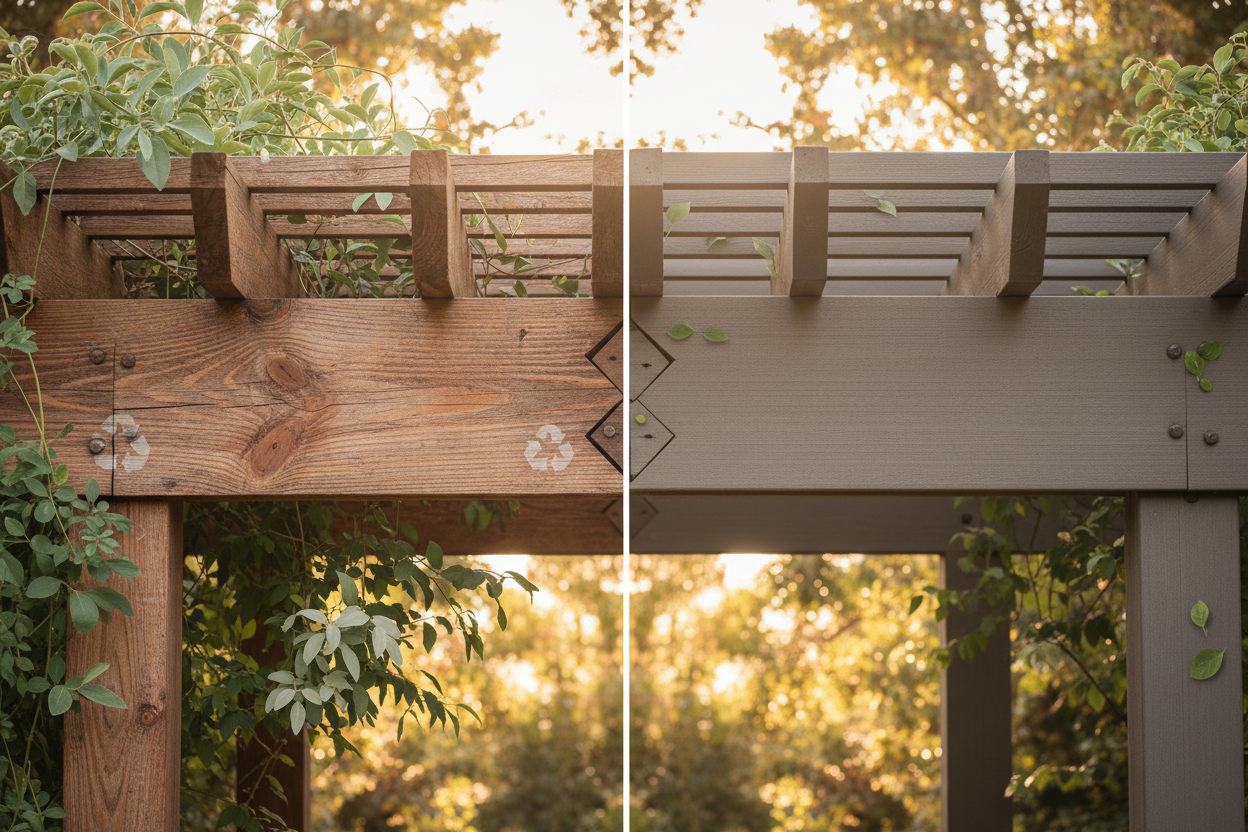
Durability represents another significant advantage. Many sustainable materials, especially those that have already weathered decades of use, have proven their ability to withstand various environmental conditions. This natural selection process means you’re choosing materials with a track record of longevity.
The unique aesthetic appeal of sustainable materials cannot be overstated. Reclaimed wood carries stories in its weathered surfaces, while recycled composite materials offer consistency and versatility in design. These materials often provide character and visual interest that’s impossible to replicate with brand-new materials.
Top Sustainable Materials for Custom Pergolas
Reclaimed Wood Options
Reclaimed wood stands as the gold standard for sustainable pergola construction. This material offers unparalleled character while providing excellent structural integrity. Barn wood, with its rich patina and weathered texture, creates pergolas that feel like they’ve been part of the landscape for generations. The natural aging process has already done much of the work, creating materials that are often more stable and less prone to warping than fresh lumber.
Old-growth timber reclaimed from demolished buildings represents another exceptional option. These pieces often feature grain patterns and wood density that’s simply unavailable in today’s fast-growth forests. The dimensional stability of old-growth wood makes it particularly suitable for pergola construction, where structural integrity is paramount.
Salvaged deck materials and fence posts offer more accessible options for those working with tighter budgets. While these materials may require more preparation and treatment, they can create stunning pergolas with proper planning and execution.
Bamboo: The Renewable Powerhouse
Bamboo deserves special recognition as one of nature’s most sustainable building materials. This remarkable plant grows incredibly quickly, with some species reaching maturity in just three to five years compared to decades for traditional hardwoods. Bamboo’s natural strength-to-weight ratio rivals that of steel, making it an excellent choice for pergola construction.
The versatility of bamboo allows for both rustic and modern pergola designs. Natural bamboo poles create tropical, resort-like atmospheres, while engineered bamboo products offer more uniform dimensions for contemporary designs. The natural flexibility of bamboo also makes it an excellent choice for areas prone to high winds or seismic activity.
Recycled Composite Materials
Modern recycled composite materials represent the cutting edge of sustainable pergola construction. These products, typically made from recycled plastics and wood fibers, offer the appearance of natural wood with superior durability and minimal maintenance requirements.
The consistency of composite materials makes them ideal for pergolas requiring precise dimensions and uniform appearance. Unlike natural wood, composites won’t warp, crack, or require regular staining or sealing. This long-term stability makes them particularly attractive for homeowners seeking low-maintenance outdoor structures.
Many composite manufacturers now offer products made from 90% or more recycled content, effectively turning waste materials into beautiful, functional building components. The color and texture options available in recycled composites continue to expand, offering realistic wood grain patterns and a variety of color choices.
Sustainable Metal Options
Recycled steel and aluminum provide excellent options for modern, industrial-style pergolas. These materials offer exceptional durability and can be recycled indefinitely without losing their structural properties. Powder-coated finishes on recycled metals provide long-lasting protection while offering unlimited color options.
The strength of recycled metals allows for more open, minimalist pergola designs with longer spans and fewer support posts. This can be particularly advantageous in smaller outdoor spaces where maximizing open area is important.
Reclaimed and Recycled Options
The world of reclaimed and recycled pergola materials extends far beyond traditional wood and metal options. Creative homeowners and designers are discovering innovative ways to repurpose materials that might otherwise end up in landfills.
Reclaimed brick and stone can create stunning pergola posts and support structures. These materials bring incredible durability and unique aesthetic appeal to pergola designs. Salvaged architectural elements, such as columns from demolished buildings, can serve as dramatic focal points in custom pergola designs.
Recycled plastic lumber represents another innovative option. Made from post-consumer plastic waste, these products offer the workability of traditional lumber with superior resistance to moisture, insects, and decay. The manufacturing process for recycled plastic lumber continues to improve, with newer products offering more realistic wood textures and colors.
Shipping containers and industrial materials are finding new life in creative pergola designs. While these applications require more specialized design and engineering considerations, they can create truly unique outdoor structures with significant environmental benefits.
Maintenance and Longevity of Sustainable Pergola Materials
One of the most compelling aspects of sustainable pergola materials is their potential for exceptional longevity with proper care. However, different materials require different maintenance approaches to maximize their lifespan.
Reclaimed wood, while naturally weathered, still benefits from appropriate treatment and protection. Depending on the wood species and intended use, this might include natural oil treatments, eco-friendly stains, or clear protective coatings. The key is choosing treatments that enhance the wood’s natural durability without introducing harmful chemicals into your outdoor environment.
Bamboo requires specific care to prevent splitting and maintain its structural integrity. Regular inspection for signs of insect damage and appropriate treatment with natural preservatives can significantly extend bamboo’s useful life in pergola applications.
Recycled composite materials require minimal maintenance, typically needing only periodic cleaning with soap and water. This low-maintenance characteristic makes composites particularly attractive for busy homeowners or those with limited time for outdoor structure upkeep.
Metal components benefit from regular inspection and touch-up of protective coatings. Recycled steel and aluminum, when properly finished and maintained, can last for decades with minimal ongoing care requirements.
Cost Considerations for Eco-Friendly Pergolas
The financial aspects of sustainable pergola construction often surprise homeowners. While some eco-friendly materials carry premium prices, others can actually reduce overall project costs when properly sourced and applied.
Reclaimed materials often offer significant cost savings compared to new lumber, particularly for high-quality wood species. However, the preparation time and potential need for additional processing should be factored into overall project costs. The labor involved in cleaning, sizing, and preparing reclaimed materials can offset some of the material cost savings.
Bamboo typically costs less than comparable hardwoods while offering superior sustainability credentials. The fast growth rate of bamboo helps keep prices stable and accessible for most pergola projects.
Recycled composite materials often carry higher upfront costs than traditional lumber but can provide long-term savings through reduced maintenance requirements and extended lifespan. When calculating total cost of ownership over 15-20 years, composites often prove more economical than traditional materials.
The investment in sustainable materials often pays dividends in increased property value and reduced long-term maintenance costs. Many homeowners find that the unique character and environmental benefits of sustainable materials justify any additional upfront investment.
Design Ideas for Sustainable Custom Pergolas
Sustainable materials open up exciting design possibilities that simply aren’t available with traditional building materials. The character and history embedded in reclaimed materials can inspire unique design approaches that celebrate both form and environmental responsibility.
Mixed-material designs combining reclaimed wood posts with recycled metal framework create visually striking pergolas that highlight the best characteristics of each material. The contrast between weathered wood and clean metal lines can create stunning architectural focal points.
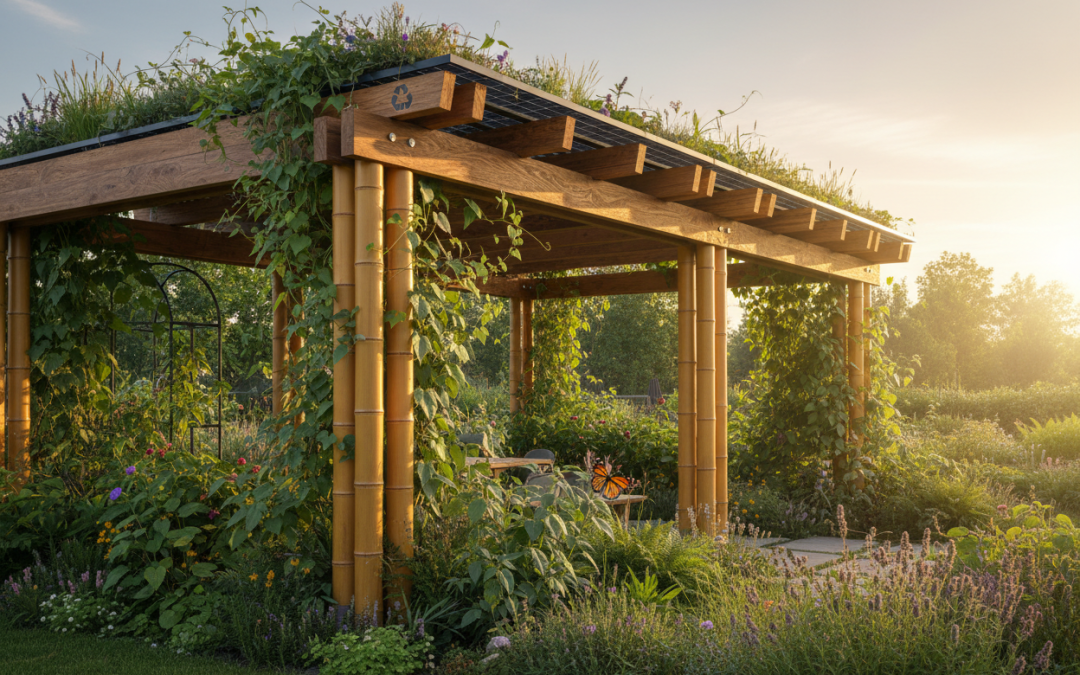
Living pergolas that incorporate growing elements with sustainable materials represent the ultimate in eco-friendly design. Training vines and climbing plants over bamboo or reclaimed wood structures creates dynamic, evolving outdoor spaces that provide increasing shade and beauty over time.
Modular designs using recycled composite materials allow for future expansion or reconfiguration as needs change. This adaptability extends the useful life of the pergola while providing flexibility for evolving outdoor living requirements.
Incorporating salvaged architectural elements as design features can create pergolas with unique character and historical significance. Reclaimed columns, brackets, and decorative elements can transform a simple pergola into a conversation piece with deep environmental and aesthetic value.
Working with Contractors on Green Building Projects
Successfully executing a sustainable pergola project often requires working with contractors who understand and appreciate green building principles. Not all contractors have experience with reclaimed materials or sustainable building practices, so choosing the right partner is crucial for project success.
Look for contractors with demonstrated experience in sustainable construction or restoration projects. These professionals understand the unique challenges and opportunities presented by reclaimed and recycled materials. They can also provide valuable guidance on material selection and preparation techniques.
Clear communication about sustainability goals and material preferences helps ensure that contractors can source appropriate materials and plan construction techniques accordingly. Some sustainable materials require specialized tools or techniques that should be discussed during the planning phase.
Contractors experienced with sustainable materials can often suggest sources for reclaimed and recycled materials that might not be readily apparent to homeowners. These professional networks can provide access to higher-quality materials at better prices than retail sources.
Conclusion
Creating a beautiful, functional pergola using sustainable materials represents more than just an environmental choice – it’s an investment in unique design, long-term durability, and responsible stewardship of our natural resources. The materials available today offer unprecedented opportunities to create outdoor structures that are both environmentally responsible and aesthetically exceptional.
From the weathered character of reclaimed barn wood to the innovative engineering of recycled composites, sustainable pergola materials provide options for every design preference and budget. The key lies in understanding the characteristics and requirements of different materials while working with experienced professionals who can help bring your vision to life.
As we continue to face environmental challenges, choosing sustainable materials for outdoor construction projects like pergolas represents a meaningful way to reduce our impact while creating beautiful, functional outdoor living spaces. The investment in sustainable materials pays dividends not only in environmental benefits but in the unique character, durability, and satisfaction that comes from making responsible choices.
Your custom pergola can serve as both a beautiful outdoor retreat and a testament to the possibility of creating stunning architectural elements while respecting our planet’s resources. The future of outdoor construction lies in these sustainable approaches, and your pergola project can be part of leading this important transformation in how we build and live.
Frequently Asked Questions
Q: Are sustainable pergola materials more expensive than traditional options?
A: The cost varies significantly depending on the specific materials chosen. Reclaimed wood can often cost less than new lumber, while recycled composites may have higher upfront costs but lower long-term expenses due to reduced maintenance needs. Overall, many sustainable options provide better value when considering total cost of ownership over the pergola’s lifetime.
Q: How do I ensure reclaimed wood is safe and structurally sound for pergola construction?
A: Have reclaimed wood inspected by a qualified professional to assess structural integrity. Look for signs of insect damage, rot, or excessive weathering. Proper cleaning and treatment can address many issues, but severely compromised wood should be avoided for structural applications.
Q: Will bamboo pergolas hold up in harsh weather conditions?
A: Quality bamboo can be very durable in various weather conditions when properly treated and maintained. However, bamboo performance varies by species and treatment method. Consult with suppliers about the best bamboo varieties for your specific climate and intended use.
Q: How long do recycled composite pergola materials typically last?
A: High-quality recycled composite materials often come with warranties of 20-25 years and can last much longer with proper care. They resist fading, staining, and structural degradation better than traditional wood materials.
Q: Can I mix different sustainable materials in one pergola design?
A: Absolutely! Mixed-material designs can be very effective and visually appealing. Consider factors like expansion rates, compatibility of finishes, and structural requirements when combining different materials. Professional design assistance can help ensure successful material integration.
Q: Where can I source reclaimed materials for my pergola project?
A: Architectural salvage companies, demolition contractors, reclaimed lumber specialists, and online marketplaces are good sources. Some lumber yards also carry reclaimed materials. Building relationships with local contractors can provide access to materials from renovation and demolition projects.

Lavon TX pergolas | Keathley Landscaping

Wylie TX covered patio contractors near me | Keathley Landscaping

Fairview TX outdoor living space contractors | Keathley Landscaping

Lowry Crossing TX custom patio cover builders | Keathley Landscaping

Rowlett TX custom pergolas | Keathley Landscaping

Frisco TX covered patios | Keathley Landscaping

Dallas TX covered patios | Keathley Landscaping

Preston Hollow Dallas TX custom patio cover cost | Keathley Landscaping

Allen TX custom pergolas | Keathley Landscaping

Sachse TX custom wood pergola | Keathley Landscaping

Wylie TX luxury custom pergolas | Keathley Landscaping

Lakewood Dallas TX custom patio cover cost | Keathley Landscaping

Lucas TX pergola companies near me | Keathley Landscaping

Lakewood Dallas TX custom pergolas | Keathley Landscaping

McKinney TX custom patio covers | Keathley Landscaping

Lavon TX custom pergolas | Keathley Landscaping

Rowlett TX covered patio contractors near me | Keathley Landscaping

Rowlett TX custom wood pergola | Keathley Landscaping

Richardson TX pergolas | Keathley Landscaping

Murphy TX custom pergolas | Keathley Landscaping

Richardson TX covered patio contractors near me | Keathley Landscaping

Allen TX pergola builders | Keathley Landscaping

Murphy TX custom wood pergola | Keathley Landscaping

Parker TX outdoor living space contractors | Keathley Landscaping

Plano TX covered patios | Keathley Landscaping

Plano TX pergola builders | Keathley Landscaping

Lowry Crossing TX custom patio covers | Keathley Landscaping

Preston Hollow Dallas TX luxury custom pergolas | Keathley Landscaping

sod installation service Plano Texas

cost for sod installation Lucas Texas

sod installation near me Lake Highlands Dallas Texas

grass contractor Preston Hollow Dallas Texas

sod installation service Fairview Texas

lawn sod installation near me Frisco Texas

lawn sod installation Lake Highlands Dallas Texas

sod installation near me Lakewood Dallas Texas

sod contractors Frisco Texas

sod installation company near me Lavon Texas

grass contractor Plano Texas

installation of sod cost Lakewood Dallas Texas

sod grass installation Richardson Texas

sod installation cost Lowry Crossing Texas

sod installation services Dallas Texas

sod installation companies Rose Hill Texas

sod installation cost Parker Texas

sod grass installation Lucas Texas

cost of sod installation Fairview Texas

cost of sod installation Lucas Texas

installation of sod cost Fate Texas

cost of sod and installation Garland Texas

price of sod installation Preston Hollow Dallas Texas

sod installation near me Murphy Texas

cost of sod and installation Dallas Texas

sod company Dallas Texas

cost for sod installation Lake Highlands Dallas Texas

sod installation companies Richardson Texas

drain contractor Plano Texas

drainage solutions near me Frisco Texas

drainage company near me Lowry Crossing Texas

drain cleaning Highland Park Texas

drain Richardson Texas

drain cleaning Lucas Texas

yard drainage specialist near me Sachse Texas

yard drainage specialist near me Lake Highlands Dallas Texas

landscape drainage Wylie Texas

drain Rockwall Texas

landscape drain Wylie Texas

channel drain cleaning Lucas Texas

drain cleaning Mobile City Texas

landscape drain Sachse Texas

drainage company McKinney Texas

yard drainage contractors near me Sachse Texas

drainage contractors near me Richardson Texas

landscape drain Frisco Texas

drain cleaning company near me Preston Hollow Dallas Texas

drainage company near me Allen Texas

drainage company Parker Texas

channel drain cleaning Wylie Texas

drainage company Murphy Texas

drainage specialist near me Rowlett Texas

yard drainage contractors near me Murphy Texas

landscape drainage contractor near me Frisco Texas

yard drainage specialist near me Rowlett Texas

Recent Comments