
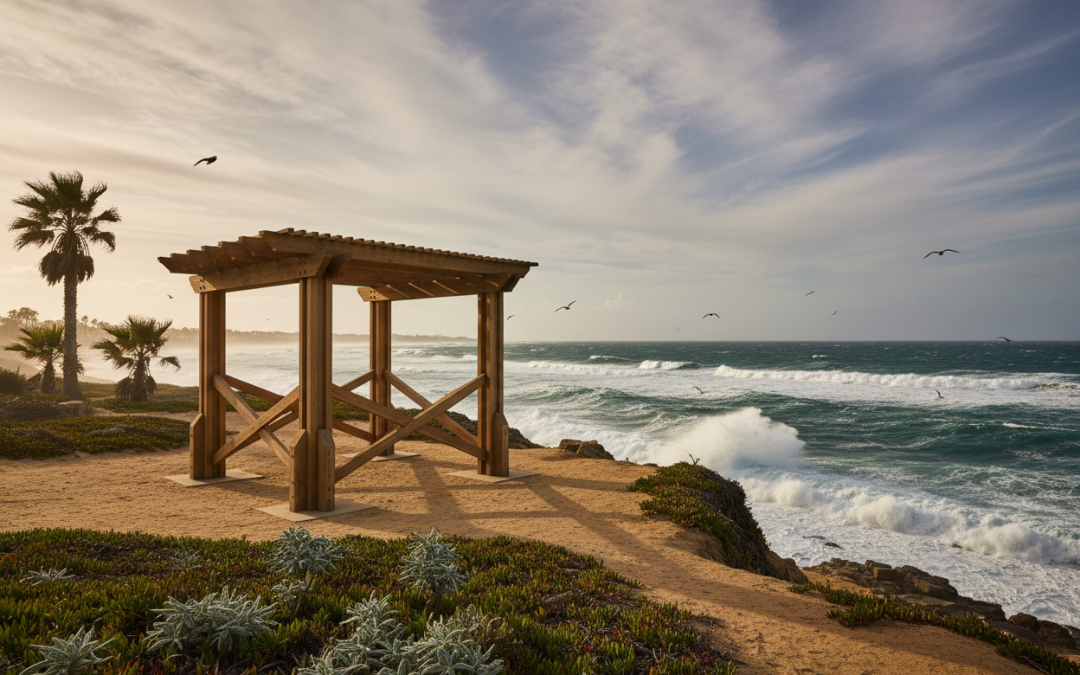
How to Design Custom Pergolas for Windy Coastal Locations
Living near the coast offers breathtaking views, fresh sea air, and the soothing sound of waves. However, coastal environments also present unique challenges when it comes to outdoor structures, particularly pergolas. The combination of salt air, high winds, and moisture can make designing and building a pergola more complex than in inland locations. If you’re dreaming of creating a beautiful outdoor living space that can withstand coastal conditions, this comprehensive guide will walk you through everything you need to know about designing custom pergolas for windy coastal locations.
Table of Contents
1. Understanding Coastal Wind Challenges
2. Essential Materials for Coastal Pergolas
3. Structural Design Considerations
4. Foundation Requirements for Wind Resistance
5. Roof and Cover Options for Coastal Pergolas
6. Professional Installation vs. DIY Considerations
7. Maintenance Tips for Coastal Pergolas
8. Cost Considerations and Budget Planning
9. Frequently Asked Questions
10. Conclusion
Understanding Coastal Wind Challenges
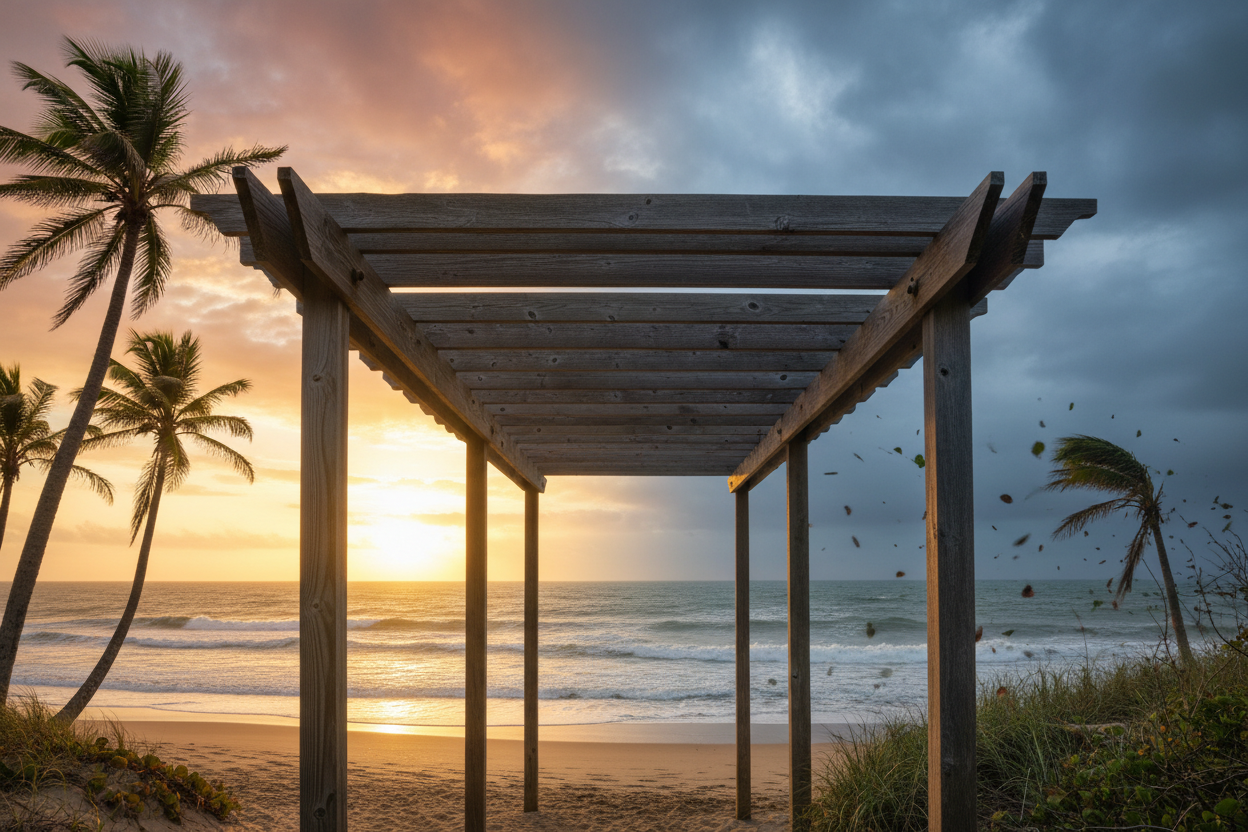
Before diving into design specifics, it’s crucial to understand what makes coastal locations particularly challenging for pergola construction. Coastal areas typically experience consistent winds that can range from gentle breezes to powerful gusts exceeding 50 mph during storms. These winds carry salt particles that can corrode metal components and moisture that accelerates wood decay.
The wind patterns in coastal areas are often unpredictable, changing direction throughout the day as land and sea temperatures fluctuate. This means your pergola needs to be engineered to handle wind loads from multiple directions, not just the prevailing wind direction. Additionally, the proximity to water means higher humidity levels year-round, which affects material selection and long-term durability.
Understanding your specific microclimate is essential. Factors such as your distance from the water, local topography, and surrounding structures all influence wind patterns around your property. Consider consulting local weather data and speaking with neighbors who have outdoor structures to get a better sense of the wind conditions you’ll be dealing with.
Essential Materials for Coastal Pergolas
Material selection is perhaps the most critical aspect of designing a coastal pergola. The harsh marine environment demands materials that can resist corrosion, withstand high winds, and maintain their structural integrity over time.
Aluminum stands out as an excellent choice for coastal pergolas. Marine-grade aluminum alloys offer exceptional corrosion resistance and maintain their strength in salt air environments. Unlike steel, aluminum won’t rust, and it’s lightweight yet strong enough to handle significant wind loads. Powder-coated aluminum provides additional protection and comes in various colors to match your aesthetic preferences.
For those preferring natural materials, certain wood species perform better in coastal environments. Teak, cedar, and pressure-treated pine with marine-grade treatments can withstand salt air and moisture. However, wooden pergolas require more frequent maintenance and may not be the best choice for areas with extreme wind conditions.
Composite materials offer another viable option, combining the appearance of wood with enhanced durability. High-quality composite lumber resists moisture, salt, and UV damage while requiring minimal maintenance. Some composite materials are specifically engineered for marine environments and can be an excellent middle ground between natural wood and metal options.
When it comes to hardware and fasteners, stainless steel is non-negotiable in coastal environments. Grade 316 stainless steel offers the highest level of corrosion resistance and should be used for all bolts, screws, and brackets. Galvanized hardware may seem like a cost-effective alternative, but it will eventually fail in salt air conditions.
Structural Design Considerations
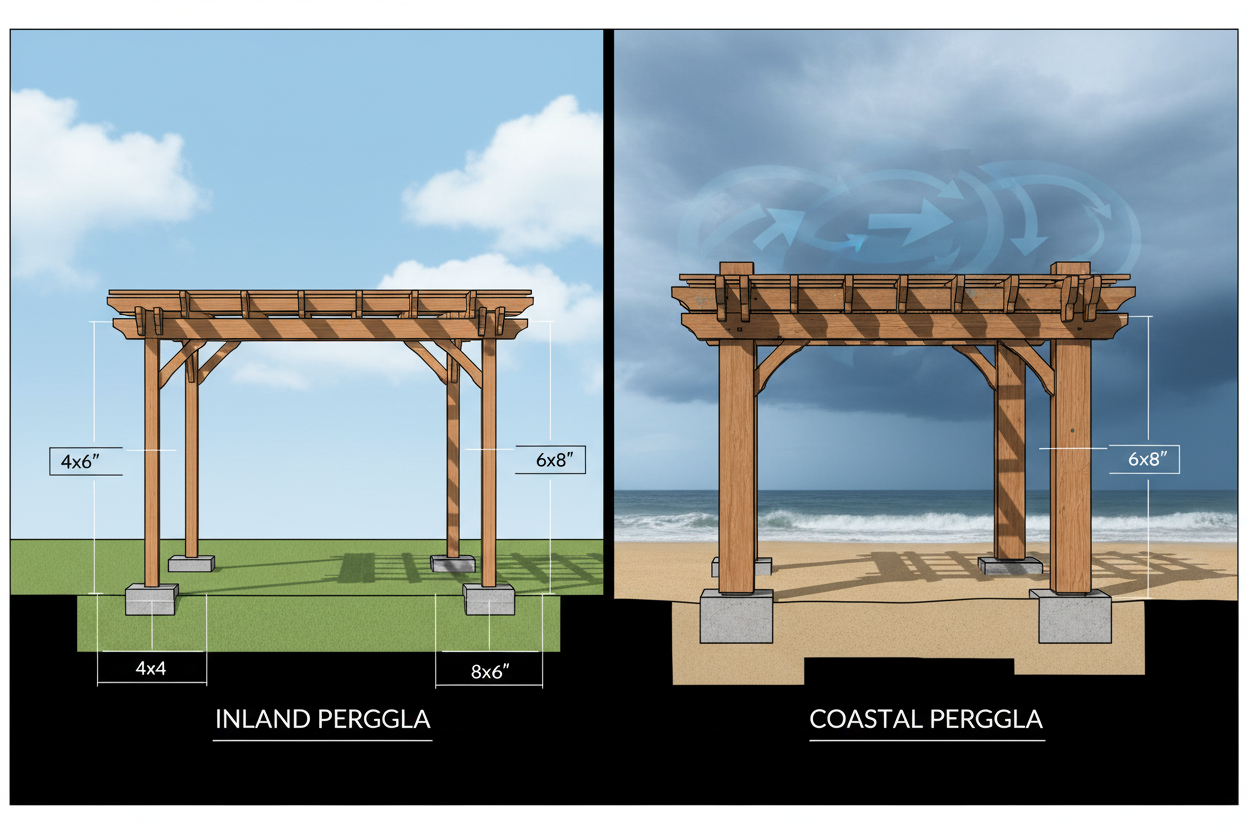
The structural design of your coastal pergola must account for significantly higher wind loads than inland structures. This means beefing up every aspect of the frame, from post dimensions to beam spacing and connection methods.
Post sizing is critical for wind resistance. In coastal areas, posts should typically be larger than standard pergola designs, with 6×6 inch posts being the minimum for most applications. For larger pergolas or areas with extreme wind exposure, 8×8 inch posts may be necessary. The posts should be spaced closer together than inland designs, typically no more than 8 feet apart for optimal stability.
Beam and rafter design must also be enhanced for coastal conditions. Doubled or tripled beams provide better wind resistance and load distribution. The connection between beams and posts should use through-bolts rather than lag screws, and metal brackets can provide additional reinforcement at critical joints.
Consider incorporating diagonal bracing into your design. While it may affect the clean lines of a traditional pergola, diagonal braces significantly improve lateral stability and wind resistance. These can be designed as decorative elements that enhance rather than detract from the overall appearance.
The overall height and profile of your pergola also matter. Lower profiles present less surface area to the wind and are inherently more stable. If you need height for clearance or aesthetic reasons, consider tapering the design or incorporating wind-reducing features like lattice panels that allow air to pass through rather than creating solid barriers.
Foundation Requirements for Wind Resistance
A pergola is only as strong as its foundation, and this is especially true in coastal environments where wind uplift and lateral forces are significant concerns. Standard deck footings that might work inland are often insufficient for coastal pergolas.
Concrete footings should be deeper and wider than standard recommendations. In most coastal areas, footings should extend at least 3 feet below ground level, and in areas prone to frost, they should go below the frost line. The concrete should be high-quality, marine-grade mix designed to resist salt intrusion and freeze-thaw cycles.
Post anchoring systems must be robust enough to handle both downward loads and significant uplift forces. Galvanized or stainless steel post anchors should be embedded deep into the concrete, and the connection between the post and anchor should be engineered for the expected wind loads.
In sandy coastal soils, special consideration must be given to soil conditions and drainage. Poor drainage can lead to foundation settlement and instability over time. Consider incorporating proper drainage systems around footings and using soil stabilization techniques if necessary.
For pergolas on elevated decks or patios, the attachment method becomes even more critical. Through-bolt connections to the underlying structure are essential, and the deck itself must be evaluated to ensure it can handle the additional wind loads imposed by the pergola.
Roof and Cover Options for Coastal Pergolas
The roof and covering system of your coastal pergola requires careful consideration of both functionality and wind resistance. Traditional solid roofing materials can create significant wind loads and may not be appropriate for high-wind coastal areas.
Retractable fabric canopies offer excellent flexibility for coastal pergolas. High-quality marine fabrics can provide shade and light rain protection when conditions are calm, but can be quickly retracted when winds pick up. Look for fabrics specifically designed for marine use, with UV resistance and mildew protection built in.
Louvered roof systems provide another excellent option for coastal pergolas. Adjustable louvers allow you to control sun exposure and ventilation while providing the ability to open fully during high winds. Aluminum louvered systems are particularly well-suited to coastal environments due to their corrosion resistance and durability.
For those preferring a more traditional open pergola design, consider the spacing and orientation of rafters and cross-beams. Wider spacing reduces wind resistance but may compromise the shade provided. The orientation of rafters can also affect wind loads, with some orientations being more aerodynamically favorable than others.
Polycarbonate panels offer a compromise between protection and wind resistance. These lightweight, virtually unbreakable panels can provide weather protection while allowing light transmission. However, they must be properly secured and may require removal during severe weather events.
Professional Installation vs. DIY Considerations
While many inland pergolas can be successfully built as DIY projects, coastal pergolas often require professional expertise due to the complex engineering requirements and local building codes specific to high-wind areas.
Professional contractors experienced in coastal construction understand local wind load requirements, soil conditions, and building codes that may not be familiar to DIY builders. They also have access to specialized tools and materials that may not be readily available to homeowners.
Building permits are typically required for pergolas in coastal areas, and the permitting process often requires engineered drawings and calculations that demonstrate the structure can withstand local wind loads. Professional contractors can navigate this process and ensure your pergola meets all local requirements.
If you do choose to tackle the project yourself, be prepared for additional research and planning. You’ll need to understand local building codes, obtain proper permits, and possibly hire a structural engineer to provide stamped drawings. The cost savings of DIY construction may be offset by these additional requirements.
Consider a hybrid approach where you hire professionals for the foundation and structural work but handle finishing details yourself. This ensures the critical structural elements are properly installed while allowing you to maintain some hands-on involvement in the project.
Maintenance Tips for Coastal Pergolas
Regular maintenance is crucial for coastal pergolas due to the harsh marine environment. Salt air, moisture, and UV exposure all take their toll on outdoor structures, making proactive maintenance essential for longevity.
Cleaning should be performed regularly, ideally monthly during peak salt season. Use fresh water to rinse away salt deposits, and consider using mild detergents for deeper cleaning. Pay special attention to joints, connections, and hardware where salt can accumulate and cause corrosion.
Inspect all hardware and connections at least twice yearly, preferably before and after storm season. Look for signs of corrosion, loosening, or wear. Replace any questionable hardware immediately, as failure of a single connection point can compromise the entire structure.
For wooden pergolas, annual treatment with marine-grade sealers or stains is essential. These treatments should be specifically designed for coastal environments and provide UV protection in addition to moisture resistance. Sand and re-treat any areas showing signs of weathering or wear.
Metal pergolas require less frequent treatment but should be inspected for any damage to protective coatings. Touch up any scratches or chips in powder coating immediately to prevent corrosion from starting. Consider applying additional protective coatings in areas of high salt exposure.
Keep detailed maintenance records, including photos of the structure’s condition over time. This documentation can be valuable for warranty claims and helps track the effectiveness of your maintenance routine.
Cost Considerations and Budget Planning
Building a pergola designed for coastal conditions typically costs more than standard inland pergolas due to the specialized materials, engineering requirements, and installation considerations involved.
Material costs are generally 20-40% higher for coastal-grade components. Marine-grade aluminum, stainless steel hardware, and specialized treatments all command premium prices. However, these upfront costs are offset by longer service life and reduced maintenance requirements over time.
Professional installation costs may also be higher due to the specialized knowledge required and additional time needed for proper foundation work and structural connections. Expect to pay 15-25% more for professional installation compared to standard pergola construction.
Permit and engineering costs can add $1,000-$3,000 to your project budget, depending on local requirements and the complexity of your design. While these seem like significant additional costs, they ensure your pergola is properly designed and legally compliant.
Consider the long-term value when budgeting for your coastal pergola. A properly designed and built structure will provide decades of service with minimal maintenance, while a cheaper alternative may require frequent repairs or complete replacement within a few years.
Factor in ongoing maintenance costs when planning your budget. While coastal-grade pergolas require less frequent major maintenance, regular cleaning and inspection should be budgeted as ongoing expenses.
Frequently Asked Questions
Q: What wind speeds should my coastal pergola be designed to withstand?
A: Most coastal building codes require structures to withstand wind speeds of 90-150 mph, depending on your specific location and hurricane risk zone. Consult local building codes and consider designing for higher loads if you’re in a particularly exposed location.
Q: Can I use regular pressure-treated lumber for a coastal pergola?
A: Standard pressure-treated lumber is not recommended for coastal environments. You’ll need lumber treated with marine-grade preservatives or choose naturally resistant species like cedar or teak. Even then, regular maintenance is essential.
Q: How close to the ocean can I build a pergola?
A: This depends on local setback requirements and environmental regulations. Generally, structures within 500 feet of the high tide line face the most severe salt exposure and wind loads. Check with local authorities for specific restrictions in your area.
Q: Should I remove fabric covers during storms?
A: Yes, any fabric covers or panels should be removed when high winds are forecast. Even marine-grade fabrics can create dangerous wind loads and should not be left in place during severe weather.
Q: How often should I inspect my coastal pergola?
A: Perform visual inspections monthly and detailed inspections twice yearly. After any major storm, conduct an immediate inspection to check for damage or loosened connections.
Q: Is it worth investing in a retractable roof system?
A: Retractable systems offer excellent flexibility for coastal locations, allowing you to provide coverage when conditions are calm and open up during high winds. While more expensive initially, they can extend the usability of your pergola significantly.
Conclusion
Designing a custom pergola for windy coastal locations requires careful planning, appropriate materials, and attention to structural details that go beyond standard pergola construction. While the challenges are significant, the rewards of having a beautiful, functional outdoor living space that can withstand coastal conditions make the extra effort worthwhile.
The key to success lies in understanding your specific environment, choosing appropriate materials, and not cutting corners on structural design or professional expertise. A well-designed coastal pergola will provide decades of enjoyment while requiring minimal maintenance, making it an excellent investment in your outdoor living experience.
Remember that coastal conditions vary significantly from location to location, so what works in one area may not be appropriate for another. Take time to research local conditions, consult with experienced professionals, and don’t hesitate to over-engineer rather than under-build. Your future self will thank you when your pergola stands strong through years of coastal weather while providing a beautiful space to enjoy those stunning ocean views.
Whether you choose aluminum, treated wood, or composite materials, the most important factors are proper engineering, quality installation, and ongoing maintenance. With these elements in place, your coastal pergola will be a lasting addition to your home that enhances both its value and your quality of life.

Wylie TX luxury custom pergolas | Keathley Landscaping

Murphy TX custom pergolas | Keathley Landscaping

Wylie TX custom patio cover builders | Keathley Landscaping

Wylie TX covered patio contractors near me | Keathley Landscaping

McKinney TX custom patio cover builders | Keathley Landscaping

Highland Park TX custom patio cover cost | Keathley Landscaping

Rowlett TX pergola companies near me | Keathley Landscaping

Preston Hollow Dallas TX custom patio covers | Keathley Landscaping

Fate TX custom pergolas | Keathley Landscaping

McKinney TX custom patio covers | Keathley Landscaping

Wylie TX custom patio cover cost | Keathley Landscaping

McKinney TX custom wood pergola | Keathley Landscaping

Lavon TX custom patio cover cost | Keathley Landscaping

Mobile City TX custom patio covers | Keathley Landscaping

Lucas TX outdoor living contractor | Keathley Landscaping

Lavon TX pergola companies near me | Keathley Landscaping

Lavon TX luxury custom pergolas | Keathley Landscaping

Lakewood Dallas TX pergola builders | Keathley Landscaping

Frisco TX outdoor living contractor | Keathley Landscaping

Lowry Crossing TX outdoor living space contractors | Keathley Landscaping

Fairview TX custom pergolas | Keathley Landscaping

Lucas TX custom wood pergola | Keathley Landscaping

Lowry Crossing TX pergola companies near me | Keathley Landscaping

Plano TX luxury custom pergolas | Keathley Landscaping

Plano TX custom wood pergola | Keathley Landscaping

Lake Highlands Dallas TX custom wood pergola | Keathley Landscaping

Lowry Crossing TX outdoor living contractor | Keathley Landscaping

Dallas TX pergola companies near me | Keathley Landscaping

price for sod installation Parker Texas

sod company Parker Texas

sod installation near me Rose Hill Texas

cost for sod installation Lake Highlands Dallas Texas

installation of sod cost Fairview Texas

sod installation services Plano Texas

grass contractor Fairview Texas

lawn sod installation Rockwall Texas

sod contractors Richardson Texas

sod company Lucas Texas

sod installation companies Preston Hollow Dallas Texas

price of sod installation Rose Hill Texas

installation of sod cost Parker Texas

price of sod installation Lakewood Dallas Texas

sod installation companies near me Lake Highlands Dallas Texas

sod installation services Murphy Texas

sod installation company Fairview Texas

grass contractor Frisco Texas

sod contractors Dallas Texas

price of sod installation Wylie Texas

sod company Fairview Texas

cost of sod and installation Wylie Texas

sod lawn installation Lakewood Dallas Texas

sod grass installation Dallas Texas

price of sod installation Garland Texas

cost for sod installation Dallas Texas

sod grass installation Rockwall Texas

sod installation services Lowry Crossing Texas

residential drainage Frisco Texas

drainage Murphy Texas

residential drainage Rowlett Texas

drainage solutions near me Lake Highlands Dallas Texas

outdoor drain repair Wylie Texas

drainage company near me Lowry Crossing Texas

drainage solutions near me Mobile City Texas

landscape drainage contractor near me Richardson Texas

drain cleaning Rowlett Texas

outdoor drain repair Lucas Texas

drainage specialist near me Fairview Texas

outdoor drain repair Rose Hill Texas

yard drainage Frisco Texas

drainage company Rowlett Texas

drainage company Mobile City Texas

drain cleaning Preston Hollow Dallas Texas

drainage specialist near me Highland Park Texas

drainage specialist near me Lowry Crossing Texas

drain cleaning company near me Lakewood Dallas Texas

residential drainage Sachse Texas

drain cleaning company near me Lake Highlands Dallas Texas

channel drain cleaning Mobile City Texas

yard drainage specialist near me Garland Texas

drain cleaning Frisco Texas

channel drain cleaning Lake Highlands Dallas Texas

landscape drainage contractor near me Parker Texas

landscape drainage contractor near me Lavon Texas

Recent Comments