
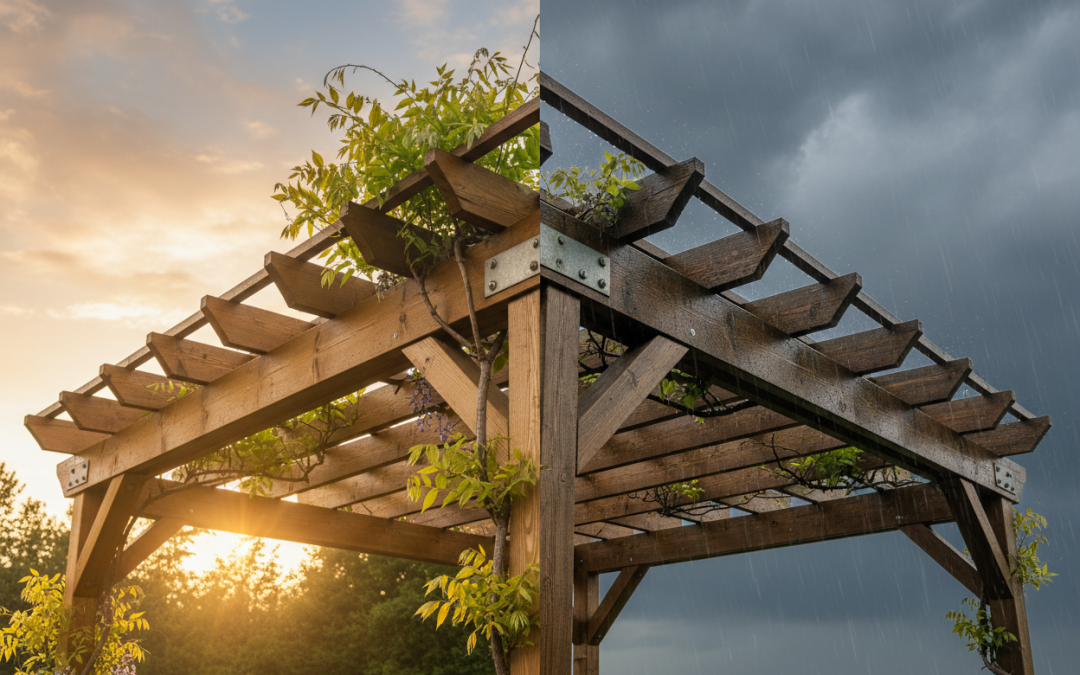
How Weather Affects Custom Pergola Material Choices: Your Complete Guide to Climate-Resistant Outdoor Structures
When planning your dream pergola, you might be focused on design aesthetics and functionality, but there’s one crucial factor that could make or break your investment: the weather. Your local climate doesn’t just influence how often you’ll use your outdoor space – it directly impacts which materials will stand the test of time and provide the best value for your money.
Choosing the right pergola materials based on your regional weather patterns isn’t just smart planning; it’s essential for creating a structure that will remain beautiful and functional for decades to come. From scorching desert heat to humid coastal conditions, from freezing mountain winters to unpredictable storm seasons, each climate presents unique challenges that require specific material considerations.
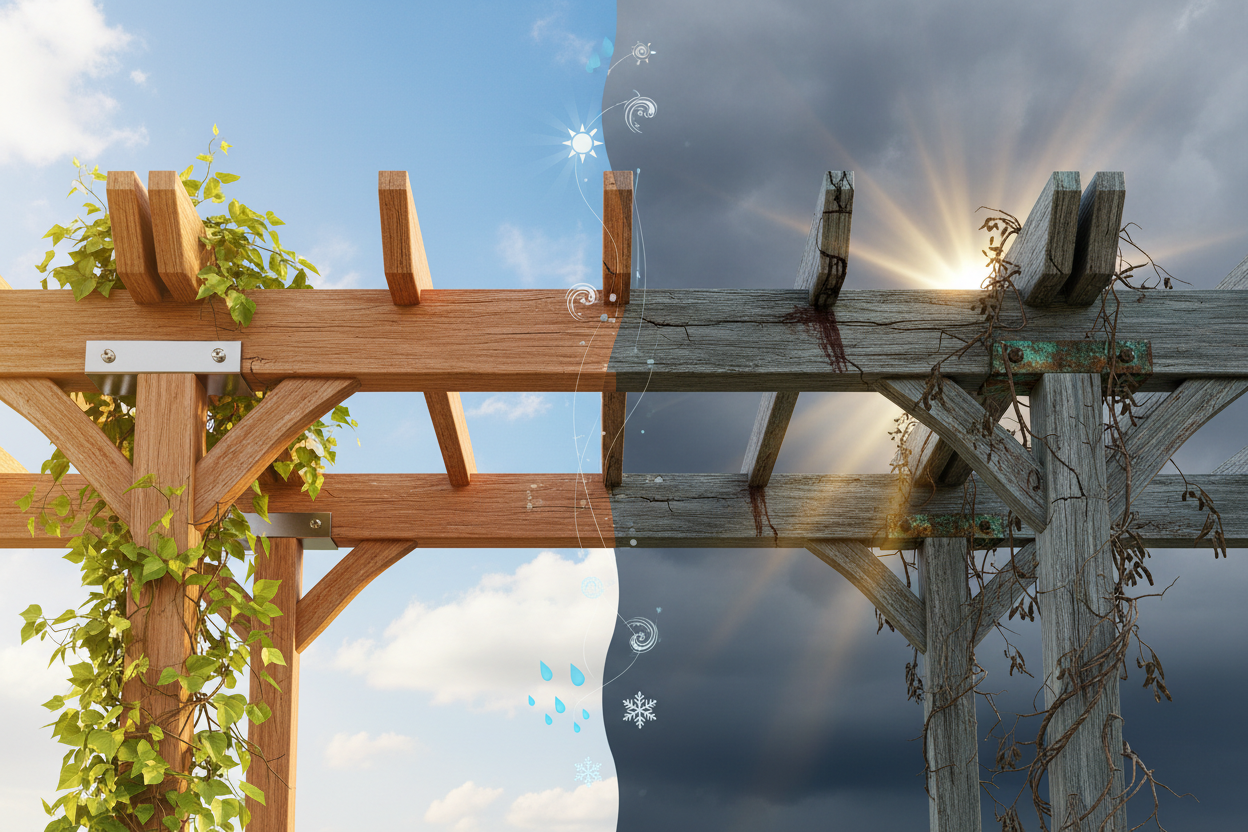
Table of Contents
Understanding Weather Impact on Pergola Materials
Hot and Dry Climates: Desert-Tested Material Solutions
Humid and Wet Environments: Moisture-Resistant Options
Cold Weather Considerations: Freeze-Thaw Durability
Coastal Conditions: Salt Air and Wind Resistance
Variable Climate Zones: Versatile Material Choices
Material-Specific Weather Performance Analysis
Maintenance Requirements by Climate Type
Cost Considerations for Weather-Appropriate Materials
Professional Installation and Climate Factors
Understanding Weather Impact on Pergola Materials
Weather affects pergola materials in ways that might surprise you. It’s not just about obvious concerns like wood rotting in wet conditions or metal rusting near the ocean. Temperature fluctuations cause materials to expand and contract, potentially leading to warping, cracking, or joint failure. UV radiation breaks down certain polymers and fades colors, while humidity levels can affect everything from wood stability to metal corrosion rates.
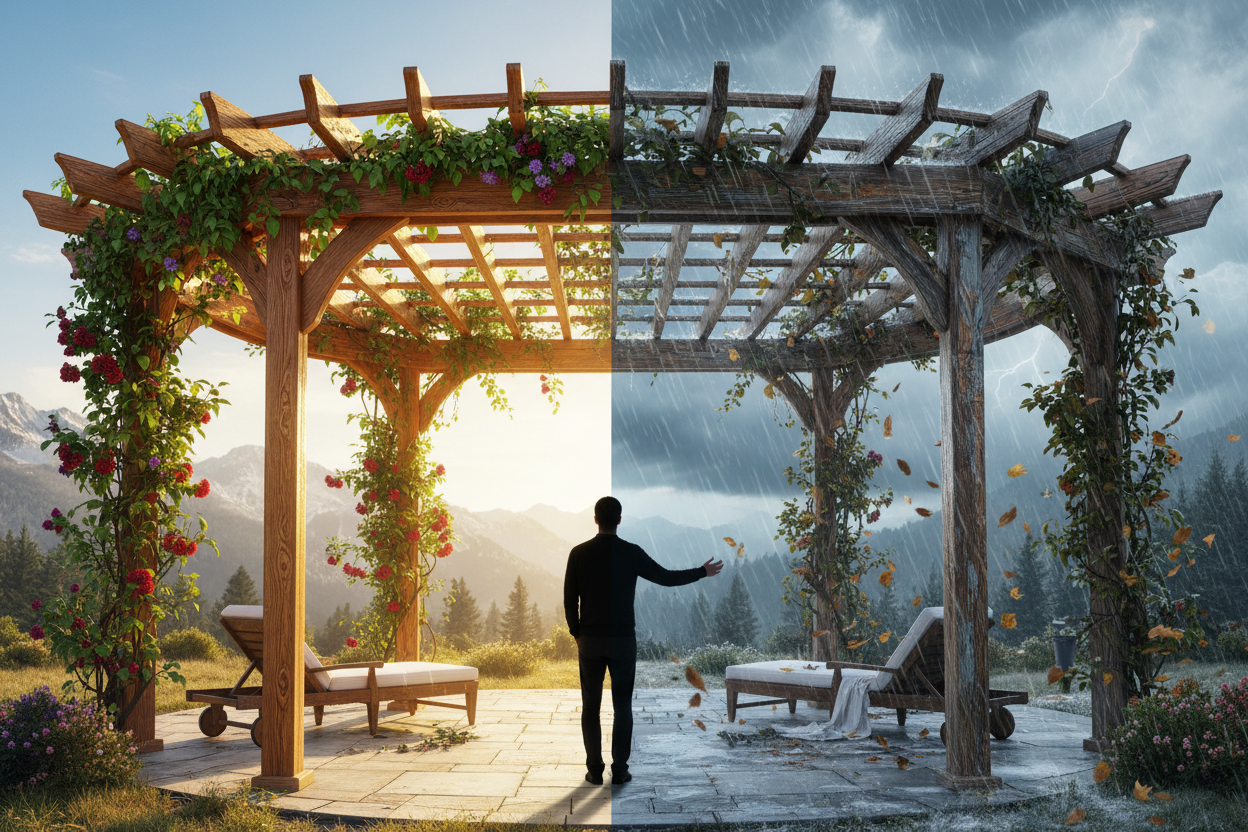
The key is understanding that different materials respond differently to various weather stressors. What works beautifully in Arizona’s dry heat might fail miserably in Florida’s humid summers. Similarly, a material that thrives in Seattle’s mild, wet climate could crack and split during a harsh Minnesota winter.
Before diving into specific material choices, consider your area’s primary weather challenges. Do you experience extreme temperature swings? Is moisture your biggest concern? Are you dealing with intense UV exposure or salt air? Understanding your climate’s dominant characteristics will guide you toward the most appropriate material selection.
Hot and Dry Climates: Desert-Tested Material Solutions
If you live in regions like Arizona, Nevada, or Southern California’s inland areas, your pergola faces intense UV radiation, extreme heat, and dramatic temperature swings between day and night. These conditions demand materials that can handle thermal expansion without warping and resist UV degradation over time.
Aluminum stands out as an excellent choice for hot, dry climates. It doesn’t absorb heat like darker materials, reflects UV rays effectively, and experiences minimal thermal expansion. Modern powder-coated aluminum pergolas can withstand temperatures exceeding 120°F without structural compromise, and the coating provides additional UV protection that prevents fading.
For those preferring natural materials, certain hardwoods like teak or ipe perform exceptionally well in dry heat. These dense woods have natural oils that provide UV protection and resist cracking even during extreme temperature fluctuations. However, they require periodic oiling to maintain their protective properties and appearance.
Engineered materials like high-quality vinyl or composite lumber also excel in hot, dry conditions. Modern composites are formulated with UV stabilizers and heat-resistant polymers that prevent warping, fading, and thermal damage. While initial costs may be higher, the long-term performance in extreme heat often justifies the investment.
Humid and Wet Environments: Moisture-Resistant Options
Regions with high humidity and frequent rainfall, such as the Southeast, Pacific Northwest, or areas near the Great Lakes, present different challenges. Here, moisture resistance becomes paramount, as does the ability to dry quickly and resist mold, mildew, and rot.
Pressure-treated lumber remains a popular choice for wet climates, but the treatment quality matters significantly. Look for lumber treated to ground contact standards, even for above-ground applications, as this provides superior moisture resistance. Cedar and redwood offer natural moisture resistance due to their inherent oils and tannins, making them excellent choices for humid environments.
Steel pergolas can work well in wet climates when properly galvanized and powder-coated. The key is ensuring complete coverage and addressing any scratches or chips immediately to prevent rust formation. Stainless steel, while more expensive, offers superior corrosion resistance in consistently wet environments.
Composite materials designed for wet climates typically incorporate antimicrobial additives and enhanced drainage features. These materials won’t rot, warp, or support mold growth, making them ideal for regions with extended wet seasons or high humidity levels.
Cold Weather Considerations: Freeze-Thaw Durability
Northern climates with freezing temperatures and snow loads require materials that can handle both the weight of snow accumulation and the stress of repeated freeze-thaw cycles. These conditions can be particularly harsh on materials, causing expansion and contraction that leads to cracking, joint failure, and structural compromise.
Engineered lumber products often outperform traditional wood in cold climates. Laminated veneer lumber (LVL) and glue-laminated timber (glulam) offer superior strength and dimensional stability compared to solid wood, making them excellent choices for areas with heavy snow loads and temperature extremes.
Steel structures excel in cold weather applications, particularly when designed with appropriate snow load calculations. The key is proper galvanization and coating to prevent corrosion from road salt and moisture. Steel’s strength allows for longer spans and better snow load distribution compared to many other materials.
When considering wood options for cold climates, species selection matters tremendously. Northern-grown species like Douglas fir, southern yellow pine, or eastern white pine are naturally adapted to freeze-thaw cycles and typically perform better than species from warmer regions.
Coastal Conditions: Salt Air and Wind Resistance
Coastal environments combine multiple challenging factors: salt air corrosion, high humidity, strong winds, and often intense UV exposure. These conditions require materials specifically chosen for their corrosion resistance and structural integrity under wind loads.
Stainless steel and aluminum are the gold standards for coastal pergolas. Marine-grade stainless steel (316 grade) offers exceptional corrosion resistance, while aluminum naturally forms a protective oxide layer that prevents further corrosion. Both materials can handle high wind loads when properly engineered and installed.
For wood lovers in coastal areas, naturally rot-resistant species like teak, mahogany, or properly treated cedar can work well, but they require more frequent maintenance. The salt air accelerates weathering, so annual cleaning and periodic re-sealing become essential maintenance tasks.
Composite materials designed for marine environments incorporate enhanced UV and salt resistance. These products often cost more than standard composites but provide superior longevity in harsh coastal conditions. Look for products specifically rated for marine or coastal applications.
Variable Climate Zones: Versatile Material Choices
Many regions experience varied weather patterns throughout the year – hot summers and cold winters, wet springs and dry falls, or unpredictable storm seasons. These areas require materials that can handle multiple types of weather stress without failing.
Aluminum pergolas shine in variable climates due to their ability to handle temperature extremes, moisture, and UV exposure equally well. The material’s versatility makes it an excellent choice when you can’t predict which weather factor will be most challenging in any given year.
High-quality composite materials also excel in variable climates. Modern composites are engineered to handle multiple stress factors simultaneously, from UV exposure and moisture to temperature fluctuations and impact damage. While more expensive initially, they often provide the best long-term value in unpredictable climates.
Engineered wood products offer another versatile solution. These materials combine the aesthetic appeal of natural wood with enhanced performance characteristics that help them handle various weather conditions more effectively than solid lumber.
Material-Specific Weather Performance Analysis
Understanding how specific materials perform across different weather conditions helps you make informed decisions based on your local climate patterns and personal priorities.
Wood pergolas offer unmatched natural beauty and can be highly durable when properly selected and maintained. However, wood performance varies dramatically by species and treatment. Cedar naturally resists moisture and insects but may fade in intense UV. Pressure-treated pine handles moisture well but may crack in extreme temperature swings. Exotic hardwoods like ipe offer exceptional durability but come with higher costs and environmental considerations.
Metal pergolas, whether steel or aluminum, provide excellent structural integrity and longevity when properly finished. Steel offers superior strength for large spans and heavy loads but requires careful attention to corrosion prevention. Aluminum provides good strength-to-weight ratios and natural corrosion resistance but may not be suitable for very large structures without additional engineering.
Composite and vinyl materials offer consistent performance across various weather conditions. Quality varies significantly between manufacturers, so research specific products rather than assuming all composites perform equally. Look for products with comprehensive warranties that cover your specific climate conditions.
Maintenance Requirements by Climate Type
Your climate doesn’t just affect material selection – it also determines ongoing maintenance requirements that impact long-term costs and enjoyment of your pergola.
In hot, dry climates, UV protection becomes the primary maintenance focus. Wood structures may need annual staining or sealing to prevent cracking and fading. Metal structures require periodic inspection for coating integrity and touch-up of any damaged areas. Composite materials typically need only regular cleaning to maintain appearance.
Wet climates demand vigilant moisture management. Wood pergolas may require bi-annual inspections for signs of rot or insect damage, with prompt treatment of any issues discovered. Metal structures need careful attention to drainage and immediate repair of any coating damage to prevent corrosion.
Cold climates require spring inspections to assess any damage from freeze-thaw cycles or snow loads. Joint connections may need tightening, and any structural issues should be addressed before the next winter season.
Cost Considerations for Weather-Appropriate Materials
While weather-appropriate materials may cost more initially, they often provide better long-term value through reduced maintenance needs and longer lifespans. Consider total cost of ownership rather than just upfront expenses when making your decision.
In harsh climates, spending more on premium materials often pays dividends through reduced replacement and repair costs. A high-quality aluminum or composite pergola might cost 50% more initially than pressure-treated lumber but could last twice as long with minimal maintenance.
Factor in regional labor costs for maintenance and repairs when calculating long-term expenses. In areas where skilled labor is expensive, low-maintenance materials become even more attractive from a financial perspective.
Professional Installation and Climate Factors
Proper installation becomes even more critical when dealing with challenging weather conditions. Professional installers familiar with local climate challenges can ensure your pergola is built to withstand regional weather patterns.
Foundation requirements vary significantly by climate. Cold regions need deeper footings below the frost line, while areas with expansive soils require special foundation considerations. Coastal areas may need additional anchoring to resist wind uplift.
Professional installers can also ensure proper drainage, adequate ventilation, and appropriate joint details that help your pergola weather local conditions successfully. While DIY installation might seem cost-effective, professional installation often provides better long-term performance in challenging climates.
Conclusion
Selecting the right pergola materials for your climate isn’t just about immediate aesthetics or budget constraints – it’s about creating an outdoor structure that will provide years of enjoyment while standing up to whatever weather your region throws at it. By understanding how different materials perform in various weather conditions, you can make an informed decision that balances initial costs, maintenance requirements, and long-term durability.
Remember that the “best” material varies by location, budget, and personal preferences. What matters most is choosing materials specifically suited to your local climate challenges while meeting your aesthetic and functional requirements. Whether you opt for the natural beauty of properly selected wood, the durability of engineered materials, or the low-maintenance appeal of quality composites, climate-appropriate selection will ensure your pergola remains a valuable addition to your outdoor living space for decades to come.
Take time to research local weather patterns, consult with experienced contractors familiar with your area’s challenges, and consider long-term costs rather than just initial expenses. Your future self will thank you for making a weather-wise choice that stands the test of time.
Frequently Asked Questions
What pergola material lasts longest in extreme weather conditions?
Marine-grade stainless steel and high-quality aluminum typically offer the longest lifespan in extreme weather, often lasting 25-30 years with minimal maintenance. However, properly selected and maintained hardwoods can also provide decades of service in appropriate climates.
How do I know if my climate requires special pergola materials?
Consider special materials if your area experiences temperature extremes (below 0°F or above 100°F), high humidity (over 70% regularly), coastal salt air, frequent storms, or heavy snow loads. Consult local building codes and experienced contractors for specific guidance.
Can I use pressure-treated lumber for pergolas in any climate?
While pressure-treated lumber works in many climates, it’s not ideal for extremely dry conditions where it may crack, or in areas with heavy snow loads where engineered lumber provides better strength. It excels in moderate to wet climates with proper maintenance.
What’s the most cost-effective material for harsh weather climates?
Aluminum often provides the best long-term value in harsh climates due to low maintenance requirements and longevity, despite higher initial costs. For budget-conscious buyers, properly selected pressure-treated lumber with regular maintenance can also be cost-effective.
Do composite pergola materials work in all weather conditions?
Quality composite materials perform well in most climates, but performance varies significantly between products. Look for composites specifically rated for your climate conditions and backed by comprehensive warranties covering weather-related issues.
How often should I inspect my pergola for weather damage?
Inspect your pergola seasonally, with more frequent checks after severe weather events. Spring inspections are particularly important in cold climates to assess winter damage, while fall inspections help prepare for harsh weather seasons.

Sachse TX pergola builders | Keathley Landscaping

Garland TX pergola builders | Keathley Landscaping

Highland Park TX covered patio contractors near me | Keathley Landscaping

Rockwall TX pergola companies near me | Keathley Landscaping

Richardson TX custom pergolas | Keathley Landscaping

Preston Hollow Dallas TX custom patio cover cost | Keathley Landscaping

Preston Hollow Dallas TX outdoor living space contractors | Keathley Landscaping

Wylie TX custom patio covers | Keathley Landscaping

Mobile City TX luxury custom pergolas | Keathley Landscaping

Lavon TX custom patio cover cost | Keathley Landscaping

Lucas TX pergolas | Keathley Landscaping

Allen TX covered patios | Keathley Landscaping

Parker TX covered patios | Keathley Landscaping

Lake Highlands Dallas TX custom patio cover builders | Keathley Landscaping

Lucas TX covered patios | Keathley Landscaping

Frisco TX outdoor living contractor | Keathley Landscaping

Lake Highlands Dallas TX covered patios | Keathley Landscaping

Lake Highlands Dallas TX custom patio cover cost | Keathley Landscaping

Rowlett TX custom patio covers | Keathley Landscaping

McKinney TX custom patio covers | Keathley Landscaping

Richardson TX pergola companies near me | Keathley Landscaping

Dallas TX custom pergolas | Keathley Landscaping

Lakewood Dallas TX luxury custom pergolas | Keathley Landscaping

Allen TX outdoor living space contractors | Keathley Landscaping

Dallas TX custom wood pergola | Keathley Landscaping

Lavon TX luxury custom pergolas | Keathley Landscaping

Plano TX outdoor living space contractors | Keathley Landscaping

Mobile City TX pergola companies near me | Keathley Landscaping

cost for sod installation Lavon Texas

sod installation company near me Rowlett Texas

cost of sod installation McKinney Texas

sod company Lowry Crossing Texas

price for sod installation Highland Park Texas

sod installation company Lucas Texas

installation of sod cost Rowlett Texas

cost of sod and installation Fairview Texas

sod installation companies Dallas Texas

cost of sod and installation Highland Park Texas

sod contractors Sachse Texas

sod installation near me Parker Texas

sod installation near me Rockwall Texas

sod installation service Frisco Texas

lawn sod installation Murphy Texas

sod installation companies Mobile City Texas

grass contractor Lucas Texas

price of sod installation Rockwall Texas

cost for sod installation Plano Texas

sod lawn installation Lake Highlands Dallas Texas

grass contractor Lake Highlands Dallas Texas

lawn sod installation Rockwall Texas

sod installation service Mobile City Texas

sod installation company Plano Texas

lawn sod installation near me Preston Hollow Dallas Texas

sod contractors Lavon Texas

sod installation company Lakewood Dallas Texas

sod installation services Dallas Texas

drainage solutions near me Preston Hollow Dallas Texas

landscape drain McKinney Texas

drainage solutions near me Parker Texas

drainage solutions near me Fairview Texas

yard drainage Wylie Texas

channel drain cleaning Mobile City Texas

yard drainage specialist near me Plano Texas

drainage company near me Lavon Texas

drain cleaning company near me Highland Park Texas

yard drainage specialist near me Frisco Texas

drainage specialist near me Frisco Texas

drainage Plano Texas

drain cleaning company near me Preston Hollow Dallas Texas

drainage Lucas Texas

drainage Murphy Texas

channel drain cleaning Fairview Texas

drain cleaning company near me Wylie Texas

drain contractor Fairview Texas

yard drainage contractors near me Preston Hollow Dallas Texas

channel drain cleaning Lucas Texas

drain Dallas Texas

drainage company near me Rose Hill Texas

drainage company near me Dallas Texas

drainage specialist near me Allen Texas

landscape drainage contractor near me Frisco Texas

drain contractor Lakewood Dallas Texas

drain cleaning company near me Rowlett Texas

Recent Comments