
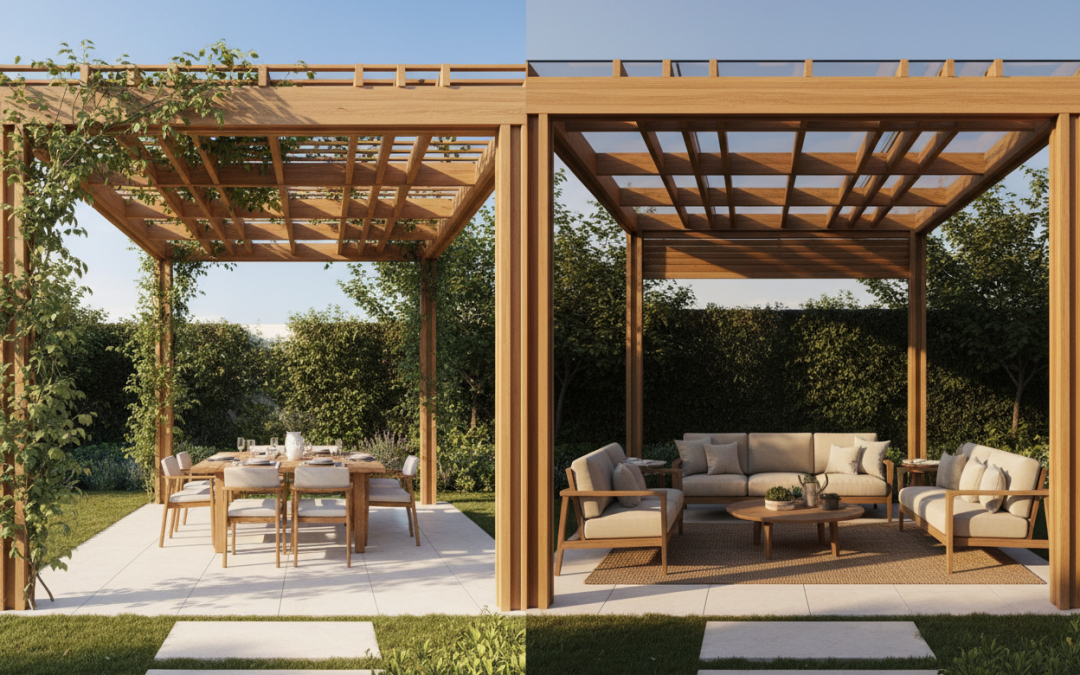
How to Choose Between Open and Closed Custom Pergola Roofing: Your Complete Guide to Making the Right Decision
Table of Contents
1. Introduction: The Great Pergola Roofing Debate
2. Understanding Open Pergola Roofing
3. Exploring Closed Pergola Roofing Options
4. Climate Considerations for Your Pergola Choice
5. Budget and Maintenance Factors
6. Design and Aesthetic Preferences
7. Functionality and Intended Use
8. Making Your Final Decision
9. Frequently Asked Questions
10. Conclusion: Creating Your Perfect Outdoor Space
Introduction: The Great Pergola Roofing Debate
Standing in your backyard, envisioning the perfect outdoor living space, you’ve likely found yourself torn between two compelling pergola roofing options. Should you go with the classic open-roof design that filters sunlight beautifully, or opt for a closed roof that provides complete weather protection? This decision isn’t just about aesthetics – it’s about creating a space that truly serves your lifestyle and needs.
The choice between open and closed custom pergola roofing has become increasingly important as homeowners seek to maximize their outdoor living potential. With rising property values and the growing trend of outdoor entertainment spaces, your pergola investment deserves careful consideration. Whether you’re a weekend entertainer, a gardening enthusiast, or someone who simply wants a peaceful retreat, understanding the nuances of each roofing style will help you make an informed decision that you’ll love for years to come.
Understanding Open Pergola Roofing
Open pergola roofing represents the traditional approach to pergola design, featuring horizontal slats or beams that create a partially covered outdoor space. This classic style allows filtered sunlight to dance through the gaps, creating those Instagram-worthy dappled light patterns that make your morning coffee feel like a luxury experience.
The beauty of open roofing lies in its simplicity and connection to nature. You’ll still feel the gentle breeze, hear the rain pattering overhead, and catch glimpses of the sky while enjoying some degree of shade. Many homeowners find this partial coverage perfect for growing climbing plants like wisteria or grape vines, which can naturally fill in some of the gaps over time.
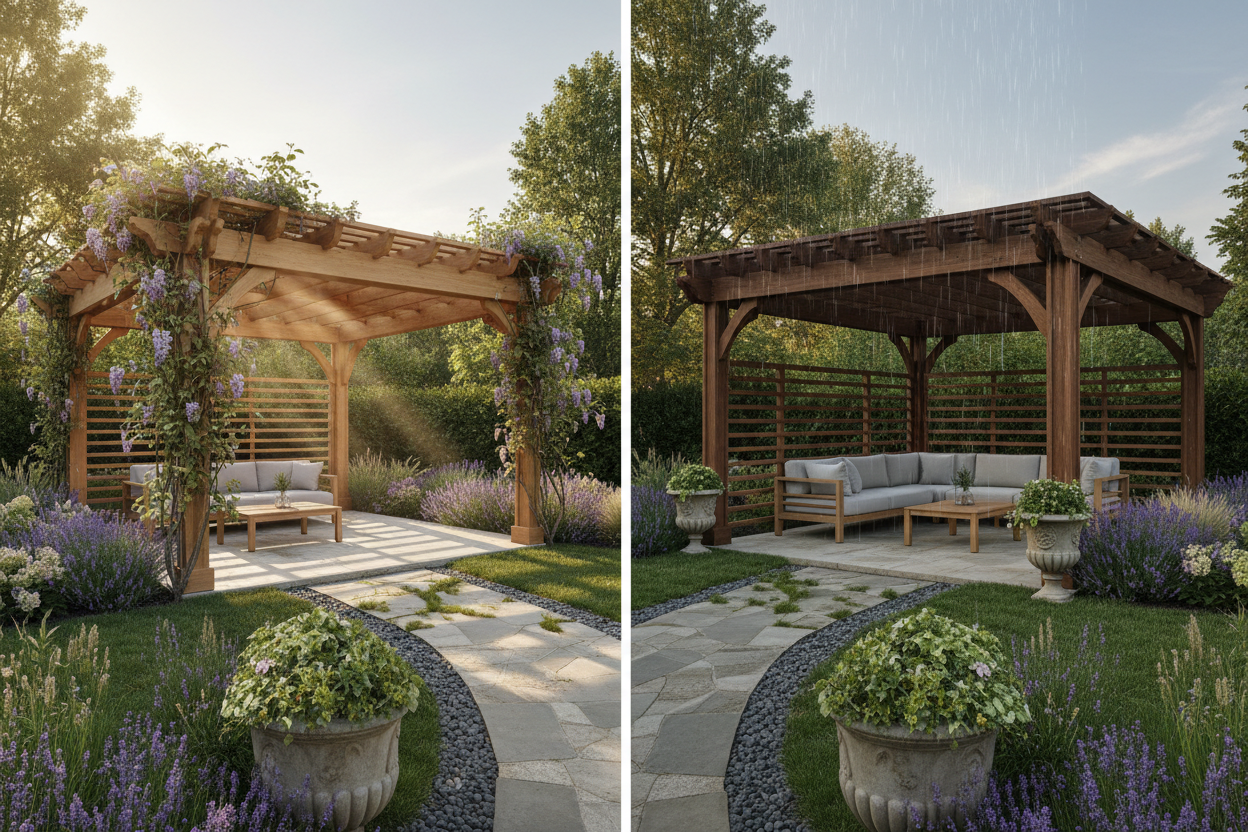
Open pergola roofs typically cost less to construct since they require fewer materials and simpler installation processes. The maintenance is generally straightforward – occasional cleaning and checking for any loose slats or weather damage. However, you’ll need to consider that this option provides limited protection from rain and won’t keep your outdoor furniture completely dry during storms.
Exploring Closed Pergola Roofing Options
Closed pergola roofing takes outdoor living to the next level by providing complete overhead protection. These systems can include solid materials like metal panels, polycarbonate sheets, or even retractable canopies that give you the flexibility to open or close your space as needed.
Modern closed roofing solutions have evolved far beyond basic solid covers. You might choose transparent or translucent materials that still allow natural light while blocking rain and harsh UV rays. Some homeowners opt for louvered systems that can be adjusted throughout the day, giving you control over both light and airflow.
The investment in closed roofing typically pays dividends in extended usability. Your pergola becomes a true outdoor room that can be enjoyed regardless of weather conditions. This means your outdoor furniture, cushions, and decorative elements stay protected, potentially saving you money on replacements and storage solutions.
Climate Considerations for Your Pergola Choice
Your local climate should be the primary driver in your roofing decision. If you live in the Pacific Northwest where rain is frequent, a closed roof system might be essential for year-round enjoyment. Conversely, if you’re in a consistently sunny climate like Southern California or Arizona, an open roof might provide the perfect amount of shade without feeling closed in.
Consider your area’s seasonal weather patterns. Do you experience intense summer heat that would benefit from solid shade? Are there monsoon seasons or frequent afternoon thunderstorms that would make closed roofing more practical? Think about the prevailing wind directions too – an open roof in a windy area might create uncomfortable downdrafts, while a closed system could provide welcome wind protection.
Snow load is another crucial factor often overlooked by first-time pergola buyers. Open roofs naturally shed snow and don’t accumulate dangerous weight loads. Closed roofing systems need proper engineering to handle snow accumulation, which might influence both your design choices and overall costs.
Budget and Maintenance Factors
Let’s talk numbers, because your pergola dreams need to align with your financial reality. Open pergola roofing typically costs 30-50% less than closed systems, making it an attractive option for budget-conscious homeowners. The materials are simpler, installation is faster, and you won’t need specialized hardware for moving parts or weatherproofing.
However, consider the long-term costs beyond initial installation. Open roofs might require more frequent cleaning of the space below, especially if you’re under trees that drop leaves or debris. You’ll also need to factor in potential furniture replacement costs if items get damaged by weather exposure.
Closed roofing systems require more upfront investment but can actually save money over time. Your outdoor furniture lasts longer, you might reduce cooling costs for adjacent indoor spaces, and you won’t need to constantly move items during weather changes. Maintenance varies by material – metal roofs might need occasional repainting, while polycarbonate panels might require cleaning to maintain transparency.
Design and Aesthetic Preferences
Your pergola should reflect your personal style and complement your home’s architecture. Open roofing tends to feel more organic and traditional, working beautifully with cottage, craftsman, or Mediterranean-style homes. The play of light and shadow creates visual interest that changes throughout the day, making your space feel dynamic and alive.
Closed roofing offers more opportunities for modern, sleek designs. Clean lines, contemporary materials, and integrated lighting systems can create a sophisticated outdoor room that rivals any indoor space. You have more flexibility with color choices, textures, and even incorporating technology like motorized louvers or integrated sound systems.
Consider how your pergola will look from inside your home as well. Large windows or sliding doors that face your pergola area should frame a view that enhances your indoor spaces too. Sometimes the choice between open and closed roofing depends on whether you want your pergola to blend seamlessly with the landscape or stand out as an architectural statement.
Functionality and Intended Use
How do you envision using your pergola space? This question should drive your roofing decision more than any other factor. If you’re planning elaborate dinner parties or want to set up an outdoor office space, closed roofing provides the reliability you need. You won’t have to worry about sudden weather changes ruining your plans or equipment.
For casual relaxation, reading, or morning yoga sessions, open roofing might provide the perfect connection to nature while still offering some comfort and definition to your space. Many homeowners find that open pergolas encourage more spontaneous use – you’re more likely to step outside for a quick break when the space feels naturally integrated with the outdoors.
Think about seasonal usage patterns too. If you want to extend your outdoor season into cooler months, closed roofing allows for the addition of heating elements, enclosed sides, or even ceiling fans. Open roofing works better for fair-weather use but creates beautiful spaces for activities like stargazing or enjoying gentle rain showers.
Making Your Final Decision
After weighing all these factors, you might find that the decision comes down to your personal priorities and lifestyle preferences. Create a simple pros and cons list specific to your situation, considering factors like your local weather patterns, budget constraints, intended use, and aesthetic preferences.
Don’t forget to check local building codes and HOA requirements, as some areas have restrictions on covered outdoor structures. You might also want to consider a phased approach – starting with open roofing and adding a covering system later if your needs change.
Consider consulting with a local pergola contractor who understands your area’s specific challenges and opportunities. They can provide insights into material performance, maintenance requirements, and design options that work best in your climate and with your home’s architecture.
Frequently Asked Questions
Can I convert an open pergola roof to a closed one later?
Yes, many open pergolas can be retrofitted with roofing systems, though this depends on the original structure’s design and load-bearing capacity. It’s often more cost-effective to plan for this possibility during initial construction.
Which roofing type adds more value to my home?
Both can add value, but closed roofing systems typically provide higher returns due to their increased functionality and year-round usability. However, the best choice depends on your local market and climate preferences.
How much maintenance does each type require?
Open pergolas require minimal maintenance – mainly cleaning and occasional repairs to slats. Closed systems need more attention, including cleaning roofing materials, checking seals, and maintaining any moving parts like retractable systems.
What’s the lifespan difference between open and closed pergola roofing?
Open pergolas typically last 15-25 years with proper maintenance. Closed systems vary by material – metal roofs can last 30+ years, while fabric or polycarbonate might need replacement every 10-15 years.
Can I have the best of both worlds?
Absolutely! Retractable roofing systems, adjustable louvers, and removable panels offer flexibility to open or close your space as needed. These systems cost more initially but provide maximum versatility.
Conclusion: Creating Your Perfect Outdoor Space
Choosing between open and closed custom pergola roofing ultimately comes down to understanding your unique needs, preferences, and circumstances. There’s no universally “right” choice – only the choice that’s right for you and your lifestyle.
Take time to really envision how you’ll use your space throughout different seasons and weather conditions. Consider your long-term plans, budget constraints, and maintenance preferences. Remember that your pergola should enhance your outdoor living experience, not create stress or limitations.
Whether you choose the natural, breezy feel of open roofing or the protected comfort of a closed system, you’re investing in more than just an outdoor structure. You’re creating a space for memories, relaxation, and connection – with nature, with family, and with the simple pleasure of outdoor living. Make the choice that will bring you the most joy and functionality for years to come.

Allen TX luxury custom pergolas | Keathley Landscaping

Lavon TX luxury custom pergolas | Keathley Landscaping

Plano TX luxury custom pergolas | Keathley Landscaping

McKinney TX pergolas | Keathley Landscaping

Wylie TX custom patio cover builders | Keathley Landscaping

Rowlett TX pergola companies near me | Keathley Landscaping

Fate TX covered patios | Keathley Landscaping

Murphy TX pergola builders | Keathley Landscaping

Dallas TX covered patios | Keathley Landscaping

McKinney TX luxury custom pergolas | Keathley Landscaping

Preston Hollow Dallas TX covered patio contractors near me | Keathley Landscaping

Dallas TX covered patio contractors near me | Keathley Landscaping

Rowlett TX custom wood pergola | Keathley Landscaping

Richardson TX outdoor living space contractors | Keathley Landscaping

Lakewood Dallas TX pergola companies near me | Keathley Landscaping

Lakewood Dallas TX outdoor living contractor | Keathley Landscaping

Mobile City TX luxury custom pergolas | Keathley Landscaping

Rockwall TX pergolas | Keathley Landscaping

Dallas TX custom wood pergola | Keathley Landscaping

Richardson TX custom wood pergola | Keathley Landscaping

Fairview TX custom patio covers | Keathley Landscaping

Lucas TX outdoor living contractor | Keathley Landscaping

Richardson TX custom patio cover cost | Keathley Landscaping

Allen TX custom patio cover cost | Keathley Landscaping

Frisco TX custom pergolas | Keathley Landscaping

Sachse TX pergola companies near me | Keathley Landscaping

Dallas TX custom patio covers | Keathley Landscaping

Mobile City TX custom patio cover builders | Keathley Landscaping

lawn sod installation near me Sachse Texas

sod installation company near me Fate Texas

sod grass installation Murphy Texas

lawn sod installation Fate Texas

grass installation Frisco Texas

sod contractors Rowlett Texas

sod installation service Wylie Texas

sod grass installation Wylie Texas

sod installation company near me Preston Hollow Dallas Texas

sod installation companies Rockwall Texas

lawn sod installation Lavon Texas

sod installation company near me Lucas Texas

cost for sod installation Murphy Texas

installation of sod cost Dallas Texas

price for sod installation Sachse Texas

lawn sod installation Allen Texas

sod contractors Lavon Texas

residential sod installation Fate Texas

sod installation company near me Lake Highlands Dallas Texas

grass installation Lowry Crossing Texas

sod installation companies Allen Texas

sod installation company Lavon Texas

residential sod installation Murphy Texas

sod company Parker Texas

sod company Murphy Texas

sod installation services Rockwall Texas

installation of sod cost Allen Texas

sod installation company Rowlett Texas

drainage specialist near me Murphy Texas

yard drainage McKinney Texas

drainage contractors near me Rowlett Texas

drain cleaning company near me Parker Texas

channel drain cleaning Mobile City Texas

drain cleaning Highland Park Texas

drainage company near me Plano Texas

yard drainage specialist near me Rockwall Texas

drainage specialist near me Highland Park Texas

landscape drainage McKinney Texas

channel drain cleaning McKinney Texas

drain cleaning company near me Lucas Texas

drainage solutions near me Lucas Texas

drainage company Lowry Crossing Texas

drainage contractors near me Highland Park Texas

yard drainage contractors near me Lucas Texas

drain cleaning Richardson Texas

yard drainage Highland Park Texas

yard drainage specialist near me Frisco Texas

landscape drainage contractor near me Rose Hill Texas

drain cleaning Fairview Texas

outdoor drain repair Allen Texas

landscape drain Parker Texas

drainage specialist near me Fate Texas

yard drainage specialist near me Lucas Texas

yard drainage specialist near me Fairview Texas

outdoor drain repair Sachse Texas

Recent Comments