
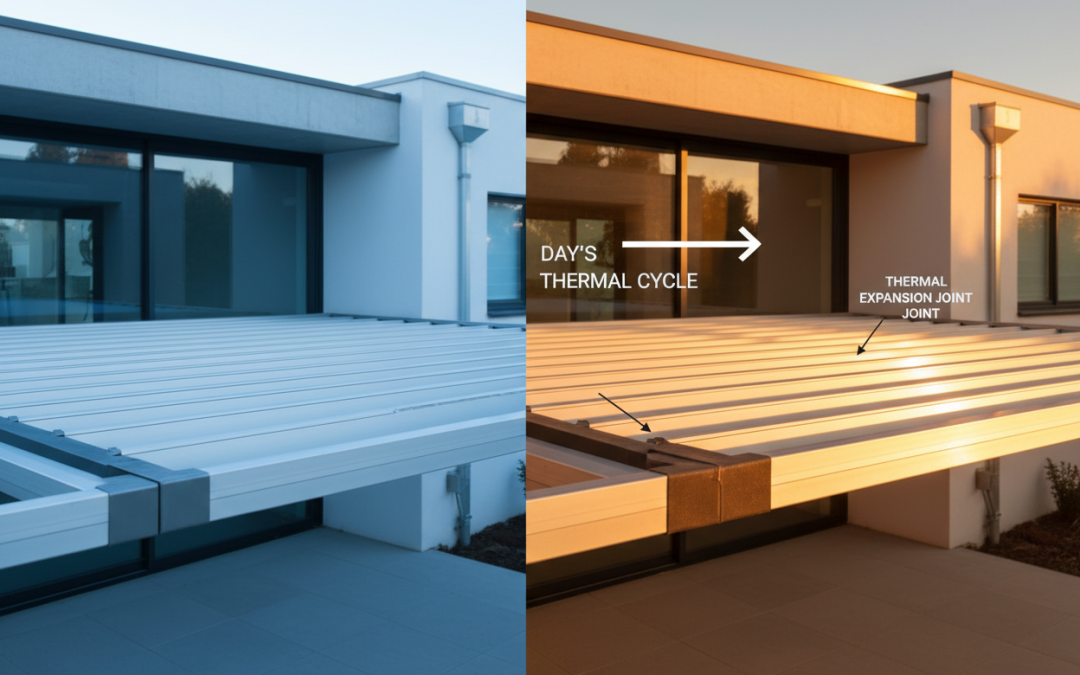
Custom Patio Cover Thermal Expansion: Planning for Material Movement
Table of Contents
1. Introduction to Thermal Expansion in Patio Covers
2. Understanding the Science Behind Material Movement
3. Common Materials and Their Expansion Rates
4. Design Strategies for Accommodating Thermal Movement
5. Installation Techniques That Prevent Problems
6. Maintenance and Long-term Considerations
7. Professional vs. DIY Installation Considerations
8. Conclusion
9. Frequently Asked Questions
Introduction to Thermal Expansion in Patio Covers
When I first started working with custom patio covers fifteen years ago, I learned a hard lesson about thermal expansion the expensive way. A beautiful aluminum cover I’d installed during a cool spring morning had buckled and warped by the first hot summer day. That experience taught me that understanding material movement isn’t just technical knowledge – it’s absolutely crucial for creating patio covers that stand the test of time.
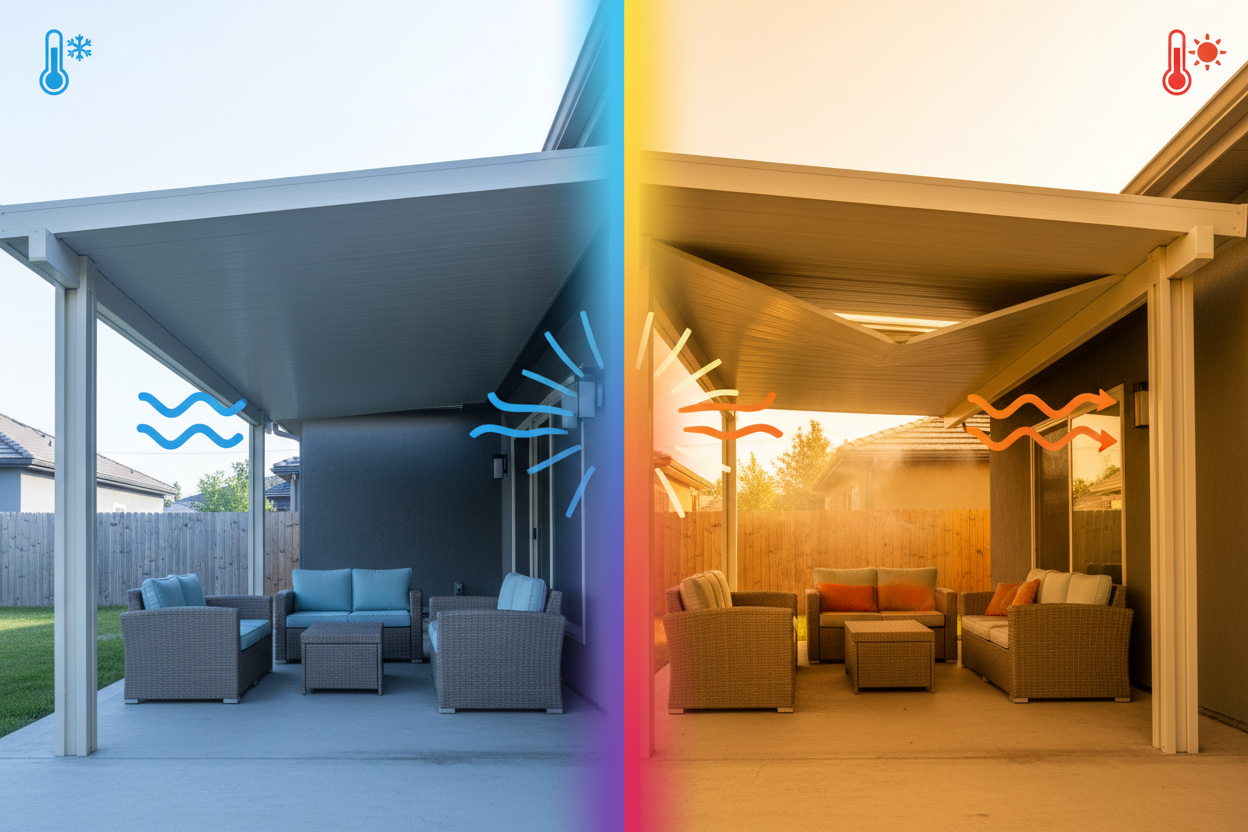
Thermal expansion might sound like a complex engineering concept, but it’s actually quite simple: materials expand when heated and contract when cooled. For patio covers, which are constantly exposed to temperature fluctuations, this natural phenomenon can cause significant problems if not properly planned for during the design and installation phases.
Whether you’re a homeowner planning a DIY project or working with a contractor, understanding thermal expansion will help you make informed decisions that save money and prevent headaches down the road. Let’s dive into everything you need to know about planning for material movement in custom patio covers.
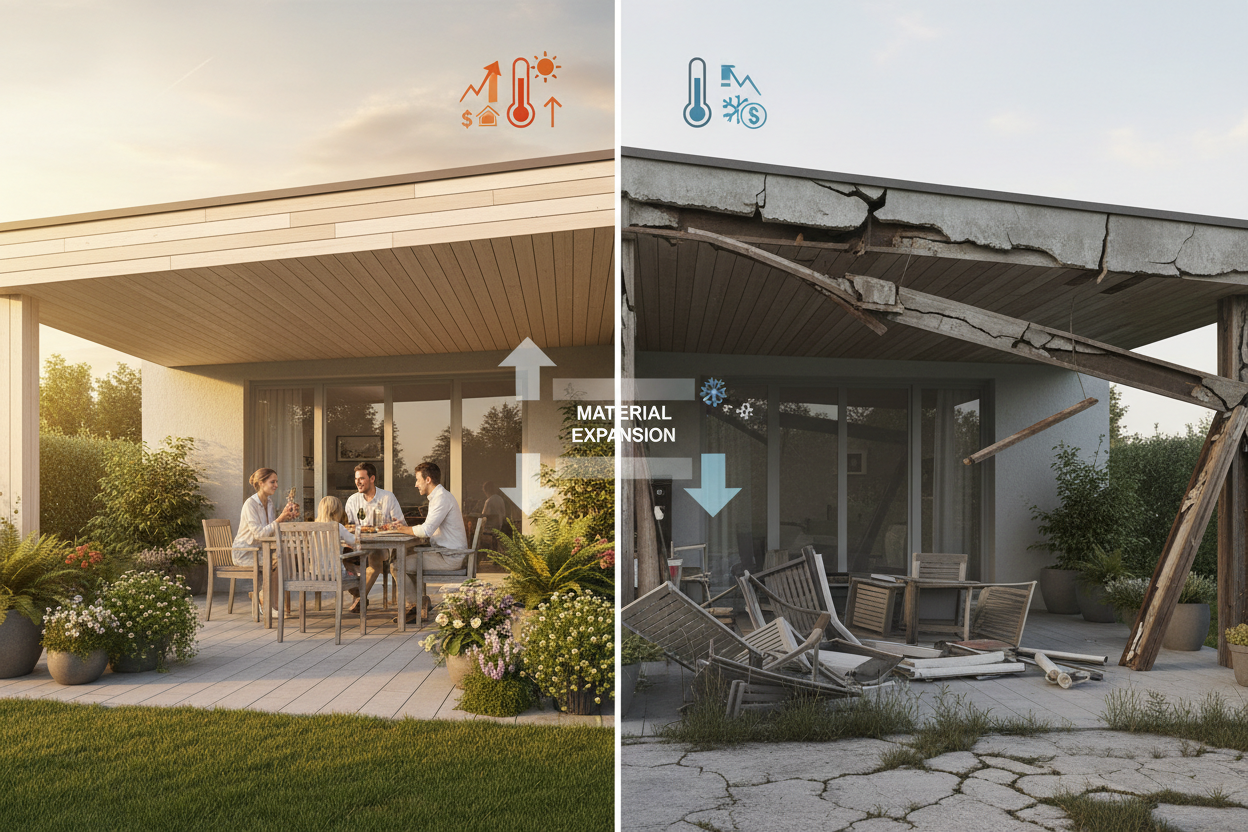
Understanding the Science Behind Material Movement
Every material has what engineers call a “coefficient of thermal expansion” – essentially a measurement of how much it grows or shrinks with temperature changes. Think of it like this: imagine a metal ruler left in your car on a hot summer day. When you retrieve it, it will actually be slightly longer than when you left it in the cool morning air.
For patio covers, this movement happens in all directions – length, width, and thickness. A 20-foot aluminum beam might expand nearly half an inch during a typical temperature swing from morning to afternoon. That might not sound like much, but when that movement is restricted or not accommodated, it creates tremendous stress that can warp, buckle, or even crack your patio cover materials.
The rate of expansion varies dramatically between materials. Metals generally expand more than wood, and different metals expand at different rates. This becomes particularly important when you’re combining materials – say, mounting aluminum panels to a steel frame. If these materials expand at different rates, you’ll need special fastening techniques to prevent problems.
Temperature swings in outdoor environments can be extreme. I’ve measured surface temperatures exceeding 150°F on dark-colored patio covers during peak summer sun, while the same surface might drop to 30°F or lower during winter nights. That’s a 120-degree temperature differential that creates significant material movement.
Common Materials and Their Expansion Rates
Understanding the expansion characteristics of different patio cover materials helps you make informed choices and plan accordingly. Here’s what you need to know about the most popular options:
Aluminum is probably the most common patio cover material, and it expands at a rate of about 0.000013 inches per inch per degree Fahrenheit. This means a 10-foot aluminum beam will expand approximately 0.19 inches during a 120-degree temperature swing. Aluminum’s relatively high expansion rate requires careful planning, but its lightweight nature and corrosion resistance make it worth the extra consideration.
Steel expands slightly less than aluminum, at about 0.0000065 inches per inch per degree Fahrenheit. While this lower expansion rate might seem advantageous, steel’s greater weight and potential for rust create other challenges. When combining steel framing with aluminum panels, the different expansion rates must be carefully managed.
Wood behaves differently than metals because it expands and contracts more with moisture changes than temperature changes. However, temperature still affects wood movement, particularly across the grain. The expansion rate varies by species, but it’s generally much lower than metals in the length direction.
Composite materials like vinyl or engineered lumber have expansion rates that fall somewhere between wood and metal, but they often include specific manufacturer guidelines for managing thermal movement. These materials are increasingly popular because they’re designed with thermal expansion in mind.
Polycarbonate panels expand significantly – even more than aluminum in some cases. A 4×8 foot polycarbonate panel might expand over a quarter-inch in each direction during extreme temperature swings. This substantial movement requires specialized fastening systems and proper edge details.
Design Strategies for Accommodating Thermal Movement
Smart design is your first line of defense against thermal expansion problems. The key is creating space for materials to move without causing stress or damage. Here are the most effective strategies I’ve developed over years of custom patio cover installations:
Expansion joints are deliberate gaps built into the structure that allow materials to expand and contract freely. These joints should be placed at regular intervals – typically every 20 to 40 feet, depending on the material and local climate conditions. The joints themselves can be covered with flexible materials or designed as attractive architectural features.
Floating connections allow one component to move relative to another. Instead of rigidly fixing every connection, strategic use of slotted holes, flexible gaskets, and sliding connections accommodates movement while maintaining structural integrity. I often use this technique where the patio cover attaches to the house, allowing the cover to expand away from the building.
Material orientation matters more than most people realize. Running longer spans in the direction of prevailing winds can help dissipate thermal stress, while breaking up large expanses with strategic joints prevents excessive accumulation of expansion forces.
Color selection significantly impacts thermal expansion. Light-colored materials absorb less heat and therefore expand less than dark-colored ones. A white aluminum patio cover might run 20-30 degrees cooler than a dark bronze one, substantially reducing thermal movement.
Structural redundancy means designing the system so that if one component experiences thermal stress, others can compensate. This might involve using multiple smaller beams instead of single large ones, or creating multiple load paths so the structure remains stable even if thermal expansion affects individual components.
Installation Techniques That Prevent Problems
Even the best design can fail if installation doesn’t properly account for thermal expansion. Here are the critical installation techniques that make the difference between a patio cover that lasts decades and one that fails in the first year:
Temperature timing is crucial during installation. I always try to install patio covers during moderate temperatures – ideally around 70°F. This allows equal expansion and contraction in both directions as seasons change. Installing during extreme temperatures can pre-stress the system and lead to problems.
Fastener selection and placement requires careful consideration. Standard screws driven tightly into slotted holes won’t accommodate movement, but specialized fasteners with built-in flexibility will. Oversized holes with washers, spring-loaded fasteners, and sliding clips all have their place in thermal expansion management.
Sealant application must be done with expansion in mind. Rigid sealants will crack and fail as materials move, while flexible sealants designed for movement will maintain their seal through countless expansion and contraction cycles. The key is using the right sealant in the right places and not over-applying it where movement needs to occur.
Support spacing affects how thermal expansion accumulates across the structure. Closer support spacing means smaller expansion segments, while wider spacing concentrates more movement at fewer points. The optimal spacing depends on your specific materials and local climate conditions.
Pre-drilling and pre-cutting all components allows for precise fit-up that accounts for thermal movement. Field modifications often compromise thermal expansion planning, so thorough preparation pays dividends in long-term performance.
Maintenance and Long-term Considerations
A well-designed and properly installed patio cover still requires ongoing attention to thermal expansion issues. Regular maintenance helps identify problems before they become expensive repairs and ensures your patio cover continues performing as designed.
Seasonal inspections should focus on expansion joints, fasteners, and sealants. Look for signs of binding, cracking, or unusual wear that might indicate thermal expansion problems. I recommend checking these areas at the beginning of each season when temperature changes are most pronounced.
Fastener maintenance involves periodically checking that expansion-accommodating fasteners are still functioning properly. Some fasteners may need adjustment or replacement as they wear, and it’s much easier to address these issues proactively than after damage occurs.
Sealant replacement should be planned as regular maintenance, not emergency repair. Most flexible sealants have a service life of 10-15 years, and replacing them before failure prevents water damage and maintains the integrity of expansion joints.
Cleaning considerations should account for thermal expansion. Pressure washing, for example, should be done during moderate temperatures to avoid shocking the system with rapid temperature changes that could cause sudden expansion or contraction.
Modification planning requires understanding how changes might affect thermal expansion. Adding accessories, changing colors, or modifying the structure can impact thermal behavior, so any changes should be evaluated for their expansion implications.
Professional vs. DIY Installation Considerations
While some homeowners successfully install their own patio covers, thermal expansion planning adds complexity that often benefits from professional expertise. Here’s how to evaluate whether you should tackle this as a DIY project or hire professionals:
Design complexity is the first consideration. Simple, single-material covers with straightforward attachment points might be manageable for experienced DIYers, but multi-material systems or complex geometries really benefit from professional design and installation.
Local climate factors significantly impact thermal expansion planning. Professionals familiar with your area understand local temperature extremes, wind patterns, and other factors that affect material movement. This local knowledge is particularly valuable in areas with extreme climates.
Tool and material requirements for proper thermal expansion accommodation often exceed typical homeowner tool collections. Specialized fasteners, sealants, and installation tools represent a significant investment for a one-time project.
Code compliance requirements vary by location and often include specific provisions for thermal expansion. Professional installers are familiar with local codes and can ensure your patio cover meets all requirements.
Warranty considerations often favor professional installation. Many material manufacturers require professional installation for warranty coverage, and the cost of professional installation is often justified by the warranty protection alone.
If you do choose the DIY route, invest in quality materials designed for thermal expansion, follow manufacturer installation guidelines precisely, and don’t hesitate to consult with professionals for design advice or complex details.
Conclusion
Planning for thermal expansion in custom patio covers isn’t just good engineering – it’s essential for creating outdoor spaces that remain beautiful and functional for decades. The key is understanding that all materials move with temperature changes and designing systems that accommodate this movement rather than fighting it.
From my years of experience, I’ve learned that the most successful patio cover projects are those where thermal expansion is considered from the very beginning of the design process. Whether you’re selecting materials, planning connections, or scheduling installation, keeping thermal movement in mind will save you money and frustration in the long run.
Remember that thermal expansion planning is an investment in your patio cover’s longevity. The extra time and cost involved in proper design and installation pale in comparison to the expense of repairing or replacing a failed patio cover. By understanding material movement and planning accordingly, you’ll create an outdoor space that enhances your home’s value and your family’s enjoyment for years to come.
Whether you’re just beginning to plan your custom patio cover or you’re ready to move forward with installation, make thermal expansion a priority in your decision-making process. Your future self will thank you when your patio cover continues looking and performing like new, season after season.
Frequently Asked Questions
Q: How much will my aluminum patio cover expand during hot weather?
A: A typical 20-foot aluminum patio cover can expand approximately 0.3 to 0.5 inches during a 100-degree temperature swing. The exact amount depends on the specific alloy, color, and installation conditions.
Q: Can I prevent thermal expansion by using really tight fasteners?
A: No, attempting to prevent thermal expansion will only create stress that leads to warping, cracking, or fastener failure. It’s much better to accommodate the movement with proper design and installation techniques.
Q: Do I need expansion joints in a small patio cover?
A: Even small patio covers benefit from thermal expansion planning, though they may not need formal expansion joints. Proper fastener selection and attachment methods are still important for covers of any size.
Q: What’s the best material for minimizing thermal expansion issues?
A: Wood generally has the lowest thermal expansion, but composite materials designed specifically for outdoor use often provide the best balance of low expansion, durability, and ease of installation.
Q: How often should I inspect my patio cover for thermal expansion problems?
A: Inspect expansion joints, fasteners, and sealants at least twice per year – ideally at the beginning of summer and winter when temperature changes are most significant.
Q: Can I add insulation to reduce thermal expansion?
A: While insulation can moderate temperature swings and reduce expansion somewhat, it’s not a substitute for proper thermal expansion planning. The structural components will still experience temperature changes and movement.

Preston Hollow Dallas TX custom wood pergola | Keathley Landscaping

Fairview TX covered patios | Keathley Landscaping

Lake Highlands Dallas TX custom patio cover builders | Keathley Landscaping

Parker TX custom patio cover builders | Keathley Landscaping

Mobile City TX covered patio contractors near me | Keathley Landscaping

Allen TX custom wood pergola | Keathley Landscaping

Frisco TX custom wood pergola | Keathley Landscaping

Garland TX custom patio covers | Keathley Landscaping

Highland Park TX covered patio contractors near me | Keathley Landscaping

Garland TX pergola builders | Keathley Landscaping

Highland Park TX custom pergolas | Keathley Landscaping

Plano TX custom patio covers | Keathley Landscaping

Sachse TX covered patios | Keathley Landscaping

Dallas TX covered patio contractors near me | Keathley Landscaping

Wylie TX pergolas | Keathley Landscaping

Rose Hill TX custom wood pergola | Keathley Landscaping

Frisco TX custom pergolas | Keathley Landscaping

Rockwall TX custom wood pergola | Keathley Landscaping

Plano TX pergolas | Keathley Landscaping

Murphy TX custom patio cover builders | Keathley Landscaping

Lake Highlands Dallas TX custom patio covers | Keathley Landscaping

Lucas TX outdoor living contractor | Keathley Landscaping

Allen TX custom pergolas | Keathley Landscaping

Rowlett TX custom pergolas | Keathley Landscaping

Dallas TX custom pergolas | Keathley Landscaping

Parker TX custom wood pergola | Keathley Landscaping

Sachse TX pergolas | Keathley Landscaping

Dallas TX pergola companies near me | Keathley Landscaping

cost of sod installation Rockwall Texas

lawn sod installation Dallas Texas

sod company Rowlett Texas

new sod installation Frisco Texas

installation of sod cost Lucas Texas

sod installation company near me Richardson Texas

sod installation service Garland Texas

sod installation cost Lakewood Dallas Texas

sod lawn installation Allen Texas

sod installation companies near me Rockwall Texas

grass installation Lavon Texas

sod installation cost Preston Hollow Dallas Texas

sod company Fairview Texas

sod installation near me Highland Park Texas

installation of sod cost Lowry Crossing Texas

sod company Richardson Texas

price of sod installation Frisco Texas

sod installation companies McKinney Texas

sod installation near me Lakewood Dallas Texas

sod installation near me Mobile City Texas

sod installation near me Plano Texas

sod lawn installation Lakewood Dallas Texas

price of sod installation Allen Texas

cost for sod installation Wylie Texas

cost of sod installation Fairview Texas

sod installation near me Dallas Texas

sod installation services Garland Texas

sod installation service Lake Highlands Dallas Texas

landscape drainage Rockwall Texas

drain Dallas Texas

drainage specialist near me Garland Texas

channel drain cleaning McKinney Texas

drain cleaning company near me Highland Park Texas

yard drainage Parker Texas

drain Richardson Texas

landscape drainage contractor near me Frisco Texas

drainage specialist near me Lakewood Dallas Texas

drainage Fairview Texas

drain Garland Texas

yard drainage specialist near me Rowlett Texas

drain Preston Hollow Dallas Texas

outdoor drain repair Mobile City Texas

drain contractor Lavon Texas

yard drainage contractors near me Lucas Texas

drainage Lake Highlands Dallas Texas

drain cleaning Rockwall Texas

yard drainage specialist near me Lavon Texas

drainage company near me Rose Hill Texas

drainage solutions near me Rose Hill Texas

drain cleaning company near me Lake Highlands Dallas Texas

drainage company Rockwall Texas

drain contractor Parker Texas

landscape drainage contractor near me Rowlett Texas

drain cleaning company near me Rowlett Texas

drainage solutions near me Wylie Texas

Recent Comments