
Custom Pergola Beam Sizing: Engineering Guidelines for DIY Builders
Table of Contents
1. Introduction
2. Understanding Pergola Beam Fundamentals
3. Key Factors Affecting Beam Size Requirements
4. Load Calculations for Pergola Beams
5. Material Selection and Sizing Guidelines
6. Span Tables and Practical Applications
7. Safety Considerations and Building Codes
8. Common Mistakes to Avoid
9. Professional Consultation When Needed
10. Conclusion
11. Frequently Asked Questions
Introduction
Building your own pergola can be one of the most rewarding DIY projects you’ll ever tackle. There’s something deeply satisfying about creating an outdoor structure that not only adds value to your property but also provides years of shade and enjoyment. However, when it comes to pergola beam sizing, many DIY enthusiasts find themselves scratching their heads, wondering if that 2×8 beam will really support the weight, or if they should go bigger “just to be safe.”
The truth is, proper beam sizing isn’t just about playing it safe – it’s about understanding the engineering principles that ensure your pergola stands strong against wind, snow, and time itself. Whether you’re planning a simple 10×10 structure or an elaborate outdoor room, getting your beam calculations right from the start will save you headaches, money, and potentially dangerous structural failures down the road.
In this comprehensive guide, we’ll walk through the essential engineering guidelines that every DIY builder needs to know about pergola beam sizing. You don’t need an engineering degree to build safely, but you do need to understand the basics of how loads work and how different materials respond to stress.

Understanding Pergola Beam Fundamentals
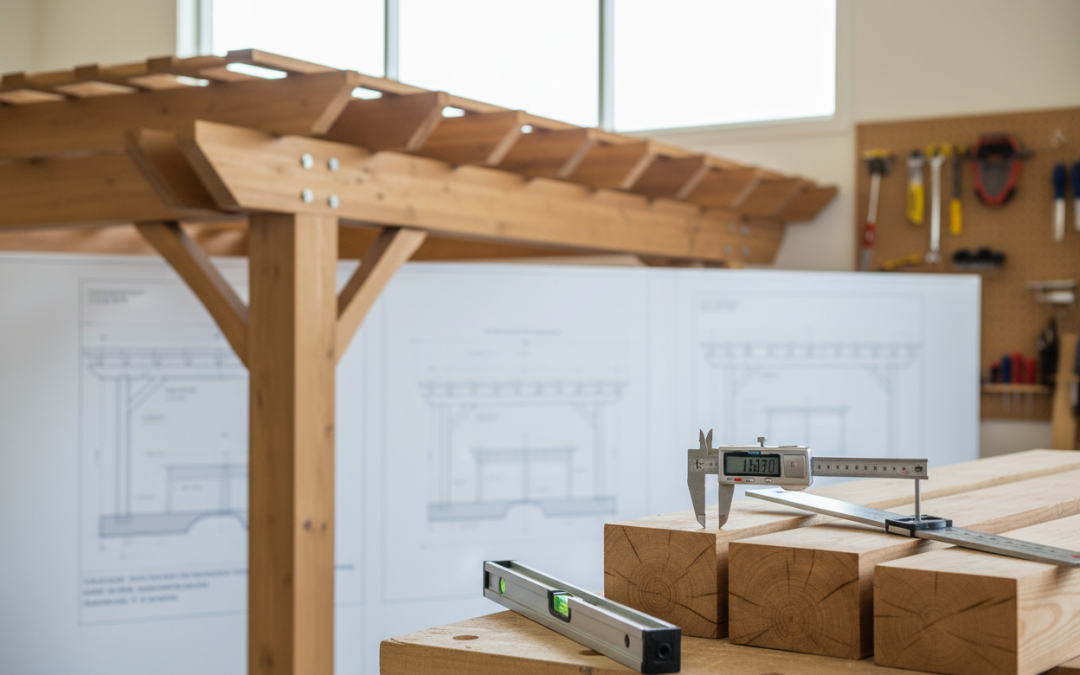
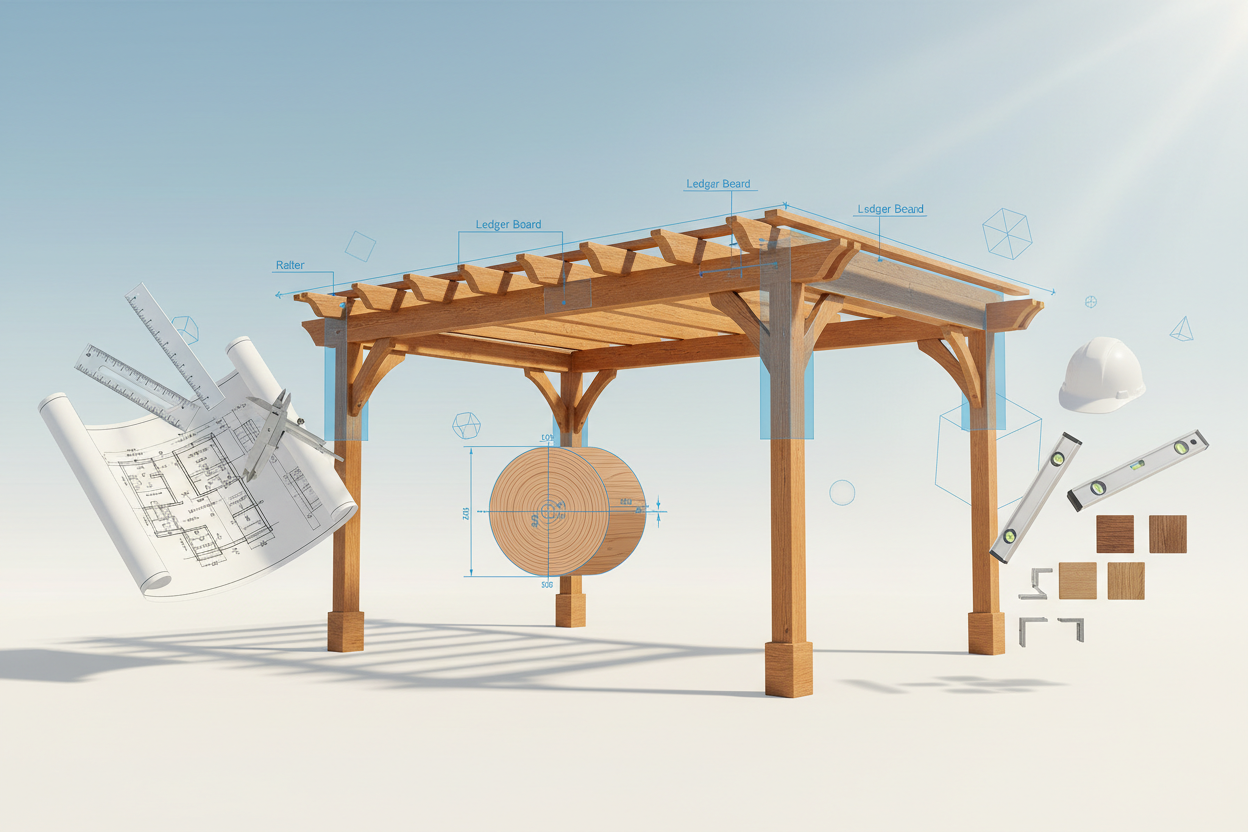
Before diving into calculations and sizing charts, let’s establish what we’re actually dealing with when we talk about pergola beams. In most pergola designs, you’ll encounter three main types of structural members: posts (vertical supports), beams (horizontal members that span between posts), and rafters (the smaller horizontal pieces that rest on top of the beams).
The beams are arguably the most critical component because they carry the entire load of the roof structure and transfer it to the posts. When a beam is undersized, it will sag, creating an unsightly appearance at best and a dangerous failure at worst. When it’s oversized, you’ve wasted money and possibly created an unnecessarily bulky appearance.
Think of pergola beams like the backbone of your structure. Just as your spine needs to be strong enough to support your body weight while remaining flexible enough for movement, pergola beams must balance strength with practicality. The key is finding that sweet spot where engineering meets aesthetics.
Key Factors Affecting Beam Size Requirements
Several critical factors determine what size beam you’ll need for your pergola project. Understanding these variables will help you make informed decisions rather than simply guessing or over-engineering your structure.
Span Length: This is the distance your beam must travel between supports. Longer spans require larger beams or additional support posts. A beam spanning 8 feet will have very different requirements than one spanning 16 feet, even if all other factors remain constant.
Load Requirements: Your pergola will need to handle several types of loads. Dead loads include the weight of the structure itself – the beams, rafters, and any permanent attachments like lighting or fans. Live loads encompass temporary weights such as hanging plants, decorations, or even someone climbing on the structure for maintenance.
Environmental Factors: Your local climate plays a huge role in beam sizing. Areas with heavy snow loads require beams that can handle significantly more weight than regions where snow is rare. Wind loads are equally important, especially for taller structures or those in exposed locations.
Material Properties: Different wood species have varying strength characteristics. Southern Yellow Pine, Douglas Fir, and Hem-Fir all have different load-bearing capacities, which directly affects sizing requirements. Even within the same species, the grade of lumber matters significantly.
Load Calculations for Pergola Beams
Now we’re getting into the meat of beam sizing – the actual calculations that determine whether your chosen beam size will work. Don’t worry; while these calculations involve some math, they’re not as complicated as they might seem at first glance.
Start with determining your total load. For a basic pergola without a solid roof, you’re typically looking at a dead load of about 10-15 pounds per square foot for the structure itself. Live loads for pergolas usually range from 20-40 pounds per square foot, depending on your intended use and local building codes.
Snow loads vary dramatically by location. In many southern regions, you might only need to account for 10-20 pounds per square foot, while northern areas might require calculations for 50 pounds per square foot or more. Your local building department can provide the specific requirements for your area.
Wind loads add another layer of complexity. While pergolas are generally more wind-resistant than solid structures due to their open design, significant wind forces can still affect beam sizing, especially for larger spans or taller structures.
Once you’ve determined your total load per square foot, multiply this by the area that each beam supports. For example, if your beams are spaced 8 feet apart and span 12 feet, each beam supports 96 square feet. With a total load of 40 pounds per square foot, each beam must handle 3,840 pounds of total load.
Material Selection and Sizing Guidelines
Choosing the right material is just as important as getting the size correct. While treated lumber remains the most popular choice for DIY pergola builders due to its availability and cost-effectiveness, you have several options worth considering.
Pressure-treated Southern Yellow Pine offers excellent strength characteristics and weather resistance. It’s readily available at most lumber yards and provides good value for the performance. However, it can be prone to warping and checking as it dries, so selecting kiln-dried lumber when possible is worth the extra cost.
Douglas Fir provides superior strength and appearance but comes at a higher price point. If your pergola will be stained rather than painted, Douglas Fir’s attractive grain pattern makes it an excellent choice for visible structural members.
Engineered lumber products like laminated veneer lumber (LVL) or glue-laminated beams offer superior strength and consistency compared to dimensional lumber. While more expensive, these products can span longer distances with smaller cross-sections, potentially saving money on posts and foundations.
For beam sizing with standard dimensional lumber, a general rule of thumb is that a beam should be at least 1/20th of its span in depth. So a beam spanning 12 feet should be at least 7.2 inches deep, suggesting a 2×8 as the minimum size. However, this is just a starting point – actual load calculations should always take precedence over rules of thumb.
Span Tables and Practical Applications
Span tables are your best friend when it comes to practical beam sizing. These tables, developed by lumber associations and building code organizations, provide pre-calculated maximum spans for various beam sizes under different loading conditions.
For a typical pergola application with moderate loading (around 40 PSF total load), here are some general guidelines for Southern Yellow Pine beams with standard spacing:
A 2×8 beam can typically span up to 8-10 feet safely, depending on the specific grade and loading conditions. This makes it suitable for smaller pergolas or as rafters in larger structures.
A 2×10 beam extends this capability to 10-13 feet, making it a popular choice for medium-sized pergolas. The additional depth provides significantly more strength with only a modest increase in cost.
A 2×12 beam can handle spans of 13-16 feet in many applications, though you’ll want to verify this against your specific loading requirements. For longer spans, consider doubled 2x12s or engineered lumber products.
Remember that these are general guidelines, and your specific application may require different sizing based on local codes, loading requirements, and safety factors. Always consult current span tables from recognized sources rather than relying solely on general recommendations.
Safety Considerations and Building Codes
Safety should never be compromised in favor of cost savings or convenience. While pergolas are generally considered low-risk structures compared to houses or commercial buildings, they still need to meet minimum safety standards to protect users and comply with local regulations.
Most building codes require pergolas over a certain size to have building permits and professional design approval. Even if your local jurisdiction doesn’t require permits for smaller structures, following code guidelines ensures your pergola will be safe and properly constructed.
Building codes typically specify minimum safety factors, meaning your beams must be capable of handling significantly more load than they’re expected to encounter in normal use. This safety margin accounts for unexpected loads, material variations, and construction imperfections.
Connection details are just as important as beam sizing. The strongest beam in the world won’t help if it’s not properly connected to its supports. Use appropriate hardware rated for the loads you’re dealing with, and follow manufacturer installation guidelines carefully.
Consider future modifications when sizing your beams. If there’s any possibility you might want to add a solid roof, ceiling fans, or other heavy accessories later, it’s much easier to oversize your beams initially than to retrofit additional support later.
Common Mistakes to Avoid
Even experienced DIY builders can fall into common traps when sizing pergola beams. Learning from others’ mistakes can save you significant time, money, and frustration.
One of the most frequent errors is using rules of thumb without considering actual loading conditions. While general guidelines provide a starting point, they can’t account for your specific situation’s unique requirements.
Another common mistake is focusing solely on vertical loads while ignoring lateral forces. Wind can create significant sideways forces on pergola beams, especially in exposed locations or with tall structures.
Many builders also underestimate the importance of lumber grade and moisture content. Using lower-grade lumber or green (high-moisture) lumber can significantly reduce your beam’s load-carrying capacity compared to kiln-dried, higher-grade materials.
Improper spacing between beams is another frequent issue. Increasing beam spacing to save money on materials often requires larger beam sizes, potentially negating any cost savings while creating a less attractive appearance.
Professional Consultation When Needed
While many pergola projects can be successfully completed by knowledgeable DIY builders, some situations definitely call for professional engineering consultation. Recognizing when you’re in over your head is a sign of wisdom, not weakness.
Large spans over 16 feet almost always benefit from professional design, especially if you’re planning to add any type of roofing material later. The loads and deflection requirements for these longer spans can be tricky to calculate correctly.
Unusual loading conditions, such as plans for heavy hanging gardens, outdoor kitchens, or other substantial additions, warrant professional input. These loads can be difficult to estimate accurately and may require specialized connection details.
If your pergola will be attached to your house or other existing structures, the connection details and load transfer mechanisms can be complex enough to require professional design. Improper connections can damage your home’s structure or create dangerous failure modes.
Sites with challenging soil conditions, significant slopes, or exposure to extreme weather may also benefit from professional consultation, even if the pergola itself seems straightforward.
Conclusion
Building a pergola with properly sized beams isn’t rocket science, but it does require careful attention to engineering principles and safety considerations. By understanding the factors that affect beam sizing – span length, loading conditions, material properties, and local requirements – you can make informed decisions that result in a structure that’s both safe and beautiful.
Remember that beam sizing is just one part of successful pergola construction. Proper foundation design, connection details, and construction techniques are equally important for long-term success. Take the time to plan carefully, consult appropriate resources, and don’t hesitate to seek professional help when your project exceeds your comfort zone.
The satisfaction of building your own pergola with properly engineered components will last for years to come. Every time you relax under your handcrafted shade structure, you’ll have the confidence that comes from knowing it was built right from the ground up. Your family and friends will be impressed not just by the appearance, but by the solid engineering that makes it all possible.
Frequently Asked Questions
Q: Can I use 2×6 lumber for pergola beams?
A: 2×6 lumber can work for pergola beams, but only for relatively short spans (typically 6-8 feet maximum) and light loading conditions. For most pergola applications, 2×8 or larger beams provide better performance and appearance.
Q: How do I account for snow loads in my beam calculations?
A: Snow loads vary significantly by geographic location and elevation. Contact your local building department for specific snow load requirements in your area, which can range from 10 PSF in southern regions to 50+ PSF in northern climates.
Q: Is it better to use one large beam or two smaller beams side by side?
A: Two smaller beams bolted together (doubled beams) can often carry more load than a single beam of equivalent total cross-sectional area. However, proper connection between the two pieces is critical for this approach to work effectively.
Q: Do I need to consider wind loads for pergola beam sizing?
A: Yes, wind loads can be significant, especially for taller pergolas or those in exposed locations. While pergolas are generally more wind-resistant than solid structures, uplift and lateral forces should still be considered in your design.
Q: Can I use steel beams instead of wood for my pergola?
A: Steel beams can be used for pergolas and offer superior strength-to-weight ratios compared to wood. However, they require different connection methods, may need special finishes for weather resistance, and typically require professional design for proper sizing.
Q: How much deflection is acceptable in pergola beams?
A: Most building codes limit deflection to 1/240th of the span for live loads, meaning a 12-foot beam shouldn’t deflect more than 0.6 inches under normal loading. However, visual appearance may dictate stricter limits for some applications.

Highland Park TX custom wood pergola | Keathley Landscaping

Dallas TX custom pergolas | Keathley Landscaping

Rowlett TX custom patio covers | Keathley Landscaping

Fate TX covered patio contractors near me | Keathley Landscaping

Sachse TX custom pergolas | Keathley Landscaping

Highland Park TX outdoor living space contractors | Keathley Landscaping

Lavon TX pergolas | Keathley Landscaping

Rockwall TX custom wood pergola | Keathley Landscaping

Parker TX outdoor living space contractors | Keathley Landscaping

Fairview TX pergola companies near me | Keathley Landscaping

Dallas TX pergola builders | Keathley Landscaping

Preston Hollow Dallas TX custom patio cover builders | Keathley Landscaping

Lake Highlands Dallas TX outdoor living space contractors | Keathley Landscaping

Preston Hollow Dallas TX covered patio contractors near me | Keathley Landscaping

Rockwall TX custom patio cover builders | Keathley Landscaping

Mobile City TX custom patio covers | Keathley Landscaping

Fate TX luxury custom pergolas | Keathley Landscaping

Allen TX custom patio cover builders | Keathley Landscaping

Lake Highlands Dallas TX custom pergolas | Keathley Landscaping

Lavon TX custom patio covers | Keathley Landscaping

Mobile City TX pergola companies near me | Keathley Landscaping

Garland TX custom pergolas | Keathley Landscaping

Lakewood Dallas TX pergola builders | Keathley Landscaping

Lowry Crossing TX pergolas | Keathley Landscaping

McKinney TX pergolas | Keathley Landscaping

Lakewood Dallas TX custom patio cover builders | Keathley Landscaping

Allen TX covered patios | Keathley Landscaping

Lavon TX luxury custom pergolas | Keathley Landscaping

sod lawn installation Fate Texas

cost of sod and installation Rose Hill Texas

sod installation companies Mobile City Texas

lawn sod installation near me Highland Park Texas

sod installation service Lowry Crossing Texas

sod company Mobile City Texas

sod installation services Allen Texas

sod grass installation Lake Highlands Dallas Texas

grass installation Lowry Crossing Texas

installation of sod cost Allen Texas

sod installation companies Highland Park Texas

sod contractors Allen Texas

sod installation company near me Lake Highlands Dallas Texas

new sod installation Plano Texas

sod installation cost Lucas Texas

sod installation near me Murphy Texas

cost for sod installation Allen Texas

sod installation companies near me McKinney Texas

sod installation company near me Wylie Texas

sod installation near me Fate Texas

sod installation service Murphy Texas

price for sod installation Frisco Texas

cost for sod installation Preston Hollow Dallas Texas

sod installation service Preston Hollow Dallas Texas

sod installation company Richardson Texas

price for sod installation Wylie Texas

installation of sod cost Garland Texas

new sod installation Murphy Texas

channel drain cleaning Rowlett Texas

drain cleaning Lavon Texas

landscape drainage Sachse Texas

yard drainage specialist near me Rockwall Texas

yard drainage Frisco Texas

landscape drainage McKinney Texas

drainage company near me Parker Texas

drain cleaning Sachse Texas

drain cleaning company near me Garland Texas

drainage company Rose Hill Texas

yard drainage contractors near me Preston Hollow Dallas Texas

drainage specialist near me Dallas Texas

drain cleaning company near me Richardson Texas

landscape drainage contractor near me Allen Texas

channel drain cleaning Lowry Crossing Texas

drain Fairview Texas

drainage Rowlett Texas

landscape drain Rockwall Texas

drain Highland Park Texas

drain Richardson Texas

drainage contractors near me Richardson Texas

drain contractor Lowry Crossing Texas

drainage solutions near me Garland Texas

channel drain cleaning Allen Texas

yard drainage contractors near me Highland Park Texas

yard drainage contractors near me Fairview Texas

drain Frisco Texas

Recent Comments